



Study: Decrease of commuter benefit bad for transit
The imminent drop in the benefit cap will result in an increase in the cost of commuting of up to 22 percent (assuming a tax rate at the national average of 31.6 percent), according to the report, commissioned by the nonprofit group TransitCenter.

Mass transit, nationwide — which experienced a three percent ridership decline during the recession — faces further ridership challenges in 2011 as a result of the expiration of an American Recovery & Reinvestment Act tax provision that helps defray the cost of getting to work, according to a new study.
The new economic study was released by TransitCenter Inc., a nonprofit provider of commuter benefit programs that promotes mass transit to improve air quality.
The Federal provision, enacted in 2009 in the stimulus bill, nearly doubled the maximum pretax deduction that workers could apply toward monthly commuting costs from $120/month up to $230/month. This lowered the net cost to get to work for many employees participating in a commuter benefits program and created parity with monthly pretax deductions allowable for parking. The increase in the transit benefit cap to $230/month is set to expire at the end of 2010 and return to its previous level of $120 per month.
This imminent drop in the benefit cap will result in an increase in the cost of commuting of up to 22 percent (assuming a tax rate at the national average of 31.6 percent), according to the report, commissioned by TransitCenter and conducted by management consulting firm Bennett Midland. In turn, this will lead to an estimated 5 percent to 9 percent drop in demand for public transportation among this group — a figure based on Bennett Midland's analysis of previous studies on the impact of price on transit usage (price elasticity).
These studies show that for every 10 percent increase in price there is roughly a corresponding 3 percent to 5 percent decrease in ridership.
The report is based on data gathered from transit systems throughout the U.S. and a range of analyses on changes in ridership to mass transit systems and the impact that the increased transit benefit cap has had on trends related to commuting costs and economic influences on the use of transit services.
Separately, TransitCenter shared a preview of findings from an upcoming employer and employee study that examines the impact of the increased transit cap amount to $230/month. The report indicates that enrollment by employers in commuter benefits programs increased considerably after the monthly cap was raised, especially at medium and large companies:
60 percent of employers with offices in multiple cities reported that employees increased their pre-tax deduction.
29 percent of employers saw higher enrollment in commuter benefits programs.
For a copy of TransitCenter's white paper regarding the impact of the $230 cap, email 230whitepaper@transitcenter.com.
More Bus

PSTA Modernizes Workforce Management with Digital Bidding System
The award-winning Workforce Transit Modernization project replaced paper bidding with a transparent digital platform, cutting administrative effort while improving access for operators.
Read More →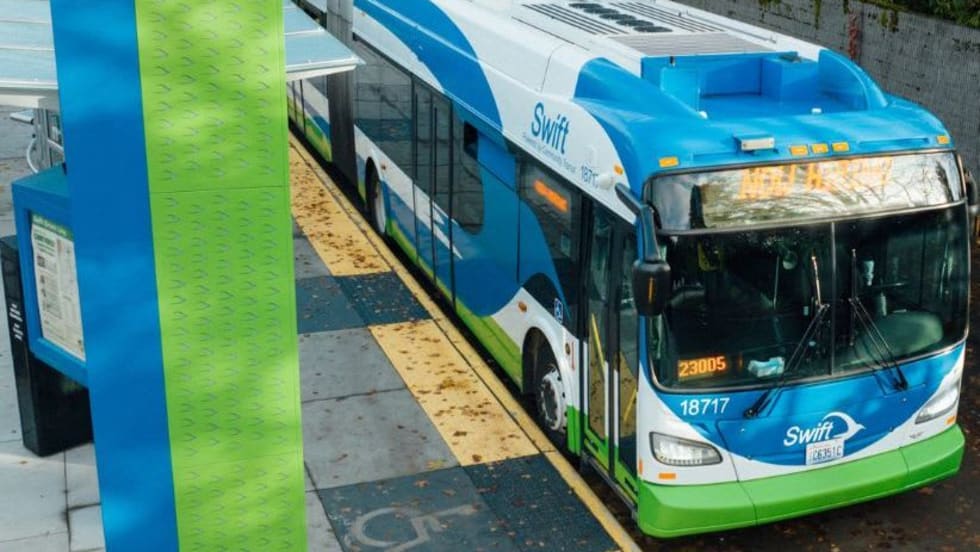
Washington's Community Transit Sets Six-Year Roadmap for Growth, Expansion
Approved TDP targets more bus service, new mobility options, Swift BRT expansion, and a potential Everett Transit annexation.
Read More →
DART Customer Satisfaction Reaches Six-Year High
Overall satisfaction rose to 74.9%, while the agency’s Net Promoter Score reached a record 33.7.
Read More →
How DART's GoPass Is Redefining Regional Mobility
Serving 14 transit agencies, GoPass simplifies multimodal travel by allowing riders to plan, pay for, and manage an entire trip through one app.
Read More →
Biz Briefs: OCTA Taps Clean Energy for Hydrogen Station, Stadler to Supply Via Rail Vehicles, and More
From manufacturers and suppliers to transit agencies and motorcoach operators, these updates offer a snapshot of the projects, partnerships and business moves driving the industry forward.
Read More →
METRO Magazine Announces 2026 Innovative Solutions Awards Winners
Projects Recognized for Advancing Mobility Through Technology, Accessibility, Workforce Innovation, and Operational Excellence
Read More →
Biz Briefs: STV teams with Amtrak, Motorcoach Operators Boost Fleet and Land Contracts, and More
From manufacturers and suppliers to transit agencies and motorcoach operators, these updates offer a snapshot of the projects, partnerships and business moves driving the industry forward.
Read More →
LA Metro Marks Banner Year, Sets Ambitious Goals for New Fiscal Year
Incoming LA Metro Board Chair and Los Angeles Mayor Karen Bass joined outgoing Board Chair Fernando Dutra and LA Metro CEO Stephanie Wiggins to review accomplishments from fiscal year 2026, which included the opening of new rail extensions, advancement of major transit projects, expanded safety programs, and new rider amenities.
Read More →
DART Taps Nathaniel P. Ford Sr. as Next President/CEO
Since 2012, Ford has served as the CEO of the Jacksonville Transportation Authority
Read More →
AC Transit’s Cecil Blandon on Building the Next Generation of Transit Maintenance Leaders
The agency’s maintenance chief discusses leadership, workforce development, zero-emission technology, and preparing technicians for the future of public transportation.
Read More →