



STV unveils sustainably designed bus facility in Worcester, Mass.
The $84 million, 150,000-square-foot facility is situated on a new 11-acre site, and replaces Worcester Regional Transit Authority’s 1920s-era converted trolley bar.

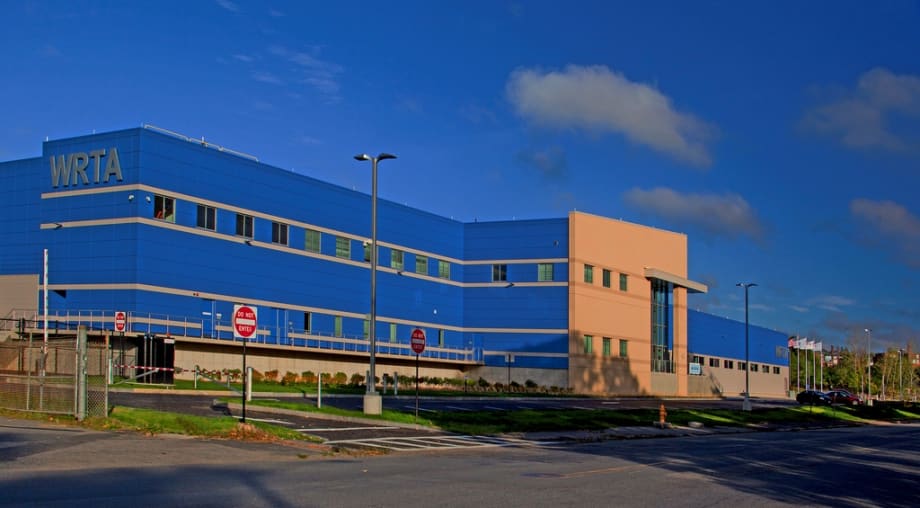
Worcester Regional Transit Authority's bus facility. Photo: STV
Worcester Regional Transit Authority's bus facility. Photo: STV
The Worcester Regional Transit Authority (WRTA) recently unveiled its new, state-of-the-art, vehicle maintenance, storage and operations facility, designed by transportation architecture and engineering firm, STV.
The $84 million, 150,000-square-foot facility is situated on a new 11-acre site, and replaces WRTA’s 1920s-era converted trolley barn while significantly increasing the agency’s storage/maintenance space for its vehicle fleet. STV provided a broad range of architectural and engineering design services for the new facility, which incorporates a number of sustainable design and environmentally-friendly features. These include high-efficiency mechanical and plumbing systems, stormwater management systems, vehicle washing reclamation system, and the provisions to enable the future installation of a photovoltaic system on the building’s roof.
The new facility houses up to 75 buses, 30 vans and other non-revenue vehicles, performs all maintenance, and facilitates operations and administration functions all under one roof, consolidating the agency’s maintenance and operations services.
“This new facility provides the WRTA with a much more productive, efficient and safe environment in which to conduct its day–to-day maintenance and operations functions, providing enhanced clean, safe and reliable service to its customers, the riding public,” said Neal DePasquale, STV’s project manager. “The facility provides the agency the flexibility it needs to evolve and expand its bus vehicle fleet in the future to accommodate new types of bus vehicles such as compressed natural gas buses.”
To address challenges created by the facility’s location in a floodplain, STV designed subsurface detention/infiltration chambers, bioswales with compatible landscaping elements, hydrodynamic separators, and deep-sump catch basins to control the quality and quantity of stormwater runoff.
The site was also challenging from an environmental perspective — it was vacant and essentially abandoned since the late 1960s and designated as a Brownfield site. Originally the location of a gas manufacturing plant dating back to the 1880s, it was highly contaminated with coal tar by-product and asbestos. The remediation and clean-up of the entire 11-acre site included the design of a gas vapor barrier and venting system, which was intergrated with the building’s foundation and slab construction.
More Bus

People Movement: Dan Dipert Coaches Adds Third-Generation Leader, Keolis Names New Valley Metro VP/GM, and More
In this edition, we also cover recent appointments and announcements at the Wabtec, SilverRide, HNTB, and more, showcasing the individuals helping to shape the future of transportation.
Read More →
New York MTA Plans Largest Bus Fleet Upgrade in More Than a Decade
The agency is seeking manufacturers for 650 new CNG buses to replace aging vehicles, improve reliability, and advance its broader fleet modernization strategy.
Read More →
Building a Flexible Path to Transit Electrification
John Hroncich discusses BAE Systems’ modular and scalable approach, lessons learned from decades of real-world operations, and how agencies can identify electrification strategies that fit their fleets.
Read More →
Bus Tech Talk: Keeping Transit Technicians Ahead of the Technology Curve
LA Metro’s Obed Mejia discusses technician training, evolving maintenance technology, fleet replacement, and strategies for getting the most out of today’s transit fleets.
Read More →
Biz Briefs: RIPTA Unveils New Frontrunners, Clevland RTA Adds New Siemens, and More
In METRO's latest installment, we take a look at recent news from Siemens, Prevost, Dodge, and more partnerships making headlines across the transportation sector.
Read More →
People Movement: Holly Arnold Joins Transdev and More
In this edition, we also cover recent appointments and announcements at Pace, CamTran, MCI, and more, showcasing the individuals helping to shape the future of transportation.
Read More →
The High Cost of Transit Buses: Industry Leaders Look to Procurement Reform
Transit leaders and policymakers examine how standardized bus designs, streamlined procurement, and predictable funding could help agencies stretch budgets and deliver better service.
Read More →
The Business Voice Behind Public Transportation
As chair of APTA’s Business Members Board of Governors, Ray Melleady explains how more than 850 business members are partnering with transit agencies to advance funding, innovation, and industry-wide collaboration.
Read More →
From Surviving to Thriving: Building Stronger Transportation Organizations
Bus Business Consultants founder Brian Dickson shares lessons on leadership, organizational health, and creating options for long-term success in a changing transportation industry.
Read More →
Finding the ‘Happy Medium’: Optimizing Maintenance Without Sacrificing Reliability
The key to maintenance optimization isn’t doing less work—it’s doing the right work at the right time on the right assets.
Read More →