



Synthetic drug use caused bus crash that killed Texas students, NTSB says
Also determines that contributing to the severity of the crash was the fact that, although the bus was equipped with seat belts in all seating positions, none of the passengers wore the restraints.


The National Transportation Safety Board (NTSB) determined that the driver of a truck-tractor that struck a medium-size bus, killing four members of the North Central Texas College softball team, lost control of his vehicle due to incapacitation stemming from his likely use of a synthetic cannabinoid. Synthetic cannabinoids are chemical compounds that are marketed as allegedly legal alternatives to marijuana; however, their effects can be considerably worse and they have been known to cause psychosis, seizures and nonresponsiveness.
The driver, who had a documented history of drug use, was operating a truck-tractor with a semitrailer northbound on I-35 near Davis, Okla. After negotiating a slight rightward curve, the truck departed the left lane, continued across the 100-foot-wide median and traveled more than 1,100 feet before striking the medium-size bus in the southbound lane of I-35. Four bus passengers died and five were seriously injured. Six additional bus passengers and both drivers sustained minor injuries.
Federal law prohibits commercial motor vehicle drivers from operating a vehicle while impaired. However, federal regulations require testing for only a few impairing substances. The crash investigation highlights the challenges that employers and law enforcement face in detecting driver use of impairing substances for which testing is not required.
“Motor carriers need to know about this emerging class of drugs and they need better tools to detect driver impairment,” said NTSB Chairman Christopher A. Hart.
As a result of the investigation, the NTSB issued recommendations addressing impairing substances that are not tested for under federal regulations.
Contributing to the severity of the crash was the fact that, although the bus was equipped with seat belts in all seating positions, none of the passengers wore the restraints. Furthermore, the bus driver failed to implement the college’s policy requiring passengers to wear seat belts. Had the seat belts been properly worn, they would probably have prevented ejections and reduced overall injuries.
Also as a result of the investigation, the NTSB called upon states to require seat belt use for all vehicle seating positions that are equipped with belts. “Buckling up can save your life, whether you are in a car, a truck, or riding in a bus,” Hart said.
The NTSB also issued or reiterated recommendations regarding side impact protection standards for medium-size buses, on-board recorder system standards for large commercial vehicles and updated criteria for median barrier installation.
More Security and Safety

Transit Agencies Highlight Safety Gains at National Summit
Leaders from 15 major transit systems shared crime-reduction results and safety initiatives while discussing the role of continued federal support.
Read More →
DART Launches Major Security, Fare Enforcement Initiative
The 90-day demonstration will deploy coordinated security teams at five light rail stations while testing controlled access and gathering data to guide future investments.
Read More →
RTD Launches NextRide App to Consolidate Trip Planning, Fares, Security Reporting
The app expands on RTD’s existing NextRide web application and allows customers to view real-time vehicle locations and service alerts, purchase and store digital fares, and access customer support.
Read More →
TAPTCO Updates OSHA Compliance Training for Transit Maintenance Operations
The revamped program addresses 26 OSHA standards for maintenance facilities, with TAPTCO pointing to training, documentation, and everyday shop hazards as continuing challenges for transit operations.
Read More →
FRA Announces $5.3B in Rail Investments, Including $2B for Amtrak
Funding will support grade-crossing improvements, infrastructure upgrades, and new Amtrak equipment in 23 states.
Read More →
Chicago, Maryland Expand Non-Law-Enforcement Safety, Rider Support
The CTA and MTA are launching new programs aimed at de-escalation, crisis response, rider assistance, and greater transparency.
Read More →
LA Metro, City of West Hollywood, and Partners Advance Smarter Bus Lane Enforcement
The award-winning partnership combines AI-powered detection with human oversight to improve bus reliability, accessibility, and enforcement efficiency.
Read More →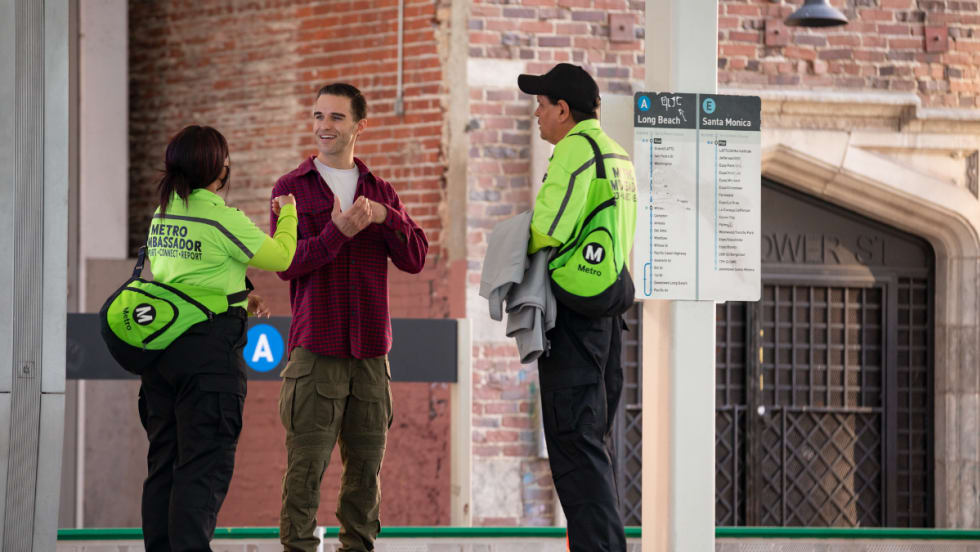
LA Metro Reports 57% Decline in Homelessness on Transit System Since 2024
The agency's latest homelessness count offers new data on how care-based services and cross-sector partnerships can complement traditional transit security strategies.
Read More →
FTA Launches 'Transit Moves America' Dashboard to Highlight Agency Safety and Performance
The online dashboard transforms National Transit Database information into a public-facing resource that allows users to compare transit agencies on key operational and safety metrics.
Read More →
LA Metro Marks Banner Year, Sets Ambitious Goals for New Fiscal Year
Incoming LA Metro Board Chair and Los Angeles Mayor Karen Bass joined outgoing Board Chair Fernando Dutra and LA Metro CEO Stephanie Wiggins to review accomplishments from fiscal year 2026, which included the opening of new rail extensions, advancement of major transit projects, expanded safety programs, and new rider amenities.
Read More →