



Tech Trends: What are the benefits, future for eScooters?
METRO spoke to Louis Pappas, sr. manager, transportation & mobility policy, at Bird about the ideal application and how it reduces car trips.

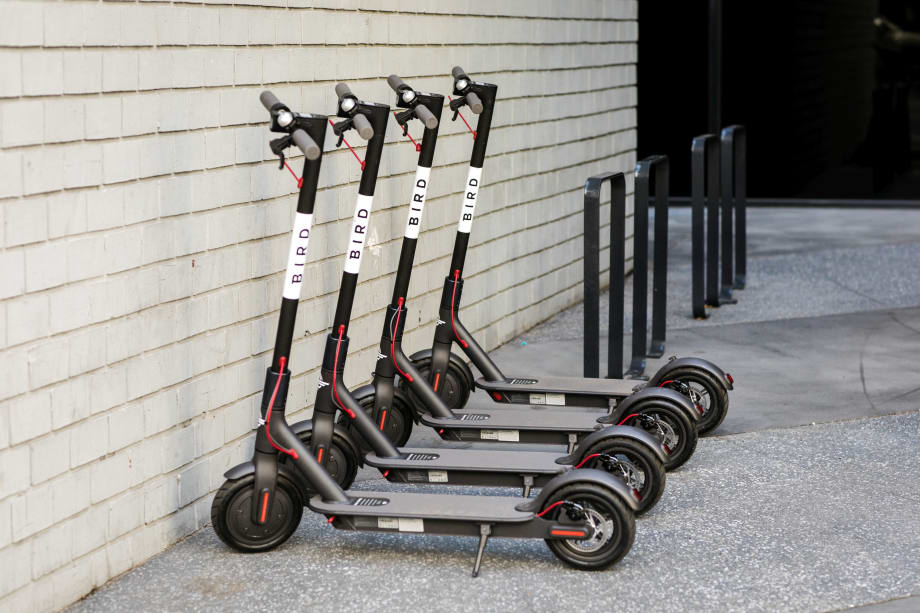

Photos courtesy of Bird
With the idea of expanding mobility options, several cities in the U.S. have turned to micromobility solutions, such as scooters, which are modeled similarly to existing bike-share programs but with one exception — they are often dockless. Another difference from the traditional bike-share is that they are most often used on sidewalks, causing several cities, including San Francisco, to at least temporarily ban them due to safety concerns for both the riders and pedestrians until they are able to better regulate implementation and usage.
METRO spoke to Louis Pappas, sr. manager, transportation & mobility policy, at Bird about the ideal application for scooters, how the company is addressing some of the safety concerns that have been raised, and what the future holds for the company.
What do you believe is the ideal application for Bird scooters in regards to enhancing mobility?
To enhance mobility, the ideal applications for Bird are twofold: replacing short car and ride-hail journeys, and bridging the ‘last mile’ to and from mass transit.
Nearly half of car trips in the U.S. are less than three miles in length. These short car trips are especially harmful to cities — they cause congestion, generate harmful emissions, and occupy a great deal of the public right-of-way, without paying their fair share for doing so. These short car trips also harm transit; both by slowing buses, and in the case of ride-hailing, by directly competing for passengers. Generally speaking, the more private cars we have in our cities, the less mobile they become, overall.
Scooters enhance mobility and improve cities by presenting a flexible, convenient car alternative for many such short trips. This isn’t theoretical — it’s actually happening today in cities that have embraced micromobility options like Bird. In Denver and Portland, for instance, 34% and 32% of e-scooter riders surveyed reported that they would have made their last e-scooter trip by car or ride-hail, had it not been for the presence of options like Bird. For cities and transit agencies that have long considered how to move the mode shift needle, that’s a huge win.
For longer trips, scooters can enhance mobility by connecting to mass transit. E-scooters, on average, triple the size of the transit ‘access shed’ — the radius within which someone can reach high-quality transit in under 15 minutes. This distance is about 0.5 miles on foot, but 1.5 miles or more on a Bird. That’s why in cities like Los Angeles and Austin, [Texas] our e-scooters are such a feature at bus and rail stations; we’re enhancing mobility by helping more people access these regions’ new and future transit investments.

Pappas
What benefits can cities experience through implementing Bird scooters into their ecosystem?
The transportation sector is the single largest source of carbon emissions in the U.S. The most important benefit cities can experience through implementing Bird scooters is mitigating their carbon footprint, thereby exercising an important leadership role in the fight against climate change. On the way to helping cities achieve this objective, Bird scooters carry a number of additional benefits:
Enhancing equity: Dockless mobility options like Bird are used by a more diverse population than docked bike-share before them, bringing new communities and new parts of cities into active transportation. In fact, three of four Portland e-scooter riders reported never trying the city’s docked bike-share program before options like Bird. And, as mentioned above, by bringing transit into easier reach, at a fraction of the cost of ride-hailing, Bird enhances affordable access to opportunity.
Improving road safety: Cars killed over 6,000 pedestrians in the U.S. in 2018. By replacing car trips, scooters can help mitigate our worsening road safety by making transportation more human-scaled. Besides taking dangerous cars off the road, growing the number of active travelers in a city also generates a ‘safety in numbers’ effect, whereby more driver awareness of vulnerable road users encourages safer driving over time. Bird recently took a leadership role in the conversation about micromobility and road safety with our Safety Report, which lays out ways that the public sector and operators can work together to achieve safer outcomes.
Streets for people: A larger cohort of active transportation supporters using options like Bird will help cities increase the cohort calling for safer, more human-scaled infrastructure. Bird can therefore help cities accelerate their progress toward complete streets, and other policies that prioritize people, not cars. This acceleration is already happening in cities like Santa Monica, [California} where just 18 months since Bird launched, the city has already created more than 100 dockless parking zones and other new protected infrastructure.
With some of the initial applications of scooters there has been some negative feedback, such as being dangerous to get around on sidewalks; can you discuss what the company has done to help solve those issues?
Shared e-scooters are challenging a status quo that most of us are unknowingly accustomed to — the massive amount of space and resources our streets and cities have dedicated to cars. Much of the early feedback we’ve received when it comes to issues like sidewalk riding and parking is in some way related to the lack of space most cities afford to active transportation, and even pedestrians.
The wider Bird vision is to lead a fundamental shift toward a more human-scaled transportation landscape, but for now, we recognize that most of the places we operate were not built around the scooter or bike — they grew up to support cars. Therefore, as we drive toward this broader vision, we have developed tools and policies to make Bird the best possible steward of the public right of way and partner to cities. Some of those tools include, the GovTech platform, a suite of services designed to help local governments incorporate and manage e-scooters as part of their transportation infrastructure and Community Mode, providing any member of the public the ability to report incidents of poor parking or damaged Birds they see in their community through the Bird app.

Can you discuss Bird Platform and how you believe it can increase your network?
Bird Platform is a suite of technologies, products, and services that gives individuals the opportunity to manage a fleet of shared e-scooters in their community while helping fight against the climate crisis and congestion in cities and communities globally. We think Bird platform is incredibly complementary because it allows us to get into other regions around the world faster and take the Bird mission to those other regions.
What do you envision for Bird scooters, and the company as a whole, in the next five years?
As the inventor of the e-scooter sharing space, Bird is focused on continuing to advance our offering when it comes to vehicle, operations, and our partnerships with cities. We believe that the boom in many other ‘micro’ transportation modes since Bird’s launch is a testament to the idea that in order for cities to continue to move, we have to think smaller, while also improving mass transit. The climate crisis and our car addiction demand a transportation mode shift to cleaner, affordable vehicles. Shared e-scooters are already replacing millions of short car trips and the pollution that comes with them, and we at Bird will continue to work with cities to help them redesign their transportation networks so that they are safer and cleaner.
More New Mobility

From Hardware to Digital Partner: Luminator Charts Its Next Chapter
CEO Magnus Friberg discusses Luminator’s shift toward becoming a digital partner, the growing importance of software and interoperability, and how AI can help agencies improve operations and passenger experience.
Read More →
Biz Briefs: Alstom Lands Canadian Contract, LYT to Supply California TSP, and More
In METRO's latest installment, we take a look at recent news from Complete Coach Works, Beep, FlixBus, and more partnerships making headlines across the transportation sector.
Read More →
CharterUP’s Armir Harris on Technology, AI, and the Future of Group Mobility
In a recent episode of METROspectives, CharterUP Founder/CEO Armir Harris discussed the company’s evolution from an online charter bus marketplace into a technology platform supporting public- and private-sector mobility and much more.
Read More →
Jacksonville’s NAVI Project Charts a New Course for Autonomous Public Transportation
Through its NAVI program, JTA is showing how autonomous vehicles, intelligent infrastructure, and coordinated operations can work together to deliver everyday public transportation.
Read More →
Biz Briefs: Luminator Marks Milestone and More
From manufacturers and suppliers to transit agencies and motorcoach operators, these updates offer a snapshot of the projects, partnerships and business moves driving the industry forward.
Read More →
New Tricks for Old Bureaucracies: Joshua Schank on Making Transit Innovation Stick
Former LA Metro Chief Innovation Officer Joshua Schank discusses why good ideas aren't enough, how transit agencies can overcome resistance to change, and why today's challenges demand more innovation.
Read More →
How DART's GoPass Is Redefining Regional Mobility
Serving 14 transit agencies, GoPass simplifies multimodal travel by allowing riders to plan, pay for, and manage an entire trip through one app.
Read More →
Biz Briefs: OCTA Taps Clean Energy for Hydrogen Station, Stadler to Supply Via Rail Vehicles, and More
From manufacturers and suppliers to transit agencies and motorcoach operators, these updates offer a snapshot of the projects, partnerships and business moves driving the industry forward.
Read More →CharterUP Expands Into New Mobility and Autonomous Transportation
Vice President of New Mobility Stephen Joos discusses how CharterUP is leveraging its nationwide transportation network, technology platform, and autonomous vehicle partnerships to expand into workforce mobility, campus shuttles, and transit solutions.
Read More →
METRO Magazine Announces 2026 Innovative Solutions Awards Winners
Projects Recognized for Advancing Mobility Through Technology, Accessibility, Workforce Innovation, and Operational Excellence
Read More →