




Navigating the Impact of Tariffs on Transit: A Strategic Approach for Agencies
Tolar Manufacturing Installs 150th Bus Shelter in LA’s Koreatown
The milestone marks early progress in LA’s plan to bring 3,000 bus shelters citywide through the Sidewalk and Transit Amenities Program.
June 13, 2025
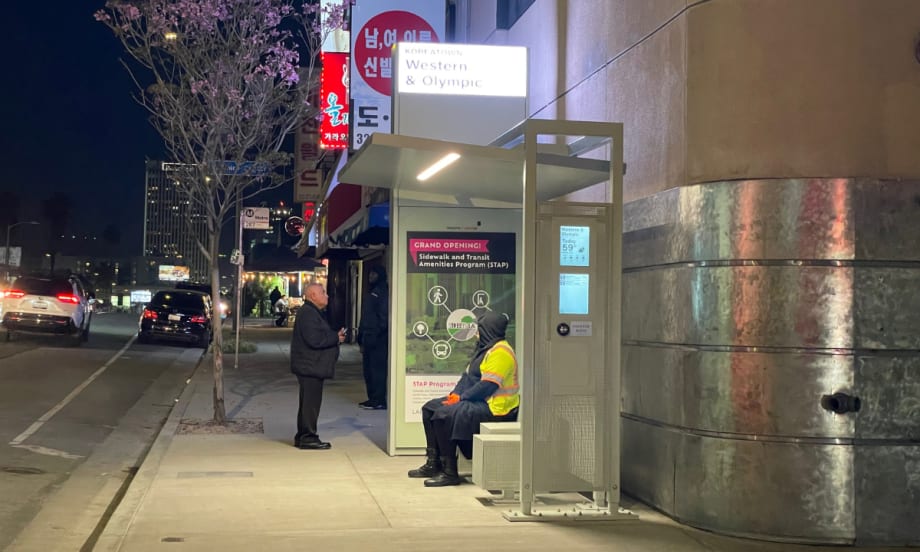
The 150th milestone marks the start of a 10-year citywide project aimed at modernizing the transit experience by installing 3,000 integrated bus shelters.
Photo: Tolar Manufacturing
3 min to read
Tolar Manufacturing Co. recently celebrated the installation of the 150th bus shelter in Koreatown in Los Angeles via the City of Los Angeles’ Sidewalk and Transit Amenities Program (STAP).
The ceremony, joined by city leaders, community members, and project partners, marked a major milestone in the city’s ambitious initiative to modernize the transit experience across all neighborhoods with shade, comfort, and digital amenities.
Out of 3,450 bus stops, 150 shelters have been installed, with 250 projected by the end of the year.
The milestone marks the start of a 10-year citywide project aimed at modernizing the transit experience by installing 3,000 tech-enabled, comfortable, and aesthetically integrated bus shelters and 450 shade structures where they’re needed most — guided by data on ridership, urban heat, and accessibility.
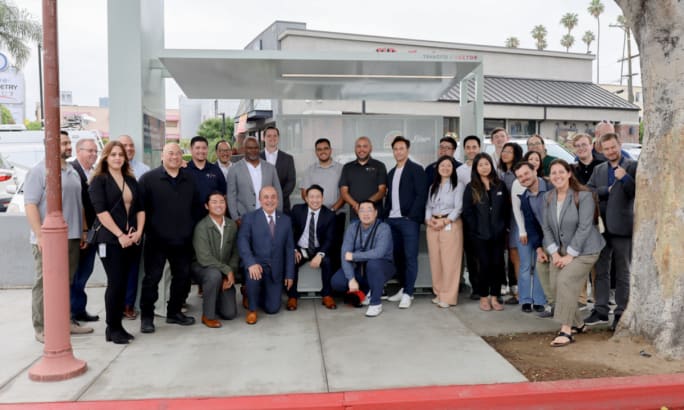
The 150th bus shelter ceremony, joined by city leaders, community members, and project partners, marked a major milestone in the city’s ambitious initiative to modernize the transit experience across all neighborhoods.
Photo: Tolar Manufacturing
Councilmembers Highlight STAP’s Role in Serving Riders Across LA
Hosted by the City of Los Angeles, the celebration featured remarks from Councilmembers Eunisses Hernandez and Heather Hutt, as well as representatives from the Board of Public Works and program partners.
“Koreatown is one of the most densely populated neighborhoods in all of Los Angeles with over 100,000 residents. Many of our seniors and young people rely on public transportation to get to work and everywhere else,” said Commissioner Steve Kang of the LA City Department of Public Works.
The program will provide amenities to 75% of bus riders in each of the city’s council districts, helping to encourage ridership and connect communities throughout Los Angeles.
“Our communities are connected. We share buses, sidewalks, and the summer heat. And when there’s no shade, we share the need for shelter like the one we are unveiling today,” said City Councilmember Eunisses Hernandez of District 1. Already, more than 20,000 riders are benefiting from the new shelters.
According to the American Public Transportation Association (APTA), every $1 invested in public transportation generates approximately $5 in economic returns — underscoring the broader economic value of projects like STAP that enhance infrastructure, connect communities, and support local jobs.
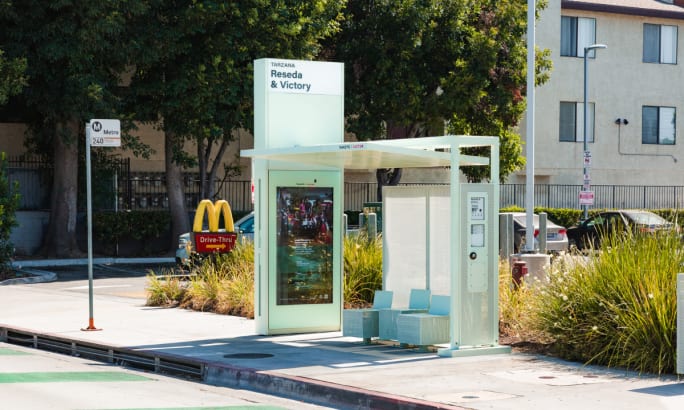
The bus shelters will feature digital solutions, including LED backlit rectangular display plates offering real-time information, smart light communications, location branding, and more.
Photo: Tolar Manufacturing
Modern Bus Shelters by Tolar Manufacturing are Smart and Scalable
Tolar’s custom 12-ft Signature bus shelters were inspired by California Modernism and are designed as an easy-to-assemble parts kit tailored for scalability and customization across diverse neighborhoods.
The Signature bus shelters feature an angled aluminum flat roof below an upper structure of 3-in sq. steel tube framing, including a three-part ceiling, wrap-around aluminum skin, and perforated rear screen. Under-roof LED illumination provides passenger security.
The bus shelters will also feature digital solutions, including LED backlit rectangular display plates offering real-time information, smart light communications, location branding, RTIS, and optional emergency call box communications, all powered by solar or 110V inset into the bus shelter end wall.
Led by Tranzito-Vector, the project brings together a team of design experts to develop and execute the program, including Skidmore, Owings & Merrill (SOM), Designworks BMW, Studio One Eleven, Fehr & Peers, HLB Lighting, and Tolar Manufacturing.
Tolar Manufacturing was selected for its extensive expertise in creating high-quality transit amenities that enhance the rider experience. It is also responsible for fabricating state-of-the-art shelters designed by SOM.
All shelters are fabricated at Tolar’s facility in Corona, Calif., under full Build America, Buy America (BABA) compliance.
More Bus

New York MTA Plans Largest Bus Fleet Upgrade in More Than a Decade
The agency is seeking manufacturers for 650 new CNG buses to replace aging vehicles, improve reliability, and advance its broader fleet modernization strategy.
Read More →
Building a Flexible Path to Transit Electrification
John Hroncich discusses BAE Systems’ modular and scalable approach, lessons learned from decades of real-world operations, and how agencies can identify electrification strategies that fit their fleets.
Read More →
Bus Tech Talk: Keeping Transit Technicians Ahead of the Technology Curve
LA Metro’s Obed Mejia discusses technician training, evolving maintenance technology, fleet replacement, and strategies for getting the most out of today’s transit fleets.
Read More →
Biz Briefs: RIPTA Unveils New Frontrunners, Clevland RTA Adds New Siemens, and More
In METRO's latest installment, we take a look at recent news from Siemens, Prevost, Dodge, and more partnerships making headlines across the transportation sector.
Read More →
People Movement: Holly Arnold Joins Transdev and More
In this edition, we also cover recent appointments and announcements at Pace, CamTran, MCI, and more, showcasing the individuals helping to shape the future of transportation.
Read More →
The High Cost of Transit Buses: Industry Leaders Look to Procurement Reform
Transit leaders and policymakers examine how standardized bus designs, streamlined procurement, and predictable funding could help agencies stretch budgets and deliver better service.
Read More →
The Business Voice Behind Public Transportation
As chair of APTA’s Business Members Board of Governors, Ray Melleady explains how more than 850 business members are partnering with transit agencies to advance funding, innovation, and industry-wide collaboration.
Read More →
From Surviving to Thriving: Building Stronger Transportation Organizations
Bus Business Consultants founder Brian Dickson shares lessons on leadership, organizational health, and creating options for long-term success in a changing transportation industry.
Read More →
Finding the ‘Happy Medium’: Optimizing Maintenance Without Sacrificing Reliability
The key to maintenance optimization isn’t doing less work—it’s doing the right work at the right time on the right assets.
Read More →
LA Metro, City of West Hollywood, and Partners Advance Smarter Bus Lane Enforcement
The award-winning partnership combines AI-powered detection with human oversight to improve bus reliability, accessibility, and enforcement efficiency.
Read More →