



Transdev set to start first AV shuttle network in North America
Babcock Ranch, a new town under construction in Southwest Fla., will start running multiple Transdev-operated autonomous shuttles, with the long-range goal of working with Transdev to bring on-demand, mobility as a service options to nearly 50,000 residents.

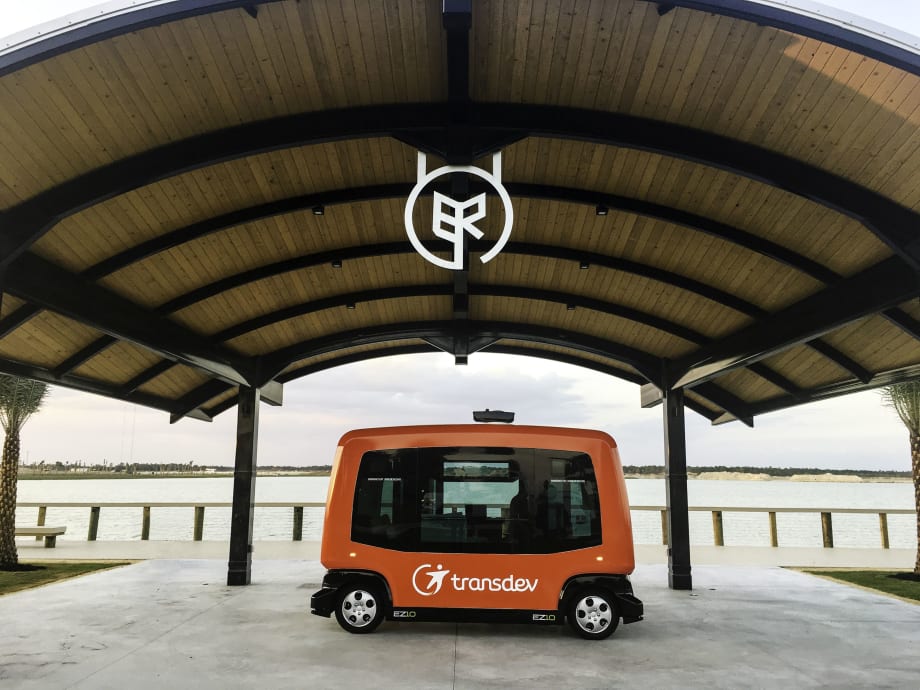
A new town under construction in Southwest Florida, will start running multiple Transdev-operated autonomous shuttles.
Photos courtesy Transdev
A new town under construction in Southwest Florida, will start running multiple Transdev-operated autonomous shuttles.
Photos courtesy Transdev
Transdev, a multimodal mobility solutions company, together with development group Kitson & Partners, announced the opening of the first autonomous shuttle network in North America, scheduled to begin operations in November 2017.
Babcock Ranch, a new town under construction in Southwest Fla., will start running multiple Transdev-operated autonomous shuttles, with the long-range goal of working with Transdev to bring on-demand, mobility as a service options to nearly 50,000 residents.
Babcock Ranch will serve as a living laboratory on the development of the mobility-as-a-service (MaaS) platform, with car-sharing, bike-sharing, autonomous shuttles and pods, and charter transit all planned for future phases of the mobility plan.
“This is a game changer. It’s everything a transit company could hope for, basically starting with a blank canvas and creating a network — from scratch — and managing the mobility ecosystem with all of the innovative tools we’ve developed,” said Dick Alexander, executive VP, Business Development, for Transdev. “As the community grows, the mobility choices will grow with it. Notably, we will have unprecedented access to MaaS data that will help shape how this vital service is implemented in other cities and communities across the country and world.”
More than 20,000 people attended a soft opening for Babcock Ranch in March, reflecting the national enthusiasm for the innovative new town with an unprecedented commitment to sustainability: Babcock Ranch is the first completely solar-powered new town in the country.
Residents will start moving into homes by the end of the year, with original plans to deploy the autonomous shuttle network to run in a loop to model homes before true connected trips to local destinations begin. The 18,000-acre Babcock Ranch will bring the characteristics and economics of a small city, with a total of 19,500 housing units and six million square feet of commercial space in bikeable, walkable neighborhoods in a town that sets aside 50% of its footprint for public green space and lakes. The first businesses in the downtown district, built around a 13-acre waterfront park, opened earlier this year.
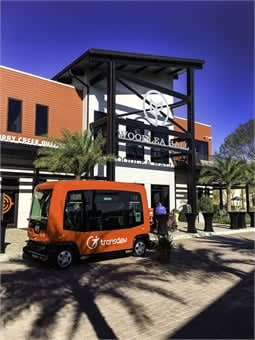
Babcock Ranch will serve as a living laboratory on the development of the mobility-as-a-service (MaaS) platform.
“We recognize that progress comes in increments,” said Syd Kitson, chairman/CEO of Kitson & Partners. “Americans are not going to go from one car for every driver to no cars for every household overnight. We start by making cars just one of many options for getting around town. When people can walk, bike, catch a shuttle, use their handheld device to summon an on-demand autonomous vehicle, or utilize a shared vehicle service for trips off-site, they will quickly realize they don’t really need their own car.”
For Transdev, the announcement is the culmination of rapid autonomous vehicle innovation backed by key industry partnerships that have helped the company emerge as an early leader in all aspects of autonomous operations. A partnership with the Renault-Nissan Alliance was agreed to earlier this year. Transdev is also partnering with Delphi on two open-road autonomous networks in Normandy and the Parisian suburbs of France.
APTA EXPO Booth # 3141
More New Mobility

From Hardware to Digital Partner: Luminator Charts Its Next Chapter
CEO Magnus Friberg discusses Luminator’s shift toward becoming a digital partner, the growing importance of software and interoperability, and how AI can help agencies improve operations and passenger experience.
Read More →
Biz Briefs: Alstom Lands Canadian Contract, LYT to Supply California TSP, and More
In METRO's latest installment, we take a look at recent news from Complete Coach Works, Beep, FlixBus, and more partnerships making headlines across the transportation sector.
Read More →
CharterUP’s Armir Harris on Technology, AI, and the Future of Group Mobility
In a recent episode of METROspectives, CharterUP Founder/CEO Armir Harris discussed the company’s evolution from an online charter bus marketplace into a technology platform supporting public- and private-sector mobility and much more.
Read More →
Jacksonville’s NAVI Project Charts a New Course for Autonomous Public Transportation
Through its NAVI program, JTA is showing how autonomous vehicles, intelligent infrastructure, and coordinated operations can work together to deliver everyday public transportation.
Read More →
Biz Briefs: Luminator Marks Milestone and More
From manufacturers and suppliers to transit agencies and motorcoach operators, these updates offer a snapshot of the projects, partnerships and business moves driving the industry forward.
Read More →
New Tricks for Old Bureaucracies: Joshua Schank on Making Transit Innovation Stick
Former LA Metro Chief Innovation Officer Joshua Schank discusses why good ideas aren't enough, how transit agencies can overcome resistance to change, and why today's challenges demand more innovation.
Read More →
How DART's GoPass Is Redefining Regional Mobility
Serving 14 transit agencies, GoPass simplifies multimodal travel by allowing riders to plan, pay for, and manage an entire trip through one app.
Read More →
Biz Briefs: OCTA Taps Clean Energy for Hydrogen Station, Stadler to Supply Via Rail Vehicles, and More
From manufacturers and suppliers to transit agencies and motorcoach operators, these updates offer a snapshot of the projects, partnerships and business moves driving the industry forward.
Read More →CharterUP Expands Into New Mobility and Autonomous Transportation
Vice President of New Mobility Stephen Joos discusses how CharterUP is leveraging its nationwide transportation network, technology platform, and autonomous vehicle partnerships to expand into workforce mobility, campus shuttles, and transit solutions.
Read More →
METRO Magazine Announces 2026 Innovative Solutions Awards Winners
Projects Recognized for Advancing Mobility Through Technology, Accessibility, Workforce Innovation, and Operational Excellence
Read More →