TransLink's Mayors' Council Calls on Voters to Help 'Save Transit'
Metro Vancouver residents can visit the Access for Everyone website, enter their name, postal code, and email, and a letter will be sent to their local candidates and provincial party leaders urging them to invest in public transit and avoid cuts to services.
TransLink currently faces a structural deficit of over $600 million and with no new funding committed to date by government, TransLink is preparing to make significant cuts to service that will have catastrophic effects throughout the region if new funding is not committed.
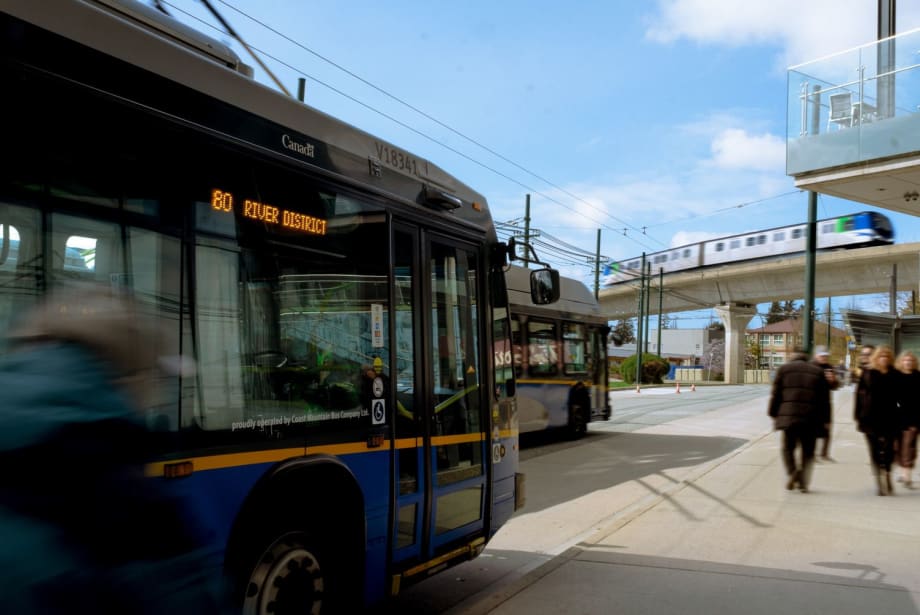
Photo: TransLink
3 min to read
The TransLink Mayors’ Council on Regional Transportation and various community and business organizations are launching a letter-writing campaign aimed at the main political parties running in the October 19 provincial election.
“The transit funding model is broken, and we are facing drastic cuts to service that will devastate our region if new funding is not identified,” said Mayor Brad West, Chair of the Mayors’ Council. “That is why we are asking the public to reach out to their local candidates and tell them to do the right thing and save transit in Metro Vancouver.”
Ad Loading...
Transit Needed in Vancouver
Metro Vancouver residents can visit the Access for Everyone website, enter their name, postal code, and email, and a letter will be sent to their local candidates and provincial party leaders urging them to invest in public transit and avoid cuts to services.
A new survey shows that over 70% of Metro Vancouver residents believe transit is an important issue in the upcoming provincial election.
The poll, commissioned by the Mayors’ Council in August 2024, also confirms residents believe the provincial government has the greatest responsibility among all levels of government to fund transit, while 84% of respondents agree that investing in public transit is essential to keep up with Metro Vancouver’s growing population.
Facing Funding Issues
TransLink currently faces a structural deficit of over $600 million and with no new funding committed to date by government, TransLink is preparing to make significant cuts to service that will have catastrophic effects throughout the region if new funding is not committed.
Cuts include potentially shutting down all bus service after 8 p.m.; cutting most bus service in communities such as Langley, the North Shore, Maple Ridge, and Delta; and reducing SkyTrain service by 30%.
Ad Loading...
Despite TransLink making significant cost cutting measures, it is still not nearly enough to address the deficit.
In the survey, 71% of respondents were concerned about these potential cuts, including 31% who are “very concerned.”
Seventy-two percent of respondents would be somewhat or very upset if the provincial government failed to save transit.
Recently, the Mayors’ Council sent an open letter to B.C. political party leaders calling for them to commit to immediate funding for TransLink post-election in order to roll out the first phase of the Access for Everyone transit expansion plan starting in April 2025
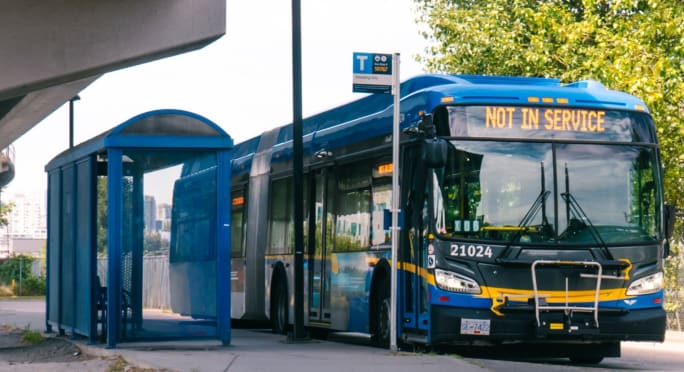
Photo: TransLink
Building on the Call for Funding
Recently, the Mayors’ Council sent an open letter to B.C. political party leaders calling for them to commit to immediate funding for TransLink post-election in order to roll out the first phase of the Access for Everyone transit expansion plan starting in April 2025, and to create a permanent $3.4-billion-per-year transit fund indexed to population growth and inflation.
The Access for Everyone Plan includes doubling bus service over the next decade, building nine new bus rapid transit lines, investing in vital new projects such as extending SkyTrain to UBC, and improving the region's major road network.
Ad Loading...
Organizations from around the region have joined the Mayors’ Council in calling for transit investment, emphasizing how important transit is to the region.
Bus Business Consultants founder Brian Dickson shares lessons on leadership, organizational health, and creating options for long-term success in a changing transportation industry.
The proposed agreement calls for a 50% increase in bus service in Everett, a new microtransit zone, continued paratransit service, and the transfer of Everett Transit operations to Community Transit.
From breaking down data silos to preparing for AI, Strada360 CEO Steve Lassey discusses how transit agencies can use technology to improve operations, customer information, and long-term decision-making.
In this edition, we also spotlight recent personnel moves at STV, the Eno Center for Transportation, and more, highlighting the people taking on new roles across the transportation industry.
The plan outlines investments in trolley modernization, new Metro and Regional Rail vehicles, accessible stations, and more frequent bus and rail service.
The federal agency closed its remaining special directive to the Massachusetts Department of Public Utilities following a safety review that began in 2022.
The “Buses Mean Business” report examines the transit bus manufacturing industry’s economic footprint, supply chain, and rising demand for vehicle replacements.
Hosted by the COTA from September 10 to 13, the Summit carried the theme “Celebrating 10 Years of Excellence, Leadership, and Impact,” with every part of the program honoring the people, agencies, and partners who built LIT over its first decade.
In this edition, we also cover recent appointments and announcements at the Wabtec, SilverRide, HNTB, and more, showcasing the individuals helping to shape the future of transportation.