



TSA, Amtrak to test suicide vest detection devices at Penn Station
The passive system triggers an alarm if an individual carrying/wearing a person-borne improvised explosive device passes by the mechanism.

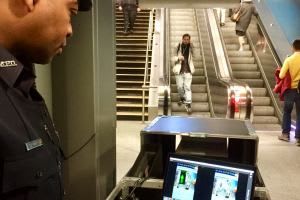
The passive system triggers an alarm if an individual carrying/wearing a person-borne improvised explosive device passes by the mechanism. Photo: TSA

The Transportation Security Administration (TSA) is partnering with Amtrak to test new security technology that can help officials detect whether an individual is concealing an improvised explosive device such as a suicide vest. The testing of the equipment is taking place inside New York’s Pennsylvania Station in the Amtrak concourse section of the station.
The passive system, known as a stand-off explosive detection unit, triggers an alarm if an individual carrying/wearing a person-borne improvised explosive device (PBIED) passes by the mechanism. It is a type of screening technology that can be used by Amtrak and mass transit agencies to detect potential threats — metallic or non-metallic — by identifying objects that block the naturally-occurring emissions emitted by a person’s body. No radiation of any kind is emitted by the unit, and no anatomical details of a person are displayed. The operator of the equipment sees either a green image of a person, known as a “green ghost,” alongside of the actual image of the individual or a color-indicator bar overlay, depending on which model of the technology is being used.
The use of such a device enables a rail or transit agency to help safeguard against terrorist threats in the mass transit environment. It is operated by employees of the agency, not by TSA. TSA is, however, supplying two models of the equipment for the purposes of the demonstration. One model is mounted on a tripod and another is contained in a trunk.
The equipment is mobile, which allows agencies to easily relocate it to different stations. Users operate it via a laptop computer in the station. The image that appears on the laptop reveals concealed objects that block naturally occurring body emissions and indicate the location and size of those objects on a green image of an individual.
TSA has been working with several passenger rail and transit agencies as test beds on demonstrations of this type of security equipment, including Amtrak, New Jersey Transit, the San Francisco Bay Area Rapid Transit District, the Los Angeles Sheriff’s Department and the Los Angeles Metropolitan Transit Authority.
More Security and Safety
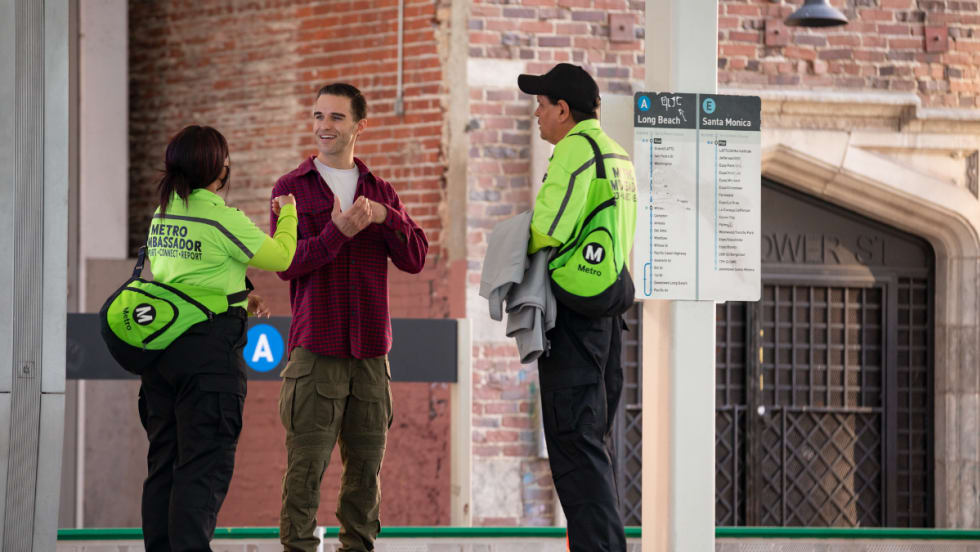
LA Metro Reports 57% Decline in Homelessness on Transit System Since 2024
The agency's latest homelessness count offers new data on how care-based services and cross-sector partnerships can complement traditional transit security strategies.
Read More →
FTA Launches 'Transit Moves America' Dashboard to Highlight Agency Safety and Performance
The online dashboard transforms National Transit Database information into a public-facing resource that allows users to compare transit agencies on key operational and safety metrics.
Read More →
LA Metro Marks Banner Year, Sets Ambitious Goals for New Fiscal Year
Incoming LA Metro Board Chair and Los Angeles Mayor Karen Bass joined outgoing Board Chair Fernando Dutra and LA Metro CEO Stephanie Wiggins to review accomplishments from fiscal year 2026, which included the opening of new rail extensions, advancement of major transit projects, expanded safety programs, and new rider amenities.
Read More →
Building the Next Generation of Transit Technology
In this edition of METROspectives, Luminator CEO Magnus Friberg discusses the company's transformation, the growing role of AI and software, and what's next for transit technology.
Read More →
TTC Launches Camera Pilot to Curb Illegal Passing of Streetcars
During the pilot, the cameras will measure how often illegal streetcar passing occurs and test the technology's reliability for future automated enforcement.
Read More →
Biz Briefs: Masabi Teams with St. Louis Metro and More
In METRO's latest installment, we take a look at recent news from Transdev, Hitachi, and more partnerships making headlines across the transportation sector.
Read More →
Metra Begins Drone Pilot Project to Boost Safety and Security
The project is funded through a $620,000 grant from FEMA’s Transit Security Grant Program, which provides transit agencies with funding for projects intended to protect critical transportation infrastructure and the traveling public.
Read More →
Building the Next Generation of Transit Technology
In this edition of METROspectives, Luminator CEO Magnus Friberg discusses the company's transformation, the growing role of AI and software, and what's next for transit technology.
Read More →
APTA Recognizes Excellence in Rail Safety and Security at 2026 Rail Conference
Nominations are evaluated on four criteria: effectiveness, benefit level, innovation, and transferability.
Read More →
Biz Briefs: Endera Delivers to California, Safety Vision Teams with San Antonio's VIA, and More
From manufacturers and suppliers to transit agencies and motorcoach operators, these updates offer a snapshot of the projects, partnerships and business moves driving the industry forward.
Read More →