




RELATED: City of Las Vegas to study IoT impact on transportation
U. of Nevada, Reno, Filament partner for autonomous vehicle project
The smart city project is designed to improve safety and communication between vehicles and surrounding infrastructure.
April 23, 2019
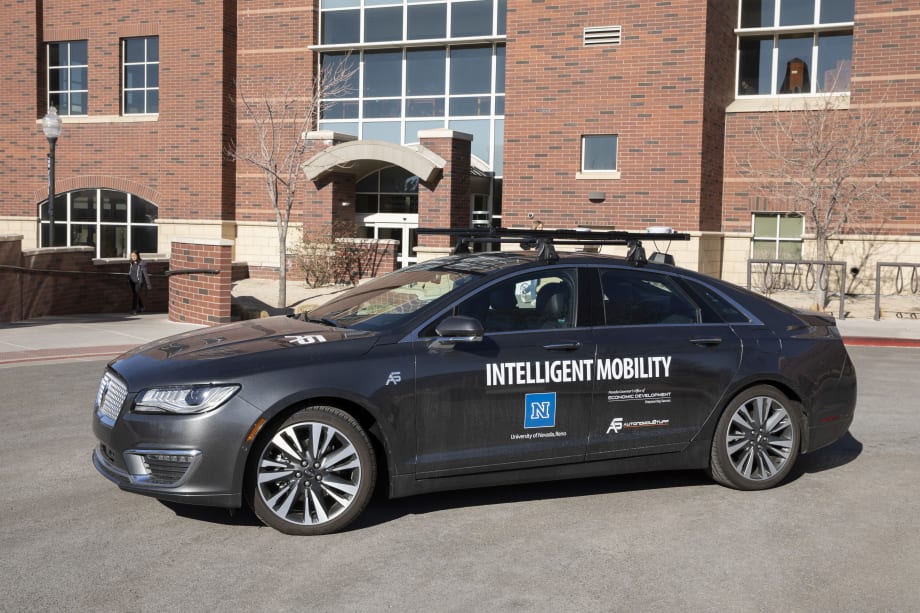
The state of Nevada, with the support and commitment of its research universities, industries, and startups, has established itself as a premier location for innovative vehicle and transportation technologies.
Filament
2 min to read
The state of Nevada, with the support and commitment of its research universities, industries, and startups, has established itself as a premier location for innovative vehicle and transportation technologies.
Filament
Filament, provider of comprehensive enterprise blockchain solutions for the Internet of Things (IoT), is working with the University of Nevada, Reno’s Intelligent Mobility initiative to develop a new standard based on blockchain IoT technology for attested data integrity between autonomous vehicles and road infrastructure. The smart city project is being conducted through the University’s Nevada Center for Applied Research (NCAR) and is designed to improve safety and communication between autonomous connected vehicles and surrounding infrastructure with LIDAR and dedicated short-range communications (DSRC) devices mounted at intersections.
“The growth in the number of connected vehicles on roads will lead to an increase in the number of IoT devices, which can potentially create vulnerabilities,” said Carlos Cardillo, director of the Nevada Center for Applied Research which facilitates the Intelligent Mobility initiative. “Working with Filament as part of Intelligent Mobility will help us to create and validate secured data generated from the many connected LIDAR devices including those in autonomous vehicles that will soon be a common feature in our cities and towns. We believe this can result in a new set of data integrity standards that others can follow when rolling out their own initiatives.”
The university will begin simulated testing of Filament’s Blocklet® technology, with plans to soon integrate the technology into both an autonomous vehicle and the sensor infrastructure placed along defined routes to deliver a trustworthy record of events, enabling attested data exchange via blockchain transactions.
The state of Nevada, with the support and commitment of its research universities, industries, and startups, has established itself as a premier location for innovative vehicle and transportation technologies. Supported by the Nevada Governor's Office of Economic Development, the University of Nevada, Reno’s Intelligent Mobility is testing synchronized mobility concepts and gathering data in real-world, “Living Lab” settings. A vehicle-to-infrastructure (V2I, also known as V2X) communication project demonstrating the security of data sent to-and-from autonomous vehicles and street-side infrastructure using blockchain technology is expected to be completed in the first half of 2019.
Filament’s Blocklet™ products provide blockchain native tools and technology for enterprises and industrial corporations, enabling them to securely process and record transactions directly from IoT devices, secure RFID tags, vehicles, manufacturing equipment, and other connected machines, ensuring digital trust from the edge to drive smart contracts, automation, compliance, and new revenue streams.
More Technology

From Hardware to Digital Partner: Luminator Charts Its Next Chapter
CEO Magnus Friberg discusses Luminator’s shift toward becoming a digital partner, the growing importance of software and interoperability, and how AI can help agencies improve operations and passenger experience.
Read More →
Beyond the Checklist: A Structured Approach to Transit Maintenance
Reliability-Centered Maintenance helps transit agencies move beyond routine checklists to focus limited resources on the assets and failures that have the greatest impact on safety, reliability, and service.
Read More →
NJ TRANSIT Advances Bus Technology Upgrades Across Statewide Fleet
More than 1,500 buses now feature upgraded technology designed to improve arrival predictions and provide free Wi-Fi, with deployment expected to reach nearly 2,000 buses by the end of 2026.
Read More →

Building a Flexible Path to Transit Electrification
John Hroncich discusses BAE Systems’ modular and scalable approach, lessons learned from decades of real-world operations, and how agencies can identify electrification strategies that fit their fleets.
Read More →
Biz Briefs: Alstom Lands Canadian Contract, LYT to Supply California TSP, and More
In METRO's latest installment, we take a look at recent news from Complete Coach Works, Beep, FlixBus, and more partnerships making headlines across the transportation sector.
Read More →
Sponsored•September 8, 2026
From Legacy Silos to Conversational Intelligence
What if transit leaders could ask any operational question and get a trusted answer in seconds? Conversational AI is transforming how agencies use their data.
Read More →
USDOT Announces Rail Vehicle Replacement Grants, Chattanooga AV Shuttle Funding
More than $191 million in federal funding will help three transit agencies replace aging rail vehicles and support a new autonomous shuttle service in Chattanooga.
Read More →
Bus Tech Talk: Keeping Transit Technicians Ahead of the Technology Curve
LA Metro’s Obed Mejia discusses technician training, evolving maintenance technology, fleet replacement, and strategies for getting the most out of today’s transit fleets.
Read More →
Biz Briefs: RIPTA Unveils New Frontrunners, Clevland RTA Adds New Siemens, and More
In METRO's latest installment, we take a look at recent news from Siemens, Prevost, Dodge, and more partnerships making headlines across the transportation sector.
Read More →
Why Simulating Pedestrian Movement Has Become Essential for Modern Rail Stations
Pedestrian microsimulation is helping rail planners identify bottlenecks, test station designs, and prepare complex transit hubs for growing passenger volumes.
Read More →