



U. of Wyoming enhances service with new buses, app feature
The new buses are 2017 model Gillig low-floor buses, 37 feet long, and with capacity for 32 seated passengers and many more standing.

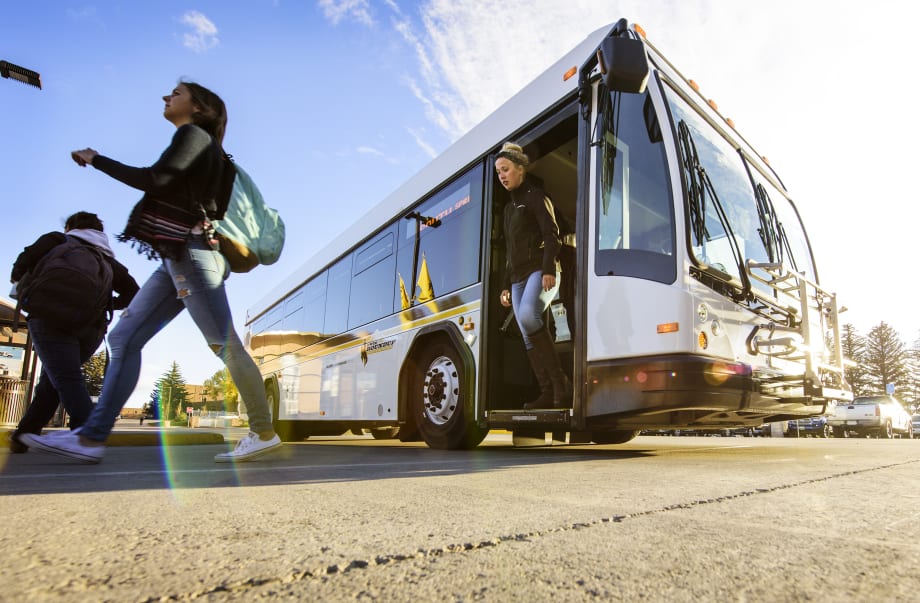
Students step off of one of UW’s two new buses at the Wyoming Union lot. UW’s transit service is available free of charge to students, employees and visitors. (UW Photo)
Students step off of one of UW’s two new buses at the Wyoming Union lot. UW’s transit service is available free of charge to students, employees and visitors. (UW Photo)
With two new buses and a new “on-demand” feature on its mobile app, University of Wyoming Transit and Parking Services has enhanced its service to the thousands of UW students and employees who use the system each day.
Visitors to campus also may use the UW bus system, free of charge, from several free parking lots near campus.
Transit and Parking Services Manager Paul Kunkel says ridership, thus far this semester, is on par with the past three years, with about 4,500 weekday passengers riding buses to and from the multitude of stops on and around campus.
“Parking is always an issue on major university campuses, but we are fortunate at UW to have a system in place that makes our campus accessible to students, employees and visitors alike,” Kunkel says. “Many people from Wyoming aren’t used to hopping on a bus, but it’s really quite easy, and we can get people to their destinations pretty quickly.”
The new buses are 2017 model Gillig low-floor buses, 37 feet long, and with capacity for 32 seated passengers and many more standing. The new buses have clean diesel engines with very low emissions, and they feature exterior bike racks for those bringing their bicycles to campus.
The $400,000-buses — funded 80 percent by federal grants and 20 percent from UW’s bus replacement fund — take the place of two 14-year-old buses that were in relatively poor condition. UW has a fleet of 27 buses and 11 minivans.
For all UW bus routes, riders are encouraged to use TransLoc, a mobile app that provides real-time tracking information for all buses on route and is available for free, both on the web and for most smartphone platforms. This fall, an “on-demand” module has been added, allowing passengers to request rides similar to how Lyft/Uber work. Passengers can use the on-demand functionality on demand-response routes such as SafeRide, Night Owl and LaramieLink Dial-A-Ride.
“With this new service, the customer experience is improved, and efficiencies are gained in the dispatch process,” Kunkel says.
More New Mobility

From Hardware to Digital Partner: Luminator Charts Its Next Chapter
CEO Magnus Friberg discusses Luminator’s shift toward becoming a digital partner, the growing importance of software and interoperability, and how AI can help agencies improve operations and passenger experience.
Read More →
Biz Briefs: Alstom Lands Canadian Contract, LYT to Supply California TSP, and More
In METRO's latest installment, we take a look at recent news from Complete Coach Works, Beep, FlixBus, and more partnerships making headlines across the transportation sector.
Read More →
CharterUP’s Armir Harris on Technology, AI, and the Future of Group Mobility
In a recent episode of METROspectives, CharterUP Founder/CEO Armir Harris discussed the company’s evolution from an online charter bus marketplace into a technology platform supporting public- and private-sector mobility and much more.
Read More →
Jacksonville’s NAVI Project Charts a New Course for Autonomous Public Transportation
Through its NAVI program, JTA is showing how autonomous vehicles, intelligent infrastructure, and coordinated operations can work together to deliver everyday public transportation.
Read More →
Biz Briefs: Luminator Marks Milestone and More
From manufacturers and suppliers to transit agencies and motorcoach operators, these updates offer a snapshot of the projects, partnerships and business moves driving the industry forward.
Read More →
New Tricks for Old Bureaucracies: Joshua Schank on Making Transit Innovation Stick
Former LA Metro Chief Innovation Officer Joshua Schank discusses why good ideas aren't enough, how transit agencies can overcome resistance to change, and why today's challenges demand more innovation.
Read More →
How DART's GoPass Is Redefining Regional Mobility
Serving 14 transit agencies, GoPass simplifies multimodal travel by allowing riders to plan, pay for, and manage an entire trip through one app.
Read More →
Biz Briefs: OCTA Taps Clean Energy for Hydrogen Station, Stadler to Supply Via Rail Vehicles, and More
From manufacturers and suppliers to transit agencies and motorcoach operators, these updates offer a snapshot of the projects, partnerships and business moves driving the industry forward.
Read More →CharterUP Expands Into New Mobility and Autonomous Transportation
Vice President of New Mobility Stephen Joos discusses how CharterUP is leveraging its nationwide transportation network, technology platform, and autonomous vehicle partnerships to expand into workforce mobility, campus shuttles, and transit solutions.
Read More →
METRO Magazine Announces 2026 Innovative Solutions Awards Winners
Projects Recognized for Advancing Mobility Through Technology, Accessibility, Workforce Innovation, and Operational Excellence
Read More →