



Valley Metro awarded $1M to develop app integrating ticketing, trip planning
Agency is partnering with RouteMatch Software, transit industry technology provider, as well as Arizona State University, Lyft and the city of Phoenix DOT to create the passenger-based app.


Valley Metro
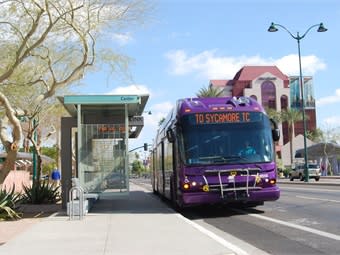
Valley Metro
Valley Metro, the regional provider of bus, rail and Dial-a-Ride services, received a
$1 million Mobility on Demand (MOD) project grant from the FTA to develop a mobile app that will integrate mobile ticketing and multi-modal trip planning information.
The agency is partnering with RouteMatch Software, transit industry technology provider, as well as Arizona State University (ASU), Lyft and the city of Phoenix Public Transit Department to create the passenger-based app.
“It’s exciting to receive a nationally-competitive grant, which serves as seed money to build upon our Ridekick™ app that can eventually be shared with transit agencies across the U.S.,” said Scott Smith, Valley Metro Interim CEO. “Alongside our mobility platform partners, we’ll be adding features such as real-time information, fare purchasing and an optimized trip planner.”
Valley Metro will use an open data platform design to allow other public transportation agencies to use the application, adjusting it to meet the needs of their respective service areas.
Seeking to bridge the gap between public transportation systems and app-based transportation companies (e.g. Lyft, Uber), the mobile app will create a seamless and efficient travel experience for riders. Within the next 12 months, the features of the app will be completed in two phases beginning with enhancements to Valley Metro’s current app, Ridekick.
Phase I will include mobile ticket purchasing and links to the mobile applications for Lyft and GR:D Bike Share reservations. Users will be able to purchase transit fare, as well as reserve a GR:D bike using a single payment method, then transition to the Lyft mobile app for a reservation allowing a rider to complete their transit trip. In addition, Wi-Fi and beacon technology between the ASU campuses in Tempe and Phoenix will allow for seamless fare validation and added safety features, such as incident reporting.
Phase II will build upon those features to include real-time data alerts of bus and light rail arrivals, on-demand reservation and cancellation of paratransit trips, and single fare payment capabilities for transit, bikeshare and ridesharing companies.
RouteMatch is serving as a key partner to both co-develop and contribute in-kind technologies for the creation of the platform. Included in this are beacon technologies for Valley Metro’s light rail and bus systems and on demand paratransit trip management technologies to facilitate mobility among riders with disabilities, especially among the visually and hearing impaired. The city of Phoenix Department of Transportation will provide the core data for vehicles, routes, and fare collection, and ASU will lead safety and security and ASU shuttle coordination. Transportation network companies will additionally participate, providing “first mile, last mile” connections from transit hubs to riders’ final destinations.
The application will be free to download on all major mobile devices and users will have the ability to create personalized accounts suitable to their needs. A recent rider survey indicates that 65 percent of Valley Metro riders use smart phone devices.
The MOD program is a new U.S. Department of Transportation initiative led by the Intelligent Transportation Systems Joint Program Office and the FTA. MOD is an innovative, user-friendly approach that leverages emerging mobility services, integrated transit networks and operations and real-time data to allow for safe and informed mobility options.
More New Mobility

From Hardware to Digital Partner: Luminator Charts Its Next Chapter
CEO Magnus Friberg discusses Luminator’s shift toward becoming a digital partner, the growing importance of software and interoperability, and how AI can help agencies improve operations and passenger experience.
Read More →
Biz Briefs: Alstom Lands Canadian Contract, LYT to Supply California TSP, and More
In METRO's latest installment, we take a look at recent news from Complete Coach Works, Beep, FlixBus, and more partnerships making headlines across the transportation sector.
Read More →
CharterUP’s Armir Harris on Technology, AI, and the Future of Group Mobility
In a recent episode of METROspectives, CharterUP Founder/CEO Armir Harris discussed the company’s evolution from an online charter bus marketplace into a technology platform supporting public- and private-sector mobility and much more.
Read More →
Jacksonville’s NAVI Project Charts a New Course for Autonomous Public Transportation
Through its NAVI program, JTA is showing how autonomous vehicles, intelligent infrastructure, and coordinated operations can work together to deliver everyday public transportation.
Read More →
Biz Briefs: Luminator Marks Milestone and More
From manufacturers and suppliers to transit agencies and motorcoach operators, these updates offer a snapshot of the projects, partnerships and business moves driving the industry forward.
Read More →
New Tricks for Old Bureaucracies: Joshua Schank on Making Transit Innovation Stick
Former LA Metro Chief Innovation Officer Joshua Schank discusses why good ideas aren't enough, how transit agencies can overcome resistance to change, and why today's challenges demand more innovation.
Read More →
How DART's GoPass Is Redefining Regional Mobility
Serving 14 transit agencies, GoPass simplifies multimodal travel by allowing riders to plan, pay for, and manage an entire trip through one app.
Read More →
Biz Briefs: OCTA Taps Clean Energy for Hydrogen Station, Stadler to Supply Via Rail Vehicles, and More
From manufacturers and suppliers to transit agencies and motorcoach operators, these updates offer a snapshot of the projects, partnerships and business moves driving the industry forward.
Read More →CharterUP Expands Into New Mobility and Autonomous Transportation
Vice President of New Mobility Stephen Joos discusses how CharterUP is leveraging its nationwide transportation network, technology platform, and autonomous vehicle partnerships to expand into workforce mobility, campus shuttles, and transit solutions.
Read More →
METRO Magazine Announces 2026 Innovative Solutions Awards Winners
Projects Recognized for Advancing Mobility Through Technology, Accessibility, Workforce Innovation, and Operational Excellence
Read More →