



Westchester County Selects GMV for ITS Solution
In this project GMV will deploy the new ecosystem of ITS products for public transport, GMV Hub and ITS Suite, which it has been developing in recent years for the European market.

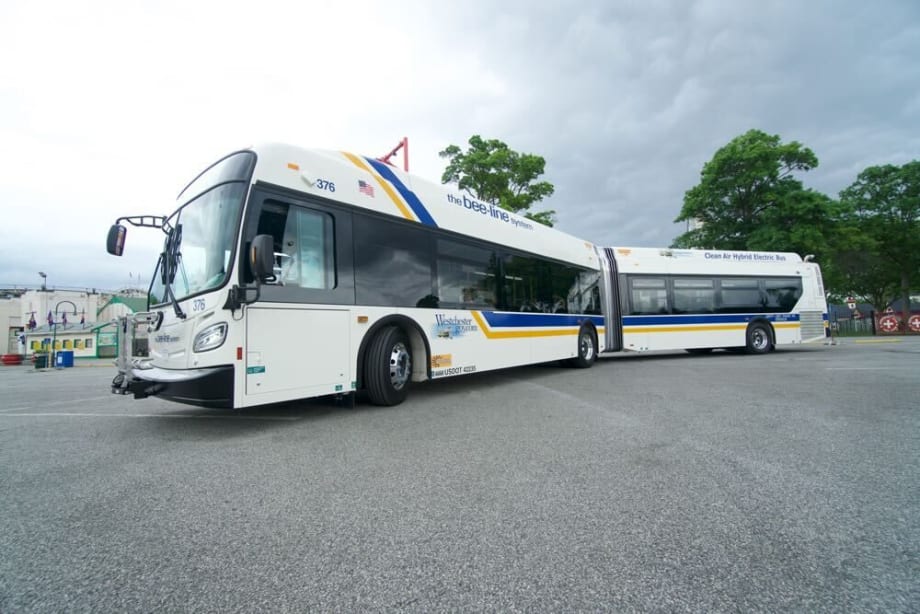
On each Bee Line bus, the company will install the GMV Hub, a rugged vehicle computer that is specifically designed and built by GMV for transit systems to ensure robust performance and long service life.
Photo: Bee Line/GMV
Following a competitive procurement, New York’s Westchester County selected GMV to upgrade its transit technology platform to deliver more efficient service, better oversight of operations, and improve the customer experience on Bee Line buses.
Brining ITS to Westchester County
In this project GMV will deploy the new ecosystem of ITS products for public transport, GMV Hub (EP200) and ITS Suite, which it has been developing in recent years for the European market and has successfully deployed in ATM Barcelona, Xunta de Galicia, Granada, and Baix Llobregat.
On each Bee Line bus, the company will install the GMV Hub, a rugged vehicle computer that is specifically designed and built by GMV for transit systems to ensure robust performance and long service life.
The GMV Hub uses an open architecture to control a range of onboard systems including GPS, bus operator touchscreen, automatic passenger counters, next stop announcements, and a dedicated sensor for precision tracking in indoor bus depots.
The GMV Hub also functions as a digital video recorder (DVR) to store footage from security cameras on each bus. The multifunction device significantly reduces the project’s equipment cost and delivers great value to the County, according to GMV officials.
How GMV’s ITS Suite Works
ITS Suite is GMV’s cloud native software that delivers a suite of applications from GMV and its partners to enhance the County’s visibility and control of their bus operations.
Each app is focused on a key transit function, and all apps are integrated for real-time data exchange:
Planning and scheduling software will generate an optimized set of routes and schedules to serve customers as efficiently as possible and reduce operating costs.
Dispatch software enables control center staff to monitor the entire fleet and take quick action to keep buses moving.
Garage management software will choreograph bus movements inside the depots to ensure vehicles are ready for service.
Video management software enables live remote viewing of bus cameras and secure storage and playback of video evidence.
GMV uses a modern technical architecture built on cloud computing, microservices, and application program interfaces (APIs) making collaboration with other solutions possible.
More Technology

From Hardware to Digital Partner: Luminator Charts Its Next Chapter
CEO Magnus Friberg discusses Luminator’s shift toward becoming a digital partner, the growing importance of software and interoperability, and how AI can help agencies improve operations and passenger experience.
Read More →
Beyond the Checklist: A Structured Approach to Transit Maintenance
Reliability-Centered Maintenance helps transit agencies move beyond routine checklists to focus limited resources on the assets and failures that have the greatest impact on safety, reliability, and service.
Read More →
NJ TRANSIT Advances Bus Technology Upgrades Across Statewide Fleet
More than 1,500 buses now feature upgraded technology designed to improve arrival predictions and provide free Wi-Fi, with deployment expected to reach nearly 2,000 buses by the end of 2026.
Read More →

Building a Flexible Path to Transit Electrification
John Hroncich discusses BAE Systems’ modular and scalable approach, lessons learned from decades of real-world operations, and how agencies can identify electrification strategies that fit their fleets.
Read More →
Biz Briefs: Alstom Lands Canadian Contract, LYT to Supply California TSP, and More
In METRO's latest installment, we take a look at recent news from Complete Coach Works, Beep, FlixBus, and more partnerships making headlines across the transportation sector.
Read More →
From Legacy Silos to Conversational Intelligence
What if transit leaders could ask any operational question and get a trusted answer in seconds? Conversational AI is transforming how agencies use their data.
Read More →
USDOT Announces Rail Vehicle Replacement Grants, Chattanooga AV Shuttle Funding
More than $191 million in federal funding will help three transit agencies replace aging rail vehicles and support a new autonomous shuttle service in Chattanooga.
Read More →
Bus Tech Talk: Keeping Transit Technicians Ahead of the Technology Curve
LA Metro’s Obed Mejia discusses technician training, evolving maintenance technology, fleet replacement, and strategies for getting the most out of today’s transit fleets.
Read More →
Biz Briefs: RIPTA Unveils New Frontrunners, Clevland RTA Adds New Siemens, and More
In METRO's latest installment, we take a look at recent news from Siemens, Prevost, Dodge, and more partnerships making headlines across the transportation sector.
Read More →
Why Simulating Pedestrian Movement Has Become Essential for Modern Rail Stations
Pedestrian microsimulation is helping rail planners identify bottlenecks, test station designs, and prepare complex transit hubs for growing passenger volumes.
Read More →