




Read More: WMATA to Reopen 2 Orange Line Stations
WMATA Begins Rollout of New Faregates
The faregate modifications will be installed in phases with plans to retrofit faregates throughout the system over the next year.
July 25, 2023
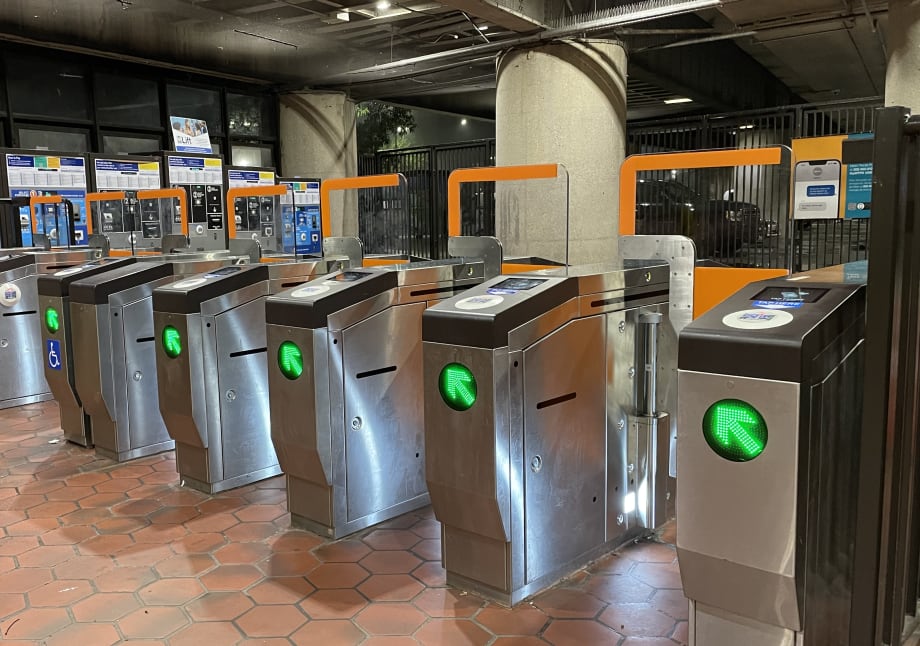
The new design includes an L-shape door panel that extends over the faregate to minimize gaps between the openings.
Photo: WMATA
2 min to read
The Washington Metropolitan Area Transit Authority (Metro) has begun installing new higher, stronger faregates at Fort Totten Station as part of a systemwide rollout.
The design improves upon the original prototype door following months of testing and modifications. The new doors are now 55 inches tall, twice as strong, and more resilient.
WMATA's Installation of Faregates
The installation at Fort Totten is expected to be completed overnight, followed by Pentagon City. The faregate modifications will be installed in phases with plans to retrofit faregates throughout the system over the next year. The first 10 stations are expected to be completed by early fall.
“Over the past several months, our team has been testing different prototypes to get to this final design. We have already seen a reduction in fare evasion and expect the higher gates will be more of a deterrent,” said Metro GM/CEO Randy Clarke. “The bottom line is fare evasion is not okay, and we will continue our efforts to ensure everyone is respecting the community’s system and each other.”
The new design includes an L-shape door panel that extends over the faregate to minimize gaps between the openings. The increase in barrier height from the original 28 to 48-inch prototype to 55 inches will also make it more difficult to jump over faregates. The new height is taller than a hockey net or nearly half the height of a standard basketball hoop.
The swing doors are made of polycarbonate which is 200 times stronger than glass, lighter weight, and more durable. The final design also includes more robust hinges and a more powerful motor to strengthen the door. As stations are retrofitted with the new barriers, Metro is also raising the height of the fencing and emergency gates.
Metro will install a single-door panel for all regular faregates, and double-door panels at the wider gates for accessibility and wheelchairs. Following Fort Totten and Pentagon City, the first phase of new faregates will be installed at Bethesda, Mt Vernon Sq, Addison Rd, Congress Heights, Wheaton, Federal Center SW, and Court House stations. Metro will notify customers prior to work beginning at stations through in-station signage and on Metro’s Faregate Retrofit Project page.
More New Mobility

From Hardware to Digital Partner: Luminator Charts Its Next Chapter
CEO Magnus Friberg discusses Luminator’s shift toward becoming a digital partner, the growing importance of software and interoperability, and how AI can help agencies improve operations and passenger experience.
Read More →
Biz Briefs: Alstom Lands Canadian Contract, LYT to Supply California TSP, and More
In METRO's latest installment, we take a look at recent news from Complete Coach Works, Beep, FlixBus, and more partnerships making headlines across the transportation sector.
Read More →
CharterUP’s Armir Harris on Technology, AI, and the Future of Group Mobility
In a recent episode of METROspectives, CharterUP Founder/CEO Armir Harris discussed the company’s evolution from an online charter bus marketplace into a technology platform supporting public- and private-sector mobility and much more.
Read More →
Jacksonville’s NAVI Project Charts a New Course for Autonomous Public Transportation
Through its NAVI program, JTA is showing how autonomous vehicles, intelligent infrastructure, and coordinated operations can work together to deliver everyday public transportation.
Read More →
Biz Briefs: Luminator Marks Milestone and More
From manufacturers and suppliers to transit agencies and motorcoach operators, these updates offer a snapshot of the projects, partnerships and business moves driving the industry forward.
Read More →
New Tricks for Old Bureaucracies: Joshua Schank on Making Transit Innovation Stick
Former LA Metro Chief Innovation Officer Joshua Schank discusses why good ideas aren't enough, how transit agencies can overcome resistance to change, and why today's challenges demand more innovation.
Read More →
How DART's GoPass Is Redefining Regional Mobility
Serving 14 transit agencies, GoPass simplifies multimodal travel by allowing riders to plan, pay for, and manage an entire trip through one app.
Read More →
Biz Briefs: OCTA Taps Clean Energy for Hydrogen Station, Stadler to Supply Via Rail Vehicles, and More
From manufacturers and suppliers to transit agencies and motorcoach operators, these updates offer a snapshot of the projects, partnerships and business moves driving the industry forward.
Read More →CharterUP Expands Into New Mobility and Autonomous Transportation
Vice President of New Mobility Stephen Joos discusses how CharterUP is leveraging its nationwide transportation network, technology platform, and autonomous vehicle partnerships to expand into workforce mobility, campus shuttles, and transit solutions.
Read More →
METRO Magazine Announces 2026 Innovative Solutions Awards Winners
Projects Recognized for Advancing Mobility Through Technology, Accessibility, Workforce Innovation, and Operational Excellence
Read More →