



WMATA Installs Solar-Powered Lights at Bus Stops
Continuing with its environment-friendly trend, the Washington Metropolitan Area Transit Authority installed three solar-powered lighting devices at several of its bus shelters and stops.

Continuing with its environment-friendly trend, the Washington Metropolitan Area Transit Authority installed three solar-powered lighting devices at several of its bus shelters and stops. The lights, activated by the push of a button that needs to be pressed every 15 minutes, were installed to increase customer safety and convenience. They may also help bus drivers better spot a passenger who is present at the stop, decreasing the number of missed pick-ups, and deter vandalism. “What we know is that people feel secure if they are in a well-lit place," said Cheryl Johnson, a spokesperson for WMATA. "Some of our bus stops at night time look dimly lit, so we thought it would be a good idea to not only light up these stops but at the same time, use something that’s environmentally friendly.” Solar Outdoor Lighting Inc. (SOL) is responsible for servicing transit communities like WMATA with what it calls the OmniLight. Several transit properties approached his company with the notions of “enhancing safety at bus stops and providing light where there is no power source available,” said Matt Hollister, SOL's transit account executive. There were concerns about a possible run-in with an insufficient energy source. “One of the things that we have to see is how these lights work in a real life condition and how much power is actually stored in the batteries, especially on a cloudy or rainy day,” Johnson said. SOL claims that many of potential complications have been addressed. “The panel will charge the battery even on a cloudy day, very similar to a person being able to get sunburned on a cloudy day," Hollister said. "You still have the appropriate UV rays that are coming through the clouds to let the panel charge the battery.” The panel converts ultraviolet rays into electrical energy and then stores the energy into a battery. A battery was also designed to provide up to seven days of backup in case there is not enough UV light available for electrical conversion. SOL also emphasized that the OmniLight is vandal resistant. The lens on the light is made of a strong polycarbonate and the protective glass on the solar panel is impact resistant, designed to take two and a half inches of hail at approximately 45 mph. “We understand that within the transit industry, there is a great deal of concern regarding vandalism," Hollister said. Several other cities, including Long Beach, Calif.; Austin, Texas; and Tampa, Fla., already installed the SOL OmniLight. The cost of a single OmniLight is about $1,200. For more information on the OmniLight, visit www.solarlighting.com.
More Management

APTA Honors 2026 Award Winners, Hall of Fame Inductees at TRANSform & EXPO
Innovations in autonomous and zero-emission transportation, standout transit systems, and industry leadership took center stage among this year's honorees.
Read More →
7 Ways to Build a Better Transit Internship Program
Lessons from DRPA/PATCO’s approach to creating a meaningful internship experience—and developing the next generation of transportation professionals.
Read More →
Scenes from APTA TRANSform & EXPO 2026
Transit leaders, manufacturers, and industry professionals gathered in Chicago to explore new technologies, share ideas, and discuss the future of public transportation.
Read More →
Building Stronger Leaders, More Resilient Transit Teams
Dr. Carol Parker Walsh discusses leadership development, employee retention, workplace culture, and preparing transit’s workforce for AI and automation.
Read More →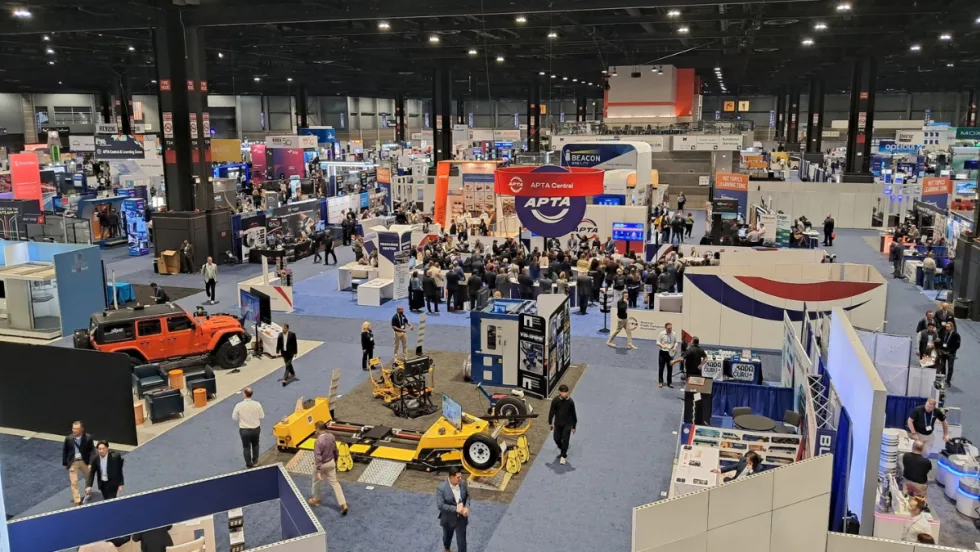
APTA 2026 TRANSform & EXPO Kicks Off in Chicago
After 45 years, APTA returns to Chicago with a focus on next-generation fleets, AI, connected transit networks, and the funding strategies shaping public transportation’s future.
Read More →
New York MTA Warns Federal Tariffs Could Add $1 Billion to Rolling Stock Costs
The agency said tariffs on specialized imported components could reduce the purchasing power of its $23 billion investment in new subway cars, railcars, and buses.
Read More →
From the Show Floor: What Happened at APTA TRANSform & EXPO 2026
See the latest product launches, partnerships, technology updates, and transit industry announcements from APTA TRANSform & EXPO in Chicago.
Read More →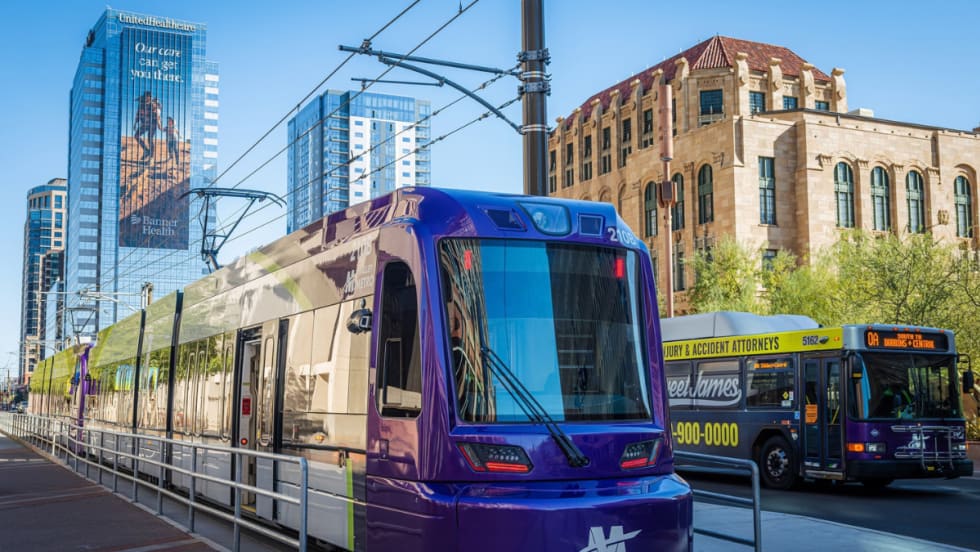
How Valley Metro Is Balancing Transit Growth With the Rider Experience
The APTA award-winning agency is pairing rapid system expansion with investments in workforce, safety, technology, and the fundamentals of transit service.
Read More →
Bus Tech Talk: Keeping Transit Technicians Ahead of the Technology Curve
In this episode of Bus Tech Talk, Complete Coach Works’ Business Development Manager Mark Hollenbeck and METRO’s Executive Editor Alex Roman sit down with Obed Mejia, Senior Technical Trainer for Bus Maintenance, at LA Metro to discuss how rapidly evolving bus technology is changing the maintenance shop — and the skills technicians need to keep pace.
Read More →
Michael Schneider Joins Paslay Group to Expand Transportation Practice
The longtime transportation executive will help Paslay Group grow its advisory and program management work across transit, highway, and other infrastructure sectors.
Read More →