



ZED Digital releases touchless fare validators
The technology can enable continued fare collection, while also enhancing driver and passenger safety.

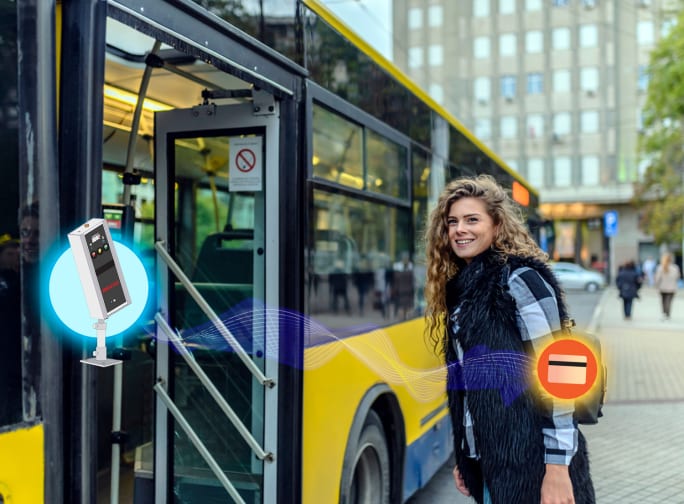
In times of social distancing, riders can see the capacity of a vehicle in real-time, so they do not board an over-crowded bus. Zed Digital
Given the critical need to stop the spread of the coronavirus in North America, transit agencies are faced with the challenges of temporary fare suspension, service reductions, higher cleaning costs, and a severe decrease in ridership. There is a need to enhance driver and rider health safety if public transportation is to continue to be viable in this new era of social distancing.
ZED Digital, a transit technology company headquartered in Columbus, Ohio, with offices in Montreal, Cleveland, Jacksonville, and Los Angeles, recently launched a patent-pending touchless fare collection technology that can enable continued fare collection and at the same time enhance driver and passenger safety.
ZIG is a smart phone based Mobile Ticketing solution that enables hands-free vehicle entry for passengers. Riders purchase tickets via smartphones using credit cards from their homes. This avoids a visit to transit centers or grocery stores to purchase tickets or tap cards. ZIG comprises of “Internet of Things” sensors that connect over-the-air with the rider’s smartphones to validate fares as they board. Riders need not wait around the validators nor touch them, thereby reducing lines.
The validators can be installed at the rear or front doors of buses and connect with a visual display unit installed up front where drivers can monitor boarding. Furthermore, drivers and control rooms can receive signals for fraud or alerts raised by fellow passengers about fraud or other unsafe activity on the bus.
ZIG has the capability to provide streaming real-time data directly from vehicles. Bluetooth sensors stream real-time bus location, passenger capacity, speed, origin, and destination of trips in seconds directly to the cloud. In times of social distancing, riders can see the capacity of a vehicle in real-time, so they do not board an over-crowded bus.
The solution is significantly less bulky than most fare validation solutions currently in the market. The ZIG validators are about the size of a smartphone, making them a flexible solution that can be affixed almost anywhere. Moreover, they are three to 10 times less expensive than fareboxes and are quick to install.
More Technology

From Hardware to Digital Partner: Luminator Charts Its Next Chapter
CEO Magnus Friberg discusses Luminator’s shift toward becoming a digital partner, the growing importance of software and interoperability, and how AI can help agencies improve operations and passenger experience.
Read More →
Beyond the Checklist: A Structured Approach to Transit Maintenance
Reliability-Centered Maintenance helps transit agencies move beyond routine checklists to focus limited resources on the assets and failures that have the greatest impact on safety, reliability, and service.
Read More →
NJ TRANSIT Advances Bus Technology Upgrades Across Statewide Fleet
More than 1,500 buses now feature upgraded technology designed to improve arrival predictions and provide free Wi-Fi, with deployment expected to reach nearly 2,000 buses by the end of 2026.
Read More →

Building a Flexible Path to Transit Electrification
John Hroncich discusses BAE Systems’ modular and scalable approach, lessons learned from decades of real-world operations, and how agencies can identify electrification strategies that fit their fleets.
Read More →
Biz Briefs: Alstom Lands Canadian Contract, LYT to Supply California TSP, and More
In METRO's latest installment, we take a look at recent news from Complete Coach Works, Beep, FlixBus, and more partnerships making headlines across the transportation sector.
Read More →
From Legacy Silos to Conversational Intelligence
What if transit leaders could ask any operational question and get a trusted answer in seconds? Conversational AI is transforming how agencies use their data.
Read More →
USDOT Announces Rail Vehicle Replacement Grants, Chattanooga AV Shuttle Funding
More than $191 million in federal funding will help three transit agencies replace aging rail vehicles and support a new autonomous shuttle service in Chattanooga.
Read More →
Bus Tech Talk: Keeping Transit Technicians Ahead of the Technology Curve
LA Metro’s Obed Mejia discusses technician training, evolving maintenance technology, fleet replacement, and strategies for getting the most out of today’s transit fleets.
Read More →
Biz Briefs: RIPTA Unveils New Frontrunners, Clevland RTA Adds New Siemens, and More
In METRO's latest installment, we take a look at recent news from Siemens, Prevost, Dodge, and more partnerships making headlines across the transportation sector.
Read More →
Why Simulating Pedestrian Movement Has Become Essential for Modern Rail Stations
Pedestrian microsimulation is helping rail planners identify bottlenecks, test station designs, and prepare complex transit hubs for growing passenger volumes.
Read More →