



New York City Transit to modernize service status notices
Will provide a much deeper level of detail, with seven new categories of service status conveyed on a line-by-line basis.

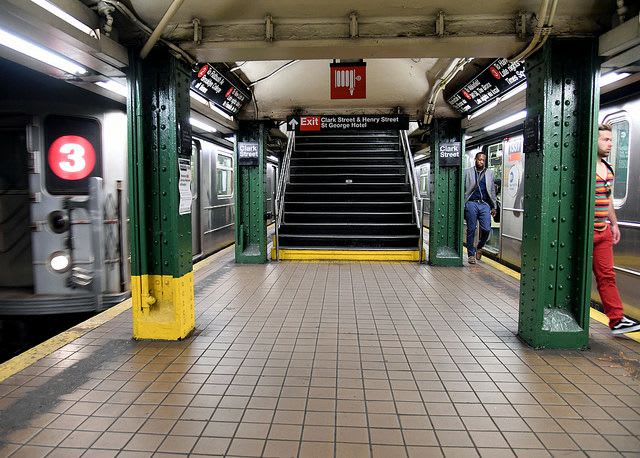
In the system being retired, there are only several broad categories and multiple subway lines are grouped together by corridor, making it difficult to tell at a glance exactly what line is impacted in what manner.
Marc A. Hermann-MTA New York City Transit
In the system being retired, there are only several broad categories and multiple subway lines are grouped together by corridor, making it difficult to tell at a glance exactly what line is impacted in what manner.
Marc A. Hermann-MTA New York City Transit
As part of an ongoing commitment to provide more transparent and useful information to the riding public, MTA New York City Transit’s “Service Status” notices on its website and on other channels will provide a much deeper level of detail, with seven new categories of service status conveyed on a line-by-line basis.
In the system being retired, there are only several broad categories and multiple subway lines are grouped together by corridor, making it difficult to tell at a glance exactly what line is impacted in what manner.
“These changes provide customers targeted, at-a-glance information to help them quickly understand exactly what’s happening on their line,” said NYC Transit President Andy Byford. “It’s always our goal to improve the quality of our real-time information and this is another step forward in that ongoing process.”
In an effort led by the recently established chief customer officer, Sarah Meyer, NYC Transit has been working to enhance the information provided to help customers assess their options when planning their trips, on multiple channels such as mta.info, Twitter, car and station announcements, and station signage. As the agency gets more robust real-time data from modernizing train technologies, the agency says it will allow the agency to not only continue to improve service, but also improve the usefulness of information provided to customers as they plan their travel.
The new language will describe the specific changes being made to train service on an individual line basis. For example, instead of reading “Service Change,” the Service Status Box will use categories such as “Part Suspended,” “Trains Rerouted,” or “Express to Local” and show exactly what line is impacted in that manner.
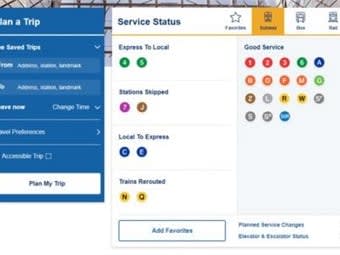
MTA service status box for subways
New service status categories include:
Part Suspended - Situations where a major disruption causes multiple stations to lose service in either direction. This could apply when a line is split in half or service ends before a train’s normal terminal.
Trains Rerouted - Situations when a train is sent over a different route than it normally travels for that time of day.
Local to Express - Situations when a train that normally runs local uses the express track on its normal route.
Express to Local - Situations when a train that normally runs express uses the local tracks on its normal route.
Stations Skipped - Situations where trains continuously skip a station in one direction or come through a station without stopping. For example, this could be used for police activity or medical assistance but not typical skips/holds to help keep the train on schedule.
Slow Speeds - Situations where trains move at slower than normal speeds but make all their normal stops. This would be used in situations where workers are on the tracks or we conduct track inspections.
Multiple Impacts - Situations where multiple status options apply to a single disruption or multiple disruptions impact a line.
More Rail

New York MTA Advances Final Contract for Second Avenue Subway Expansion
Contract Four is the largest in the Second Avenue Subway Phase 2 project and includes construction of station infrastructure, tracks, and signals for the subway expansion, MTA officials said. Work on Contract Four will begin in 2027.
Read More →
San Diego MTS Breaks Monthly Trolley Ridership Record
Agency officials said July’s ridership indicates MTS’s continued recovery from the pandemic.
Read More →
Report Examines NJ TRANSIT Reliability, Funding Challenges
The Garden State Initiative analysis examines the roles of Amtrak infrastructure, fleet management, and agency operations while recommending a more performance-based approach to improving reliability.
Read More →
Stadler, CapMetro Sign Long-Term Rail Fleet Support Agreement
Beginning in 2027, Stadler will provide on-site technical expertise, spare parts support, training, and obsolescence management to help extend the reliability and longevity of CapMetro’s GTW fleet.
Read More →
Biz Briefs: Alstom Lands Canadian Contract, LYT to Supply California TSP, and More
In METRO's latest installment, we take a look at recent news from Complete Coach Works, Beep, FlixBus, and more partnerships making headlines across the transportation sector.
Read More →
CATS Gold Line Marks 5 Years of Service, 2.8M Passenger Trips
With a six-mile expansion planned, the Charlotte streetcar is positioned to connect more neighborhoods and major transit hubs across the region.
Read More →
Why Simulating Pedestrian Movement Has Become Essential for Modern Rail Stations
Pedestrian microsimulation is helping rail planners identify bottlenecks, test station designs, and prepare complex transit hubs for growing passenger volumes.
Read More →
Amtrak Begins Major Construction at New York’s Sunnyside Yard
The new maintenance facility will support Amtrak’s Airo trainsets while improving maintenance efficiency and turnaround times in New York.
Read More →
Chicago Leaders Unveil Plans for O’Hare Airport Express Train
The privately developed project would offer a 15-minute trip between downtown and O’Hare’s Terminal 2, with trains operating every 15 minutes on a dedicated track. The service would use battery-electric trains and three existing freight rail rights-of-way.
Read More →
OCTA Maps Out 30-Year Strategy to Protect Coastal Rail Corridor
The draft feasibility report identifies strategies to protect the coastal rail line for decades as the agency continues near-term stabilization and sand placement efforts.
Read More →