



Funding Gap Could Force Caltrain to Slash Service, Close Stations
The Peninsula Corridor Joint Powers Board recently met for a budget workshop, during which staff outlined the significant service reductions Caltrain could be forced to make without new external funding.

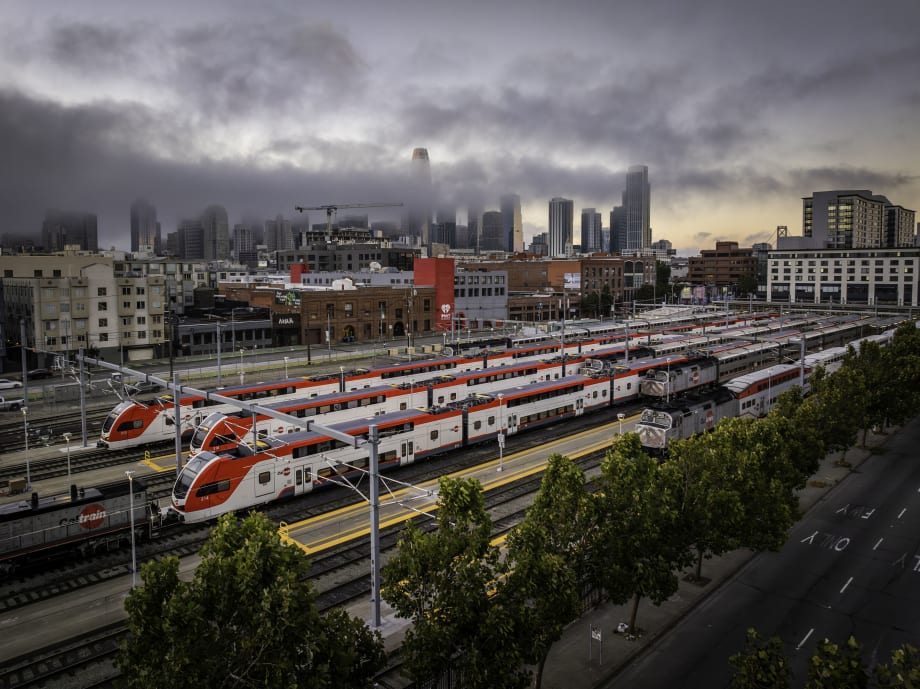
Core Visual, Courtesy of HNTB
- The Peninsula Corridor Joint Powers Board recently conducted a budget workshop to discuss Caltrain's financial situation.
- Staff highlighted the potential necessity for significant service reductions if Caltrain does not secure new external funding.
- Without additional funding, Caltrain may face service cuts and the possible closure of some stations.
*Summarized by AI
The Peninsula Corridor Joint Powers Board (Caltrain) met for a budget workshop, during which staff outlined the significant service reductions Caltrain could be forced to make without new external funding.
Senate Bill 63 authorized the formation of a new, five-county Public Transit Revenue Measure District that allows the board of that District or citizens using the initiative process to place a revenue measure on the November 2026 ballot. A group of citizens has already begun gathering signatures for a citizens’ initiative to bring the measure to the ballot, said Caltrain officials.
Absent a new, reliable funding source, Caltrain said it will be forced to make significant service and staffing cuts, with potentially long‑lasting consequences for the tens of thousands of people and businesses that “depend on — and have begun to benefit from — the newly electrified system.”
The agency added that, daily, Caltrain carries the equivalent of three lanes of Highway 101 traffic, and reduced service would result in more traffic and more pollution — 36,000 additional daily car trips, adding 828,000 miles of driving and generating 220 additional metric tons of CO₂ each day.
Potential Cuts Facing Caltrain, Riders
The potential cuts that were presented to the Caltrain board as part of a no external funding scenario included:
- Closing more than one-third of stations.
- Eliminating all weekend service.
- Reducing train frequency to once an hour.
- Ending service by 9 p.m.
- Cutting segments of services.
“Caltrain is delivering more frequent, faster, and more reliable service for riders up and down the Peninsula," said Caltrain Executive Director Michelle Bouchard. “But, we are facing a structural funding challenge that cannot be solved through cuts or efficiencies alone. Without a stable, long-term funding solution, we will be forced to make difficult decisions that would significantly reduce service and impact the communities that rely on Caltrain every day.”
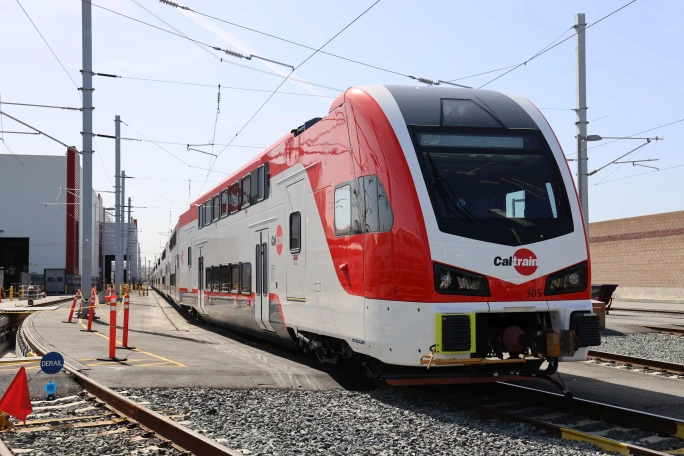
Caltrain is currently projecting an average annual deficit of approximately $75 million from FY2027 to FY2041, largely due to the rise of remote work and changing travel patterns.
Caltrain
Caltrain’s Impact in the Region
Caltrain officials said ridership is up 47% in 2025 compared with the previous year, making it the fastest-growing transit agency in the US.
With the launch of the agency’s new high-performance electric trains in September 2024, agency officials said Caltrain has generated strong support for the agency.
In fact, a poll of voters in Santa Clara, San Mateo, and San Francisco counties found overwhelming approval for Caltrain: 82% of respondents reported a favorable view of the transit agency, rising to 91% among frequent riders.
Despite this progress, Caltrain is currently projecting an average annual deficit of approximately $75 million from FY2027 to FY2041, largely due to the rise of remote work and changing travel patterns. Officials also said Caltrain has high fixed costs for maintaining its new electric infrastructure and state-of-the-art fleet, which are required “whether the agency runs a single train daily or the usual 104.”
To help address budgetary issues, Caltrain has instituted cost-cutting measures where possible and expanded new revenue sources to reduce its annual operating deficit. The agency has also taken significant cost-cutting measures, including FTE freezes, crewing efficiencies, and reductions to professional services and other non-labor expenses.
Caltrain is also working hard to help fund a portion of operating costs through revenue from sources other than fares, including advertising and naming rights, monetizing Caltrain’s real estate, and other assets like fiber-optic cable capacity.
Last May, the Caltrain board voted to support SB 63, which authorized a proposed 14-year regional tax measure to fund public transit in the Bay Area and would allocate approximately 7% of its funds to Caltrain — by creating a half-cent sales tax in four counties and a one-cent sales tax in San Francisco, with built-in measures to ensure effective oversight and accountability.
If the measure qualifies for the ballot and a majority of voters support the measure, it is projected to fully fund Caltrain’s operating deficit for the 14-year duration of the measure.
Officials said the Caltrain board will continue refining the FY2027 budget options in the coming months, alongside long-term service and financial planning efforts to address the agency’s projected fiscal cliff should external funding not become available.
Quick Answers
Caltrain is considering service reductions due to significant funding gaps and the need for new external funding.
*Summarized by AI
More Rail

First Full MetroLink Rail Expansion Completed in 20 Years with $192M Airport Project
The project links two St. Louis-area airports by light rail while adding roadway and bike trail connections to improve regional access and mobility.
Read More →
Utilimarc Launches SmartReplace to Optimize Fleet Replacement Decisions
AI-powered SmartReplace helps fleets prioritize vehicle replacements, model budget scenarios, and build more defensible long-term strategies.
Read More →
Scenes from APTA TRANSform & EXPO 2026
Transit leaders, manufacturers, and industry professionals gathered in Chicago to explore new technologies, share ideas, and discuss the future of public transportation.
Read More →
USDOT Awards $416 Million for Florida Rail Crossing Safety Upgrades, New Brightline Station
The projects aim to reduce risks for motorists and pedestrians at rail crossings while expanding passenger rail access along Florida’s Space Coast.
Read More →
OCTA Declares Emergency to Protect Rail Corridor From Coastal Erosion
The California agency is accelerating shoreline protection and plans to place approximately 690,000 cubic yards of sand along the San Clemente coast to protect a key passenger and freight rail link.
Read More →
More Than a Summer Job: Building the Next Generation of Transit Talent
The Delaware River Port Authority and PATCO have transformed their internship program into a hands-on professional development experience that introduces students to the breadth of transportation careers — and creates a pipeline for future employees.
Read More →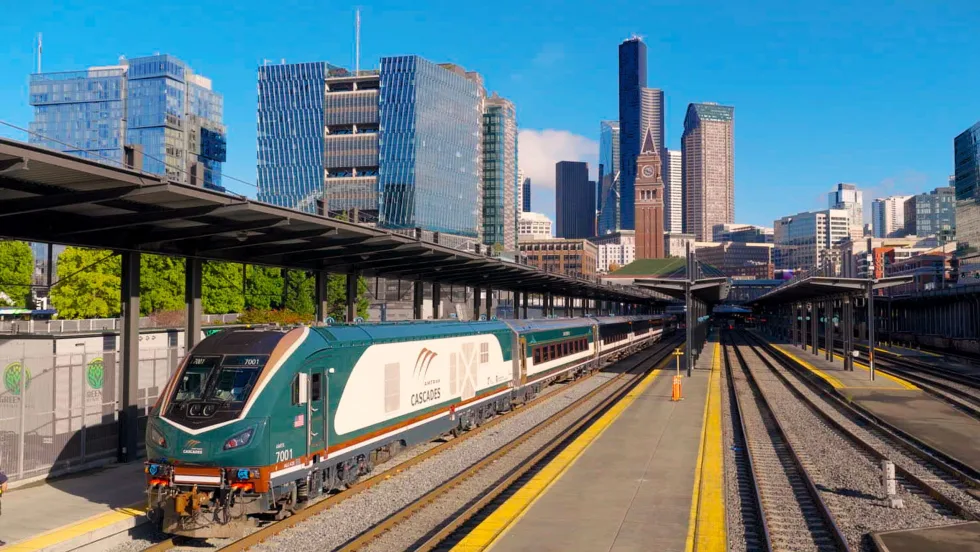
Airo Trains Make Their Amtrak Cascades Debut in the Pacific Northwest
Effective immediately, two cutting-edge Airo trainsets will join the Amtrak Cascades route, operating four daily trips between Vancouver, B.C., Seattle, Portland, and Eugene, Oregon, marking the first introduction of Airo trains into passenger service anywhere in the country.
Read More →
Florida's Brightline Announces Financial Restructuring
Brightline Florida says train operations will continue as normal as certain parent entities enter Chapter 11 and financial stakeholders provide $490 million in new long-term capital.
Read More →
ENC Lands MATA Contract and More in Biz Briefs
In this edition of Biz Briefs, we spotlight the latest developments shaping the future of mobility.
Read More →
Strada360’s Steve Lassey on Turning Transit Data Into Better Decisions
From breaking down data silos to preparing for AI, Strada360 CEO Steve Lassey discusses how transit agencies can use technology to improve operations, customer information, and long-term decision-making.
Read More →