




...adversaries are increasingly going after surface transportation targets, but are concentrating on easier modes of attack.
New study examines extremist attacks on rail targets
Since 1970, there have been more than 1,000 attempts to derail trains and otherwise attack rail infrastructure.
July 26, 2018
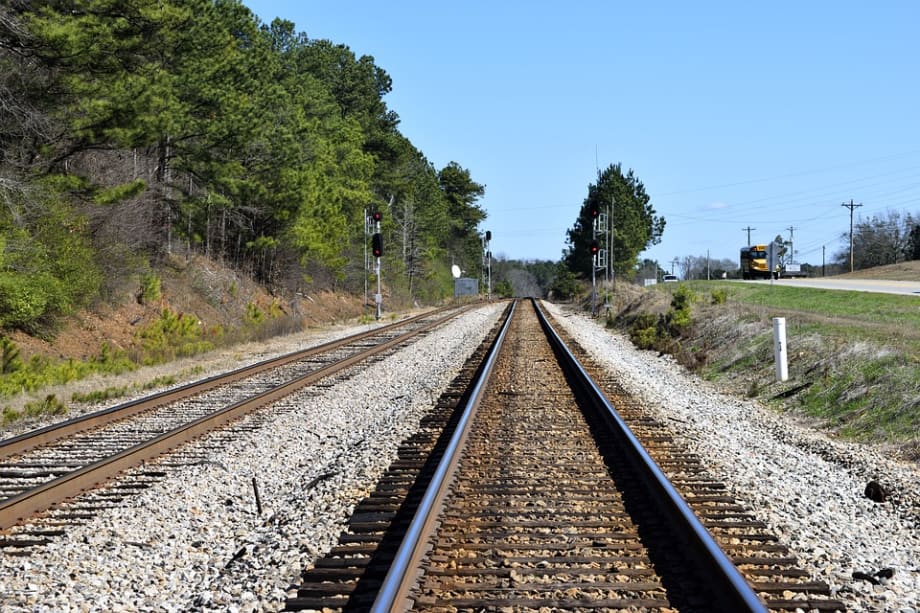
Although derailments have increased over time, these types of attacks have not increased nearly as much as all other attacks on passengers in all surface transportation targets, including passenger trains and stations, buses and bus stations and stops, and passenger ferries and ferry terminals.
2 min to read
Although derailments have increased over time, these types of attacks have not increased nearly as much as all other attacks on passengers in all surface transportation targets, including passenger trains and stations, buses and bus stations and stops, and passenger ferries and ferry terminals.
In July 2017, both the Islamic State of Iraq and (greater) Syria (ISIS) and al Qaeda in the Arab Peninsula (AQAP) urged their followers to derail trains around the world. AQAP even provided detailed instructions in their online magazine regarding how to make a derailment device. But did this lead to an uptick in derailment attempts over the past year? What has been the overall pattern and trends related to rail sabotage and attacks over the past few decades? New research, “Train Wrecks and Track Attacks: An Analysis of Attempts by Terrorists and Other Extremists to Derail Trains or Disrupt Rail Transportation,” from the Mineta Transportation Institute’s (MTI) National Transportation Security Center examines these questions.
Brian Michael Jenkins and Bruce R. Butterworth oversee MTI’s database of all terrorist and serious criminal attacks against public surface transportation, including rail. Since 1970, there have been more than 1,000 attempts to derail trains and otherwise attack rail infrastructure. Of the 282 attempts to derail trains, 42% led to derailment with more than 1,000 total fatalities and over 3,000 total injuries.
“Derailments are intended to cause casualties,” said Jenkins, “While attacks on tracks and other right-of-way infrastructure are primarily intended to cause disruption and attract attention.”
To examine differences in motives, objectives, and modes of operating, Jenkins and Butterworth looked at four specific groups of perpetrators: an assemblage of anarchist and environmentalist extremists in Europe; Maoist guerrillas in India; separatist insurgents in southern Thailand; and jihadists worldwide. According to Butterworth, “these particular attackers were chosen because they have engaged in continuing campaigns which account for approximately one-quarter of attacks since 1970.”
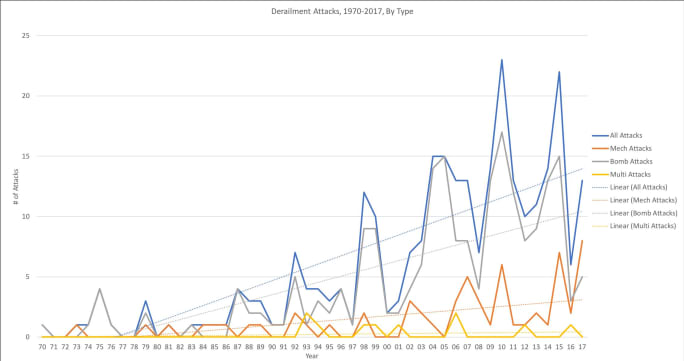
Although derailments have increased over time, these types of attacks have not increased nearly as much as all other attacks on passengers in all surface transportation targets, including passenger trains and stations, buses and bus stations and stops, and passenger ferries and ferry terminals. This suggests that adversaries are increasingly going after surface transportation targets, but are concentrating on easier modes of attack.
More Security and Safety
Sponsored•August 18, 2026
How VaporVision™ Adds Value to Transit Door Systems
Wabtec engineers explain how the system improves doorway detection, strengthens diagnostics and gives transit agencies and OEMs greater operating flexibility.
Read More →
FRA Announces $5.3B in Rail Investments, Including $2B for Amtrak
Funding will support grade-crossing improvements, infrastructure upgrades, and new Amtrak equipment in 23 states.
Read More →
Chicago, Maryland Expand Non-Law-Enforcement Safety, Rider Support
The CTA and MTA are launching new programs aimed at de-escalation, crisis response, rider assistance, and greater transparency.
Read More →

LA Metro, City of West Hollywood, and Partners Advance Smarter Bus Lane Enforcement
The award-winning partnership combines AI-powered detection with human oversight to improve bus reliability, accessibility, and enforcement efficiency.
Read More →
LA Metro Reports 57% Decline in Homelessness on Transit System Since 2024
The agency's latest homelessness count offers new data on how care-based services and cross-sector partnerships can complement traditional transit security strategies.
Read More →
FTA Launches 'Transit Moves America' Dashboard to Highlight Agency Safety and Performance
The online dashboard transforms National Transit Database information into a public-facing resource that allows users to compare transit agencies on key operational and safety metrics.
Read More →
LA Metro Marks Banner Year, Sets Ambitious Goals for New Fiscal Year
Incoming LA Metro Board Chair and Los Angeles Mayor Karen Bass joined outgoing Board Chair Fernando Dutra and LA Metro CEO Stephanie Wiggins to review accomplishments from fiscal year 2026, which included the opening of new rail extensions, advancement of major transit projects, expanded safety programs, and new rider amenities.
Read More →
Building the Next Generation of Transit Technology
In this edition of METROspectives, Luminator CEO Magnus Friberg discusses the company's transformation, the growing role of AI and software, and what's next for transit technology.
Read More →
TTC Launches Camera Pilot to Curb Illegal Passing of Streetcars
During the pilot, the cameras will measure how often illegal streetcar passing occurs and test the technology's reliability for future automated enforcement.
Read More →
Biz Briefs: Masabi Teams with St. Louis Metro and More
In METRO's latest installment, we take a look at recent news from Transdev, Hitachi, and more partnerships making headlines across the transportation sector.
Read More →