



Prototype design for Dubai Hyperloop passenger capsule unveiled
Designworks worked with Virgin Hyperloop One and the Roads and Transport Authority of Dubai on the project.


Working with Virgin Hyperloop One, and the Roads and Transport Authority of Dubai (RTA), Designworks helped create a prototype design for the Dubai hyperloop capsule. Image: Designworks
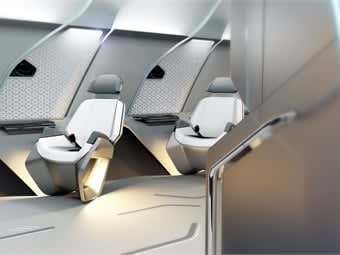
Working with Virgin Hyperloop One, and the Roads and Transport Authority of Dubai (RTA), Designworks helped create a prototype design for the Dubai hyperloop capsule. Image: Designworks
Working with Virgin Hyperloop One, and the Roads and Transport Authority of Dubai (RTA), Designworks helped create a prototype design for the Dubai hyperloop capsule. The design recently made its global debut at City Walk Dubai as part of UAE Innovation Month. This is the first time a physical, full-scale hyperloop prototype has been shown to a broad public audience.
Once built, the passenger capsule, electromagnetically propelled through a vacuum tube, could reach speeds up to 670 mph, potentially traveling from Dubai to Abu Dhabi in as little as 12 minutes. Virgin Hyperloop One is currently negotiating the next stage of development (Phase 2) with the RTA with the clear aim of building the world’s first hyperloop transportation system in the UAE / Middle East.
Designing for the future of mobility
"With the Virgin Hyperloop One design, we wanted to create a new visual expression for a new mode of public transportation" says Designworks LA Studio Design Director, Johannes Lampela.
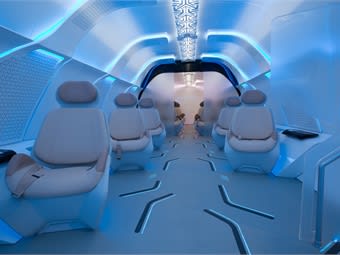
Seats in the Virgin Hyperloop One capsule prototype by Designworks include integrated heating and cooling. Image: Designworks
The central challenge the Designworks team faced was how to create a comfortable and engaging interior with no windows, and a current requirement for passengers to be seated throughout the journey. Designworks took what might at first glance be a very restrictive environment and transformed it into a more personal and uplifting sensory experience that can be both memorable and enjoyable.
Innovation with human-centric design
The design concept suggested several ways of achieving this, through multidirectional and personally-controlled light, digital displays, and premium comfort — creating a sense of individualized space for each passenger. In first class, for example, adjustable leather seats feature touchscreens for personal settings for light brightness and color, allowing passengers to shift the light from blue to pink to set the mood. The seats include integrated heating and cooling. Passengers could enjoy personalized entertainment through built-in displays. In this way, the concept could create a more sophisticated and user-centered spatial experience that transcends the typical utilitarian notion of public transportation. Floor lighting is also aesthetically used to double as wayfinding.
To further enrich the passenger experience, designers took inspiration from traditional Arabic patterns, taking care to create intentional and relatable cultural references while also applying a more futuristic and progressive interpretation. The design is thus anchored in the cultural legacy of the kingdom while acknowledging its contemporary achievements and aspirations.
More Technology

From Hardware to Digital Partner: Luminator Charts Its Next Chapter
CEO Magnus Friberg discusses Luminator’s shift toward becoming a digital partner, the growing importance of software and interoperability, and how AI can help agencies improve operations and passenger experience.
Read More →
Beyond the Checklist: A Structured Approach to Transit Maintenance
Reliability-Centered Maintenance helps transit agencies move beyond routine checklists to focus limited resources on the assets and failures that have the greatest impact on safety, reliability, and service.
Read More →
NJ TRANSIT Advances Bus Technology Upgrades Across Statewide Fleet
More than 1,500 buses now feature upgraded technology designed to improve arrival predictions and provide free Wi-Fi, with deployment expected to reach nearly 2,000 buses by the end of 2026.
Read More →

Building a Flexible Path to Transit Electrification
John Hroncich discusses BAE Systems’ modular and scalable approach, lessons learned from decades of real-world operations, and how agencies can identify electrification strategies that fit their fleets.
Read More →
Biz Briefs: Alstom Lands Canadian Contract, LYT to Supply California TSP, and More
In METRO's latest installment, we take a look at recent news from Complete Coach Works, Beep, FlixBus, and more partnerships making headlines across the transportation sector.
Read More →
From Legacy Silos to Conversational Intelligence
What if transit leaders could ask any operational question and get a trusted answer in seconds? Conversational AI is transforming how agencies use their data.
Read More →
USDOT Announces Rail Vehicle Replacement Grants, Chattanooga AV Shuttle Funding
More than $191 million in federal funding will help three transit agencies replace aging rail vehicles and support a new autonomous shuttle service in Chattanooga.
Read More →
Bus Tech Talk: Keeping Transit Technicians Ahead of the Technology Curve
LA Metro’s Obed Mejia discusses technician training, evolving maintenance technology, fleet replacement, and strategies for getting the most out of today’s transit fleets.
Read More →
Biz Briefs: RIPTA Unveils New Frontrunners, Clevland RTA Adds New Siemens, and More
In METRO's latest installment, we take a look at recent news from Siemens, Prevost, Dodge, and more partnerships making headlines across the transportation sector.
Read More →
Why Simulating Pedestrian Movement Has Become Essential for Modern Rail Stations
Pedestrian microsimulation is helping rail planners identify bottlenecks, test station designs, and prepare complex transit hubs for growing passenger volumes.
Read More →