




RELATED: Navigational app helps bus riders with visual impairments
MBTA program uses AI to deliver info to blind, low-vision users
Aira connects blind or low-vision users with highly trained sighted agents who provide visual information about the user’s surroundings.
May 6, 2019
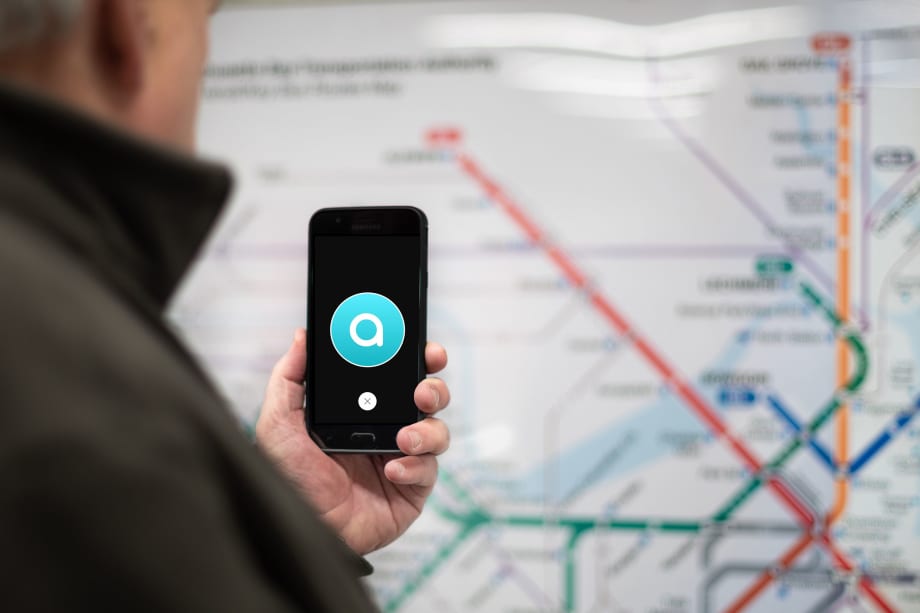
Aira connects blind or low-vision users with highly trained sighted agents who provide visual information about the user’s surrounding environment.
Aira
2 min to read
Aira connects blind or low-vision users with highly trained sighted agents who provide visual information about the user’s surrounding environment.
Aira
The Massachusetts Bay Transportation Authority (MBTA) announced the launch of a pilot program that will use artificial intelligence to connect blind or low-vision users with sighted agents providing information via smartphone video technology.
The free six-month accessibility technology pilot called AccessAI features human artificial intelligence (human AI) technology from Aira, a California-based tech startup.
Aira connects blind or low-vision users with highly trained sighted agents who provide visual information about the user’s surrounding environment — live and on-demand through smartphone video technology. During the six-month pilot that began on May 1, the Aira smartphone app, powered by AT&T, will be free to users throughout the MBTA system at all bus stops, subway stations, Commuter Rail stations, and ferry routes.
“Technology is enhancing transit infrastructure. This pilot program gives us the opportunity to unite people, technology, and mobility in ways that have never been tried before. I want to see how far we can go with this,” said Massachusetts Association for the Blind and Visually Impaired Executive Director and Aira Explorer Sassy Outwater-Wright.
Aira’s visual interpreter service will be available to users for free throughout the MBTA’s subway, bus, ferry, and commuter rail systems during the six-month pilot through October 31, 2019. The MBTA will also educate the public about the availability of this service through targeted marketing to the MBTA’s Blind Access CharlieCard users and The RIDE’s blind or low vision users as well as through community engagement with local blind and low vision advocate groups. The pilot comes at no cost to the MBTA.
During the six-month pilot, users will be regularly surveyed on the app’s impacts with data that is gathered available to both the MBTA and Aira, and analyzed upon completion of the pilot. Next steps following the pilot will be determined after this data is gathered and analyzed following the pilot’s conclusion.
Used previously at places including the Perkins School for the Blind and Massachusetts Association for the Blind and Visually Impaired (MABVI), free access to Aira is also available at Massport’s Boston Logan International Airport and Worcester Regional Airport. Additional Aira Access locations can be found here.
MBTA customers interested in accessing Aira while within the MBTA system can visit the MBTA website and AccessAI.today for more information, downloading the Aira smartphone app, and signing up for training sessions offered by the Massachusetts Association for the Blind and Visually Impaired. More information can also be found by connecting with the T on Twitter @MBTA or Aira @airaio.
More Technology

From Hardware to Digital Partner: Luminator Charts Its Next Chapter
CEO Magnus Friberg discusses Luminator’s shift toward becoming a digital partner, the growing importance of software and interoperability, and how AI can help agencies improve operations and passenger experience.
Read More →
Beyond the Checklist: A Structured Approach to Transit Maintenance
Reliability-Centered Maintenance helps transit agencies move beyond routine checklists to focus limited resources on the assets and failures that have the greatest impact on safety, reliability, and service.
Read More →
NJ TRANSIT Advances Bus Technology Upgrades Across Statewide Fleet
More than 1,500 buses now feature upgraded technology designed to improve arrival predictions and provide free Wi-Fi, with deployment expected to reach nearly 2,000 buses by the end of 2026.
Read More →

Building a Flexible Path to Transit Electrification
John Hroncich discusses BAE Systems’ modular and scalable approach, lessons learned from decades of real-world operations, and how agencies can identify electrification strategies that fit their fleets.
Read More →
Biz Briefs: Alstom Lands Canadian Contract, LYT to Supply California TSP, and More
In METRO's latest installment, we take a look at recent news from Complete Coach Works, Beep, FlixBus, and more partnerships making headlines across the transportation sector.
Read More →
Sponsored•September 8, 2026
From Legacy Silos to Conversational Intelligence
What if transit leaders could ask any operational question and get a trusted answer in seconds? Conversational AI is transforming how agencies use their data.
Read More →
USDOT Announces Rail Vehicle Replacement Grants, Chattanooga AV Shuttle Funding
More than $191 million in federal funding will help three transit agencies replace aging rail vehicles and support a new autonomous shuttle service in Chattanooga.
Read More →
Bus Tech Talk: Keeping Transit Technicians Ahead of the Technology Curve
LA Metro’s Obed Mejia discusses technician training, evolving maintenance technology, fleet replacement, and strategies for getting the most out of today’s transit fleets.
Read More →
Biz Briefs: RIPTA Unveils New Frontrunners, Clevland RTA Adds New Siemens, and More
In METRO's latest installment, we take a look at recent news from Siemens, Prevost, Dodge, and more partnerships making headlines across the transportation sector.
Read More →
Why Simulating Pedestrian Movement Has Become Essential for Modern Rail Stations
Pedestrian microsimulation is helping rail planners identify bottlenecks, test station designs, and prepare complex transit hubs for growing passenger volumes.
Read More →