



Biz Briefs: Westmatic in Albuquerque, New Fare Payment Systems, and More
In METRO's latest installment, we take a look at the latest news from suppliers including Alstom, Modeshift, and more.

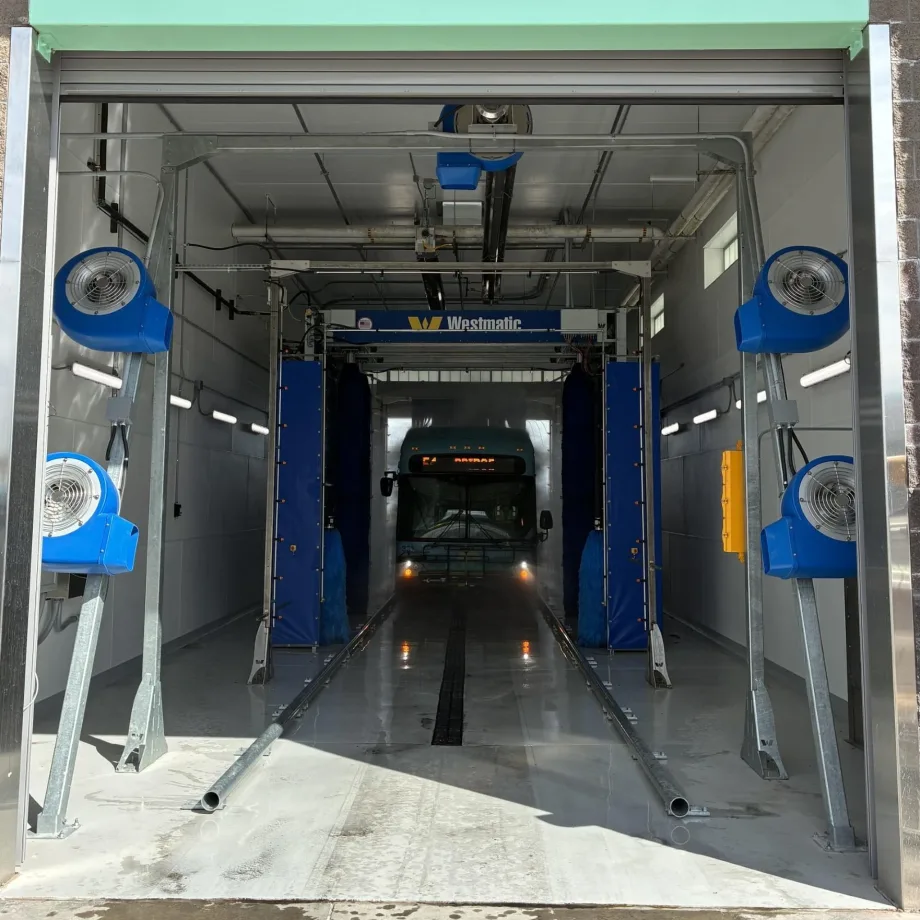
The new bus wash will clean around 100 buses daily, requiring less time, manual labor, and water.
ABQ RIDE
- METRO reports on updates from various suppliers, including developments from Alstom and Modeshift.
- Westmatic, a player in the supplier sector, is highlighted for its activities in Albuquerque.
- The briefing covers advancements in fare payment systems and their implications for the industry.
*Summarized by AI
From strategic partnerships to acquisitions and service expansions, the industry continues to evolve at a rapid pace.
In this edition of Biz Briefs, we highlight the latest developments shaping the future of mobility — from manufacturers and technology providers to transit agencies and motorcoach service operators. Stay informed with these quick takes on the projects and companies driving progress across the transportation landscape.
In METRO's latest installment, we take a look at the latest news from suppliers including Alstom, Modeshift, and more.
ABQ RIDE Adds New Westmatic Automated Bus Wash
Albuquerque, New Mexico’s ABQ RIDE added a new Westmatic automated bus wash system. The new wash is like a regular drive-through car wash but accommodates larger fleet vehicles such as Sun Vans or 60-foot-long Albuquerque Rapid Transit (ART) buses.
The new bus wash will clean around 100 buses daily, requiring less time, manual labor, and water.
The project’s total cost is $3.2 million, funded with a mix of local dollars and Federal Transit Administration grants. ABQ RIDE received $50,000 from the New Mexico Legislature through the capital outlay bill HB450, passed in 2025, with project funding sponsorship by Rep. Kathleen Cates.
Illinois’ Public Transit System, Modeshift Launches Contactless Fare Collection
Illinois’ Decatur Public Transit System (DPTS), in partnership with Modeshift, launched a new contactless fare collection system across its fixed-route bus network.
The modernized platform introduces mobile ticketing, reloadable smart cards, and real-time account management tools designed to improve convenience, accessibility, and operational efficiency.
The new system, Decatur Transit Pay, modernizes legacy paper and cash-based processes with a fully integrated, account-based fare collection platform. Riders can now plan, purchase, and validate trips through a smartphone app or reloadable smart card, reducing boarding times and simplifying fare management.
The fare collection platform also generates real-time data insights, enabling DPTS to optimize routes, improve planning decisions, and better understand rider needs, according to agency and company officials.
Florida’s TPA Adds New Alstom Automated People Movers
Alstom announced that four Innovia R automated people mover (APM) vehicles began to serve passengers at Tampa International Airport (TPA), a key part of an extensive modernization of the airport to serve a growing metropolitan region.
TPA has ordered 16 state-of-the-art Innovia R cars to replace 30-year-old APM cars (also made by Alstom) that have logged more than one million miles each.
According to Alstom, the third-generation model is quieter, easier to maintain, and more energy efficient. Interiors feature improved lighting, updated video information screens, and doors with obstacle-detection systems.
In addition, Alstom is installing its Urbalis Flo automatic train control system, enabling trains to run more frequently, increasing capacity, and reducing passenger wait times.
All of the APM vehicles are manufactured at Alstom’s plant in West Mifflin, Pennsylvania, near the site where the first APMs were developed and tested in the 1960s.
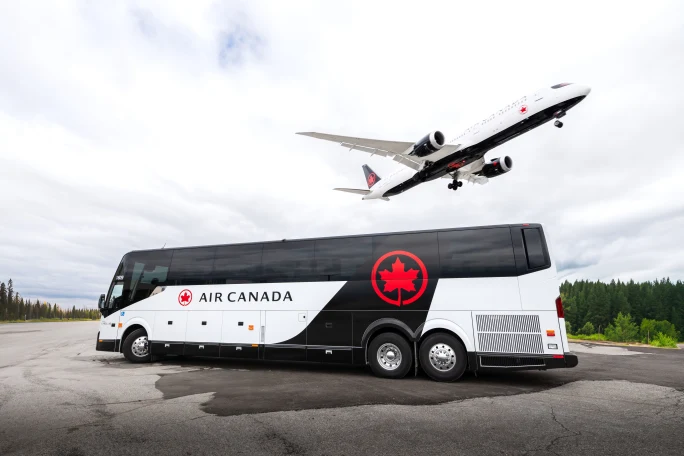
This summer, Landline will operate 26 daily departures to and from Toronto Pearson across six Ontario communities, expanding regional connectivity and deepening network feed into Air Canada’s global hub.
Landline
Air Canada, The Landline Company Extend Service, Partnership
Air Canada renewed its agreement with The Landline Company to extend the luxury motorcoach service to the Ontario communities of Niagara, Sarnia, and Muskoka, linking them directly with the airline’s global hub at Toronto Pearson International Airport beginning June 15.
In addition, the carrier announced increased frequencies on Landline’s existing motorcoach services to Kingston and Kitchener-Waterloo.
This summer, Landline will operate 26 daily departures to and from Toronto Pearson across six Ontario communities, expanding regional connectivity and deepening network feed into Air Canada’s global hub.
The Air Canada-branded motorcoaches operated by Landline are designed and built in Quebec by Prevost and provide premium features such as spacious leather seating, free Wi-Fi, power outlets, and full accessibility for passengers with reduced mobility. The motorcoaches run multiple non-stop round-trip daily from regional airports to Toronto Pearson, offering customers the same benefits as air-only itineraries, including boarding pass and bag tag printing at their regional airport, disruption protection, and Aeroplan point-earning opportunities.
Indiana’s METS Modernizes Fare Collection System
Indiana’s Metropolitan Evansville Transit System (METS) signed a five-year agreement with Matawan to modernize the city’s bus fare collection system completely.
METS is advancing public transportation with the introduction of Matawan’s advanced Account-Based Ticketing (ABT) and Open Payment system. This initiative increases accessibility and equity for over 1 million annual METS riders by allowing payment by cash, credit, or debit across 29 buses and 21 routes.
The core of the transformative project lies in Matawan’s unique ability to integrate its cutting-edge ABT platform with existing infrastructure. According to Matawan, the capability allows METS to transition smoothly, while immediately gaining:
- Inclusive Access: Existing fareboxes are retained, and physical cash top-ups are integrated via local retail partners —effectively digitizing cash for the unbanked — while simultaneously accepting standard EMV (credit/debit card) and mobile wallet payments.
- Dynamic Fare Engine: Providing the flexibility to easily implement programs, such as popular "Free Ride Days," without system overhaul, a feature often difficult for legacy systems to manage.
- Fare Capping: Automatically ensuring riders never pay more than the daily or weekly pass price, regardless of how often they tap.
Hitachi Rail Unveils Next-Generation Validator
Hitachi Rail launched its new BV700 validator, which is the latest addition to its advanced portfolio of ticketing solutions designed to enhance the passenger experience and accelerate the shift toward more connected, frictionless, and sustainable mobility.
Building on the proven performance of the BV600, deployed in 10 countries and with 50,000 units sold, the BV700 introduces new user interaction capabilities, improved maintainability, and a reduced ecological footprint.
The new validator integrates with Hitachi Rail’s TRANSCITYTM ticketing platform — a comprehensive, interoperable solution that supports multimodal and multi-operator networks at city, regional, and national scales.
The BV700 has been developed to meet evolving passenger expectations and operator needs. It offers:
Two screen formats (5- and 7-inches) enabling flexible display layouts and intuitive passenger interactions through touch interface.
Support for multiple fare media, including contactless cards, EMV (Europay, Mastercard, and Visa) for Open Loop, QR codes, and emerging hands-free ticketing, such as UWB (Ultra Wideband) and facial recognition.
A design focused on operational efficiency and maintainability, ensuring reduced downtime and simplified servicing.
Quick Answers
METRO's latest installment highlights companies including Alstom and Modeshift.
*Summarized by AI
More Technology
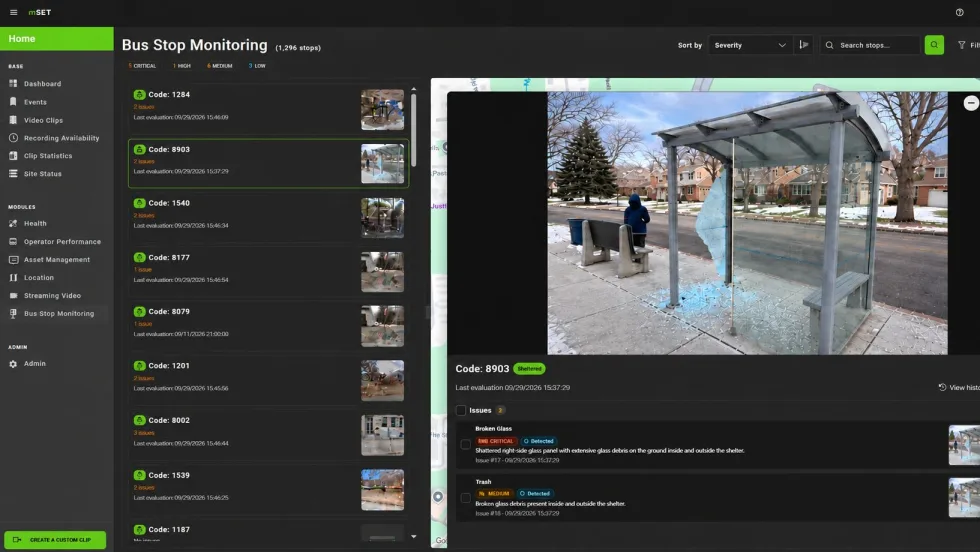
Biz Briefs: Luminator Launches AI Technology to Monitor Bus Stop Conditions and More
In METRO's latest installment, we also take a look at recent news from Masabi, Troman Industries, ioki, CCW, and more partnerships making headlines across the transportation sector.
Read More →
Public Transit Conference Returning to GFX in 2027, Call for Papers Now Open
The Call for Papers is now open, allowing transit agency professionals and industry experts to help shape the PTC educational program by submitting session ideas for consideration.
Read More →
ENC Lands MATA Contract and More in Biz Briefs
In this edition of Biz Briefs, we spotlight the latest developments shaping the future of mobility.
Read More →
Strada360’s Steve Lassey on Turning Transit Data Into Better Decisions
From breaking down data silos to preparing for AI, Strada360 CEO Steve Lassey discusses how transit agencies can use technology to improve operations, customer information, and long-term decision-making.
Read More →
Almaviva Looks to Open Architecture to Advance Transit Technology
Eric Reese discusses how interoperability, open architecture, and modular design can help transit agencies control costs, reduce vendor lock-in, and upgrade technology without starting over.
Read More →
Driving Smarter Paratransit
John Hanlon shares how AlphaRoute is leveraging AI-powered technology to help paratransit providers optimize operations, support frontline staff, and enhance the rider experience.
Read More →
From Hardware to Digital Partner: Luminator Charts Its Next Chapter
CEO Magnus Friberg discusses Luminator’s shift toward becoming a digital partner, the growing importance of software and interoperability, and how AI can help agencies improve operations and passenger experience.
Read More →
Beyond the Checklist: A Structured Approach to Transit Maintenance
Reliability-Centered Maintenance helps transit agencies move beyond routine checklists to focus limited resources on the assets and failures that have the greatest impact on safety, reliability, and service.
Read More →
NJ TRANSIT Advances Bus Technology Upgrades Across Statewide Fleet
More than 1,500 buses now feature upgraded technology designed to improve arrival predictions and provide free Wi-Fi, with deployment expected to reach nearly 2,000 buses by the end of 2026.
Read More →
Building a Flexible Path to Transit Electrification
John Hroncich discusses BAE Systems’ modular and scalable approach, lessons learned from decades of real-world operations, and how agencies can identify electrification strategies that fit their fleets.
Read More →