



What You Need to Know About Door Systems
Though often unappreciated, door systems on transit vehicles play an integral role in safety and rider satisfaction.
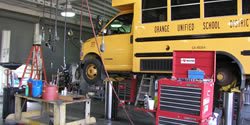
For transit passengers, the opening of the vehicle door can be either a welcoming sign or a scary contraption about to close on them too soon. Making sure it is the former requires agencies to employ the best system not only in design but also with safety in mind.
Photo caption: Door systems play a critical role in safety and passenger satisfaction. Vapor Bus International offers a contact-less acoustic sensing system that enhances both safety and passenger flow.
Despite the fact that every passenger enters and exits through these portals, door systems are often ignored. "It is probably one of the most important and least thought about control systems on a bus or any transit vehicle," says John Walsh, chief maintenance officer for the Department of Buses at New York City Transit.
Back to geometry
Door systems are divided into geometries, which refer to the way the door is fixed to the vehicle and the motion that the door panel makes when it opens and closes. The four most common geometries used on buses are slide-glide, swing, bi-fold and parallelogram plug doors.
Determining which geometries are best for your vehicles depends on the services provided by your agency. "One should match the geometries to the agency's particular needs or the needs of the applications," says James Pearson, vice president of marketing for Vapor Bus International in Buffalo, Ill. This includes taking into account passenger interactions with the door, whether there is a need to limit access to a particular opening or if a wider access is needed to accommodate all passengers.
One of the more popular geometries used on transit buses in North America is the slide-glide door, in which the panel rotates from the closed position to about a 90-degree angle perpendicular to the length of the vehicle. According to Pearson, slide-glide provides a wide entrance with little protrusion of the door beyond the side of the vehicle.
If a vehicle is used in a high-density area where large numbers of passengers are expected, a wide doorway on the slide-glide is best to accommodate all passengers, including those using mobility devices. A door system that opens and closes quickly will also save time. "Door systems that can open and close safely and rapidly can minimize the dwell time at any given stop," Pearson says. This can lead to increased revenue and reduce the frustration level of passengers boarding the bus, he says.
For transit agencies that want to limit the number of passengers entering the bus, the swing door provides a good option. The swing door opens out from the inside, or swings out, hence the name. Since the door swings out, it has been primarily used as an exit door. This was used to deter passengers from boarding through doors at the rear, and instead requires them to enter through the front door where drivers collect fares. But the slide-glide door is increasingly used for exit doors because, according to Pearson, many agencies want to maximize the speed in which passengers can be passed through.
On transit buses in North America, bi-fold and parallelogram doors are not used as often as slide-glide or swing doors. Although bi-fold is a straightforward geometry to design and install, its looks prevent it from being as popular as the other two. "It does not look particularly contemporary, and you're restricted to utilizing a totally flat door panel," Pearson says.
Rails vs. bus
Due to the nature of rails and the speed at which railcars travel, different geometries are used on rail applications than on buses. While bi-fold doors are not common on buses, they are commonly used on rail vehicles, especially light rail. Heavy rail transit, on the other hand, uses a sliding-pocket door where the doors slide from the closed position into a pocket in the wall of the car. The outside sliding plug door, where the door moves away slightly from the opening and then slides to its fully open position along the side of the car, is also popular in rail transit.
Another difference between bus and rail door systems is the source of power. Transit buses tend to use pneumatic power instead of electric, which is more common on trains. Pneumatic uses compressed air as its source of power Ñ similar to the system that provides compressed air for the brakes on buses. Because of the simplicity and reliability of an air-powered door system, pneumatic-powered systems are more widely used in buses, according to Pearson.
Watch out for that ... door!
Safety is the main priority for transit agencies, and door systems are a part of the equation. According to Larry Huetsch, vice president of operations and engineering at Glendale Heights, Ill.-based Hoerbiger-Origa Corp., the biggest safety concern is people getting caught in doorways. "It's really the detection of the people and not closing the door on somebody, and not leaving when someone's clothes are stuck to the door," Huetsch says.
Many manufacturers are coming out with new features that will help minimize this problem. One system by Hoerbiger-Origa uses infrared light to detect motion in the doorway. "If that beam is broken, then the unit sends a signal to the controller," Huetsch says.
Miller Edge, a door manufacturer in Jennersville, Pa., produces a door edge sensor that, when in contact with passengers, sends a signal to the operator to reverse the direction of the door.
Similarly, A&M Systems Inc. in South Bend, Ind., provides a system that will shut down if a person or object is in the doorway. "We also have one [system] available that will automatically reopen the door if there is a person or an object in the path of the door while the door is being closed," says A&M President Jim Miller.
Meanwhile, Vapor has introduced an ultrasonic, contact-less acoustic sensing system (CLASS) that provides additional features to alleviate safety concerns. CLASS replaces passenger actuation devices such as touch tapes. In addition, it provides a mode that holds the door open to accommodate existing passengers without the doors closing and enhances sensitive edges to better detect passengers. "It detects a passenger flow without the need for the door to physically contact the passenger," Pearson says.
Keeping it running
Once installed, door systems can last a long time. The Northern New England Passenger Rail Authority (NNEPRA) has been using the same door system since 1971, according to Executive Director John Englert. "We haven't done anything since then," he says. NNEPRA plans to update its door system with Vapor products in the next three to five years.
Once the system is in place, very little maintenance is needed to make sure all parts are functioning properly. An annual maintenance checklist could include inspecting passenger actuation devices and lubricating all moving parts. A&M Systems' Miller suggests lubricating all parts twice a year with lithium aerosol grease. As the vehicle ages, adjustments to the mechanical linkages or the speed cushioning control may be needed, but this is not often required.
Hoerbiger-Origa has gone a step further by providing a computer system that logs every operation of a door system. The system detects and records the information if something goes wrong or if there is an error code. The information can be downloaded at the end of the day. "By that information, you know the number of cycles that it had," Huetsch says.
To prevent unnecessary repair costs, proper materials should be used on door panels and seals. Panels should be made from corrosion-resistant materials or non-metallic materials that can provide the proper strength.
"We find that aluminum stands up quite well to a corrosive environment," Miller says. Materials such as carbon or low-alloy, high-tensile steels are not recommended because of their susceptibility to corrosion, according to Vapor's Pearson. Likewise with seals, durable materials that can retain their elasticity throughout the vehicle's normal temperature range are best.
"Apart from periodic inspection, lubrication and occasional adjustments, [door systems] should not require any significant attention until the mid-life of the vehicle," Pearson says.
More Management
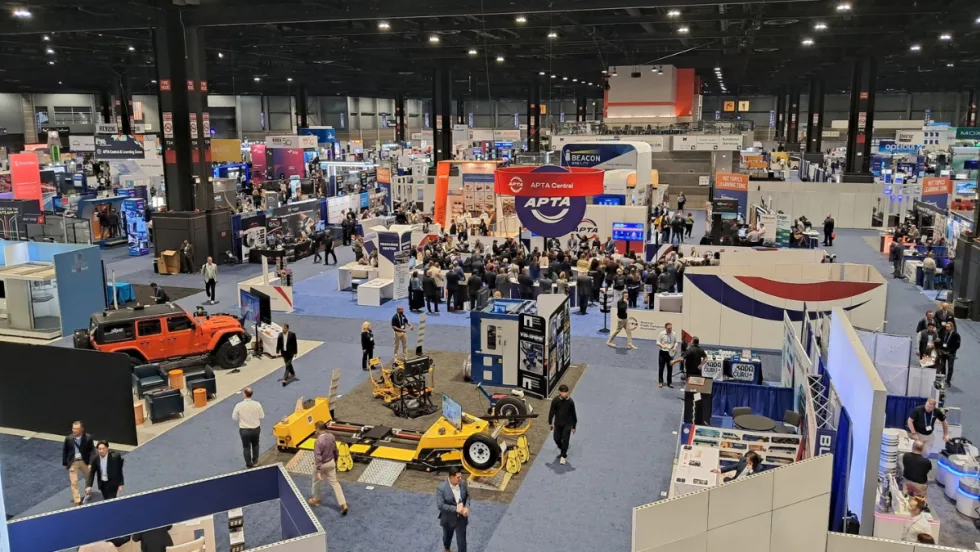
APTA 2026 TRANSform & EXPO Kicks Off in Chicago
After 45 years, APTA returns to Chicago with a focus on next-generation fleets, AI, connected transit networks, and the funding strategies shaping public transportation’s future.
Read More →
New York MTA Warns Federal Tariffs Could Add $1 Billion to Rolling Stock Costs
The agency said tariffs on specialized imported components could reduce the purchasing power of its $23 billion investment in new subway cars, railcars, and buses.
Read More →
From the Show Floor: What’s Happening at APTA TRANSform & EXPO 2026
Follow the latest product launches, partnerships, technology updates, and transit industry announcements coming out of APTA TRANSform & EXPO in Chicago.
Read More →
How Valley Metro Is Balancing Transit Growth With the Rider Experience
The APTA award-winning agency is pairing rapid system expansion with investments in workforce, safety, technology, and the fundamentals of transit service.
Read More →
Bus Tech Talk: Keeping Transit Technicians Ahead of the Technology Curve
In this episode of Bus Tech Talk, Complete Coach Works’ Business Development Manager Mark Hollenbeck and METRO’s Executive Editor Alex Roman sit down with Obed Mejia, Senior Technical Trainer for Bus Maintenance, at LA Metro to discuss how rapidly evolving bus technology is changing the maintenance shop — and the skills technicians need to keep pace.
Read More →
Michael Schneider Joins Paslay Group to Expand Transportation Practice
The longtime transportation executive will help Paslay Group grow its advisory and program management work across transit, highway, and other infrastructure sectors.
Read More →
People Movement: Connectpoint Expands Leadership Team, Stadler Names New Group CEO, and More
In this edition, we also spotlight recent personnel moves at Burns, UZURV, and more, highlighting the people taking on new roles across the transportation industry.
Read More →
More Than a Summer Job: Building the Next Generation of Transit Talent
The Delaware River Port Authority and PATCO have transformed their internship program into a hands-on professional development experience that introduces students to the breadth of transportation careers — and creates a pipeline for future employees.
Read More →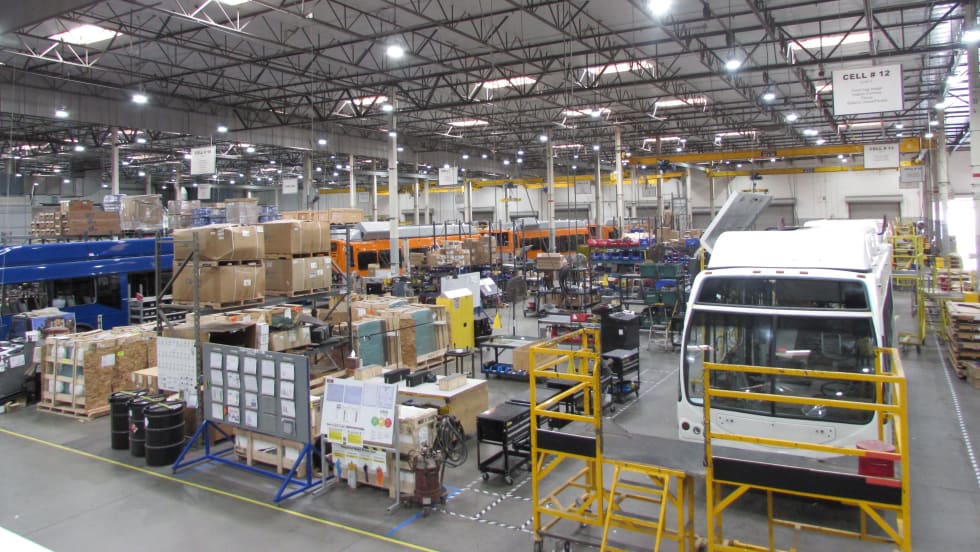
LA Metro Board Awards 220 Battery-Electric Bus Contract to ENC
The contract, which is the largest base award of battery-electric buses by a U.S. transit agency, will be built in Southern California, sustaining good jobs as LA prepares to welcome the world in 2028
Read More →
What’s Behind San Diego MTS’s Award-Winning Transit Strategy
Named one of APTA’s 2026 Outstanding Public Transportation Systems with 50 million or more annual passenger trips, California’s San Diego Metropolitan Transit System points to gains in ridership, safety, technology, and reliability as foundations of its success.
Read More →