



ABA's Ferguson Testifies in Support of BUSES Act, National Standards for Bus Operators
The BUSES Act would create a nationwide framework preventing state and local governments from enforcing bus idling restrictions of less than 15 minutes, a threshold consistent with existing Environmental Protection Agency guidance.

According to the ABA, supporters of the legislation argue that a national standard is necessary because interstate motorcoach operators currently face a confusing patchwork of local regulations that vary significantly from city to city.
ABA/METRO
- The BUSES Act proposes a uniform national standard for bus idling times, aiming for a minimum limit of 15 minutes.
- The goal is to prevent individual states and local governments from imposing stricter idling limits for buses.
- This threshold is aligned with the current guidance provided by the Environmental Protection Agency.
*Summarized by AI
Fred Ferguson, president and CEO of the American Bus Association (ABA), testified before the House Energy and Commerce Committee's Subcommittee on Environment during a hearing titled "Rules of the Road: Examining Legislation to Modernize the Clean Air Act's Mobile Source Requirements."
The hearing examined several proposals to modernize federal transportation regulations, including the soon-to-be-released bipartisan Buses Utilizing Safety and Environmental Standards Act (BUSES Act), legislation designed to establish a uniform national standard governing operational idling for over-the-road buses.
A Look at the BUSES Act
The BUSES Act would create a nationwide framework preventing state and local governments from enforcing bus idling restrictions of less than 15 minutes, a threshold consistent with existing Environmental Protection Agency (EPA) guidance.
The legislation would also prohibit bounty-style enforcement programs that financially reward private citizens for reporting bus idling violations. It would prevent local idling violations from triggering federal Clean Air Act citizen lawsuits.
According to the ABA, supporters of the legislation argue that a national standard is necessary because interstate motorcoach operators currently face a confusing patchwork of local regulations that vary significantly from city to city.
Industry leaders, labor organizations, tourism stakeholders, and transportation providers have expressed concerns that increasingly restrictive local idling rules create conflicts with federal safety requirements, accessibility obligations, and the operational realities of commercial passenger transportation.
Ferguson’s Testimony
During his testimony, Ferguson highlighted the critical role motorcoaches play in America's transportation network and economy.
He noted that the motorcoach industry generated approximately $158 billion in economic impact in 2024, supported nearly 890,000 jobs, and provided affordable transportation options for millions of Americans, particularly seniors, students, military personnel, and residents of rural communities.
Ferguson told lawmakers that while the industry supports efforts to reduce unnecessary emissions, current local enforcement systems are increasingly penalizing operational idling that is necessary for safety, accessibility, passenger comfort, and compliance with federal regulations.
"Motorcoaches are among the most environmentally efficient forms of passenger transportation in the United States," Ferguson testified. "The issue before Congress is not whether unnecessary idling should be reduced. The industry strongly supports reducing unnecessary idling. The question is whether federal law should recognize the distinction between avoidable idling and limited operational idling necessary to satisfy federal safety obligations and safely transport passengers."
Ferguson described how modern motorcoaches rely on engine-powered systems to operate brakes, doors, wheelchair lifts, climate control systems, and federally required safety equipment.
He explained that many local anti-idling ordinances establish one- or three-minute limits that are often incompatible with required vehicle inspections, passenger boarding, ADA compliance, and the maintenance of safe cabin temperatures during extreme weather.
His testimony also focused on the growing impact of local enforcement programs, including New York City's citizen complaint system, which allows private individuals to receive a portion of the penalties collected.
Ferguson warned that similar enforcement models are emerging in other jurisdictions and could pose significant challenges for interstate transportation providers. Similar opposition to the flawed program can be heard from organizations throughout the country, including SMART members in New Jersey and Delaware.
Already Impacting Operators
According to ABA survey data cited during the hearing, some motorcoach operators have already reduced service, declined charter contracts, or reconsidered operations in jurisdictions with heavy enforcement due to mounting fines, litigation risks, and administrative burdens.
Ferguson urged Congress to adopt a balanced approach that protects environmental goals while recognizing transportation safety requirements, passenger welfare, interstate commerce, and technological realities.
"The BUSES Act is a measured, bipartisan solution that recognizes operational realities without compromising the nation's environmental objectives," Ferguson said. "It protects passengers, supports interstate commerce, promotes regulatory consistency, and preserves one of the nation's cleanest and most efficient forms of mass transportation."
The hearing was convened by Subcommittee Chairman Gary Palmer (R-AL) and Energy and Commerce Committee Chairman Brett Guthrie (R-KY) as part of a broader review of federal mobile source regulations under the Clean Air Act.
Quick Answers
The BUSES Act aims to create a nationwide framework to prevent state and local governments from enforcing bus idling restrictions of less than 15 minutes.
*Summarized by AI
More Motorcoach

Biz Briefs: Alstom Lands Canadian Contract, LYT to Supply California TSP, and More
In METRO's latest installment, we take a look at recent news from Complete Coach Works, Beep, FlixBus, and more partnerships making headlines across the transportation sector.
Read More →
Biz Briefs: RIPTA Unveils New Frontrunners, Clevland RTA Adds New Siemens, and More
In METRO's latest installment, we take a look at recent news from Siemens, Prevost, Dodge, and more partnerships making headlines across the transportation sector.
Read More →
People Movement: Holly Arnold Joins Transdev and More
In this edition, we also cover recent appointments and announcements at Pace, CamTran, MCI, and more, showcasing the individuals helping to shape the future of transportation.
Read More →
ABA Report: Motorcoach Travel Generates $161.6B Economic Impact
The 2025 analysis finds motorcoach travel supported nearly 900,000 jobs and generated $28 billion in federal, state, and local taxes.
Read More →
CharterUP’s Armir Harris on Technology, AI, and the Future of Group Mobility
In a recent episode of METROspectives, CharterUP Founder/CEO Armir Harris discussed the company’s evolution from an online charter bus marketplace into a technology platform supporting public- and private-sector mobility and much more.
Read More →
People Movement: ABC Names John Walsh as Chief Commercial Officer
In this edition, METRO also covers recent appointments and announcements at the DART, STV, and more, showcasing the individuals helping to shape the future of transportation.
Read More →
From Surviving to Thriving: Building Stronger Transportation Organizations
Bus Business Consultants founder Brian Dickson shares lessons on leadership, organizational health, and creating options for long-term success in a changing transportation industry.
Read More →
Biz Briefs: Luminator Marks Milestone and More
From manufacturers and suppliers to transit agencies and motorcoach operators, these updates offer a snapshot of the projects, partnerships and business moves driving the industry forward.
Read More →
ABAF Study Reveals Growing Insurance Crisis for Motorcoach Operators
Preliminary findings show 98% of operators faced premium increases over the past five years, while shrinking insurer participation is putting added pressure on businesses and customers.
Read More →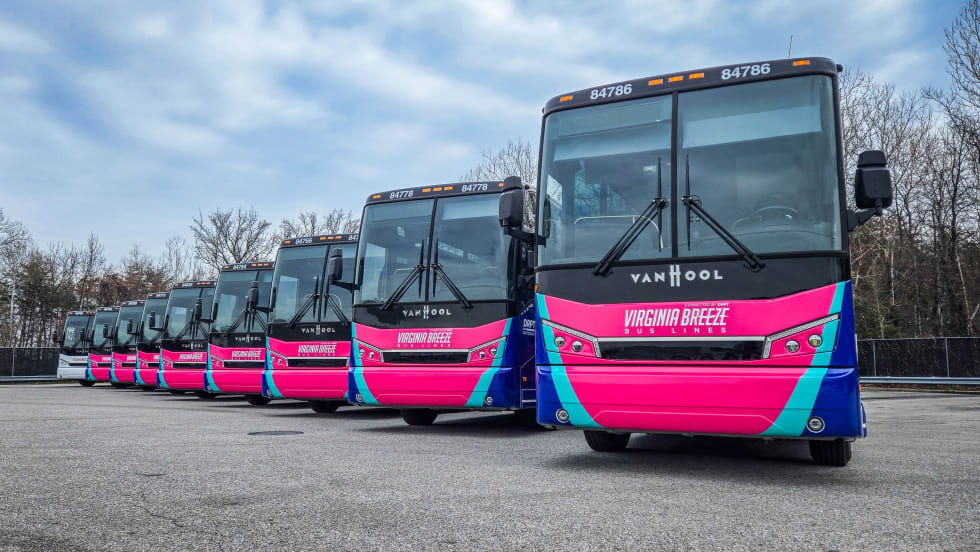
Motorcoach Market Remains Flat Amid Shift in Buying Patterns
Q2 sales totaled 514 units, up slightly from 2025, as operators favored pre-owned equipment and public-sector purchases increased.
Read More →