



NABI unveils CompoBus at Alabama plant
45-foot model unveiled before crowd of congressmen and transit leaders.

North American Bus Industries (NABI) unveiled a prototype of its 45-foot CompoBus at its plant in Anniston, Ala., on Dec. 1. In attendance were U.S. Sen. Richard Shelby (R-Ala.) and U.S. Rep. Mike Rogers (R-Ala.) as well as Roger Snoble, CEO of the Los Angeles County Metropolitan Transportation Authority (MTA). Shelby is chairman of the key Senate public transportation authorizing committee and appropriations subcommittee. Patrick Rona, president and CEO of NABI, said innovations like the CompoBus would not have been possible without Shelby’s leadership. “Investments in public transportation improve the quality of life for everyone,” Rona said. The body of the CompoBus is constructed with a lightweight composite material that is rust- and corrosion-resistant. Its 45-foot length increases passenger capacity without adding to operating costs, according to NABI officials. The unique unitized composite body has allowed NABI to extend the bus length by five feet, which puts seven more seats on the two-axle bus without substantially affecting other operating costs. The MTA has ordered 100 of the heavy-duty buses for its bus rapid transit (BRT) program. Those vehicles, which will be powered by CNG, will be used in MTAÕs highly successful Metro Rapid program, a BRT network that is being expanded each year across the Los Angeles area. “We see tremendous potential in the CompoBus,” said John Catoe, MTA deputy CEO. “We’re adding capacity while saving weight, a rare combination in bus manufacturing.” Meanwhile, NABI is nearing completion of delivery of 56 units to the city of Phoenix for its BRT program. Because the application in Phoenix involves more interurban and suburban express service than the MTA’s, the buses have more amenities, including a plush interior, reading lights and padded, high-back seats.
More Management

COTA Launches First Customer Experience Action Plan to Improve Transit Service
The new plan outlines improvements to service reliability, accessibility, communication, and the overall rider experience across Central Ohio's transit system.
Read More →
LA Metro September Ridership Climbs 3.9%, Led by Rail Growth
The agency recorded more than 27.2 million boardings, with rail ridership increasing 12.4% year over year and the D Line posting the largest gains.
Read More →
Utilimarc Launches SmartReplace to Optimize Fleet Replacement Decisions
AI-powered SmartReplace helps fleets prioritize vehicle replacements, model budget scenarios, and build more defensible long-term strategies.
Read More →
APTA Honors 2026 Award Winners, Hall of Fame Inductees at TRANSform & EXPO
Innovations in autonomous and zero-emission transportation, standout transit systems, and industry leadership took center stage among this year's honorees.
Read More →
7 Ways to Build a Better Transit Internship Program
Lessons from DRPA/PATCO’s approach to creating a meaningful internship experience—and developing the next generation of transportation professionals.
Read More →
Scenes from APTA TRANSform & EXPO 2026
Transit leaders, manufacturers, and industry professionals gathered in Chicago to explore new technologies, share ideas, and discuss the future of public transportation.
Read More →
Building Stronger Leaders, More Resilient Transit Teams
Dr. Carol Parker Walsh discusses leadership development, employee retention, workplace culture, and preparing transit’s workforce for AI and automation.
Read More →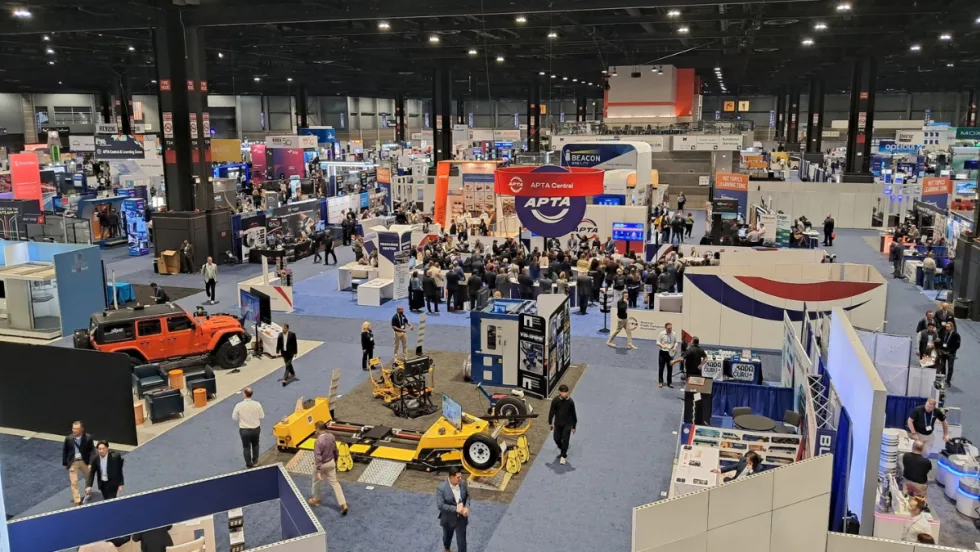
APTA 2026 TRANSform & EXPO Kicks Off in Chicago
After 45 years, APTA returns to Chicago with a focus on next-generation fleets, AI, connected transit networks, and the funding strategies shaping public transportation’s future.
Read More →
New York MTA Warns Federal Tariffs Could Add $1 Billion to Rolling Stock Costs
The agency said tariffs on specialized imported components could reduce the purchasing power of its $23 billion investment in new subway cars, railcars, and buses.
Read More →
From the Show Floor: What Happened at APTA TRANSform & EXPO 2026
See the latest product launches, partnerships, technology updates, and transit industry announcements from APTA TRANSform & EXPO in Chicago.
Read More →