



N.Y. Grand Central Terminal foyer dedicated to Kennedy Onassis
The former First Lady and iconic New Yorker led the historic campaign to save Grand Central from destruction in the 1970s.

Photos by Marc A. Hermann - MTA New York City Transit
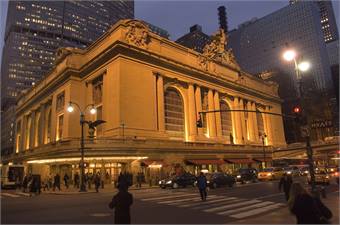
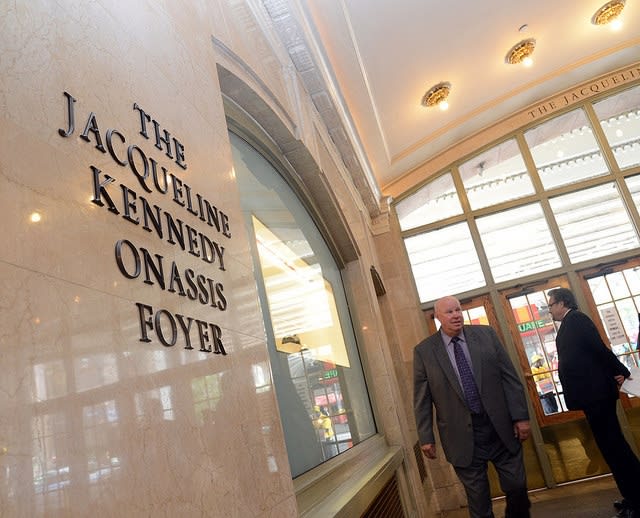
MTA Metro-North Railroad, the steward of Grand Central Terminal, dedicated the Terminal’s fully restored, main entry vestibule at 89 East 42nd Street and Park Avenue (Pershing Square), in honor of Jacqueline Kennedy Onassis, the former First Lady and iconic New Yorker who led the historic campaign to save Grand Central from destruction in the 1970s.
Onassis’ efforts with the Municipal Art Society (MAS) and other luminaries in New York City, including then-Congressman Ed Koch and MAS leaders Fred Papert and Kent Barwick, helped fight construction of a major office tower atop Grand Central Terminal during a lawsuit that was appealed all the way to the United States Supreme Court. It ruled in favor of preservation in a celebrated 1978 decision that marked the first time the Supreme Court ruled on historic preservation and led to the ongoing protection of other landmarks across the nation.
Photos by Marc A. Hermann - MTA New York City Transit
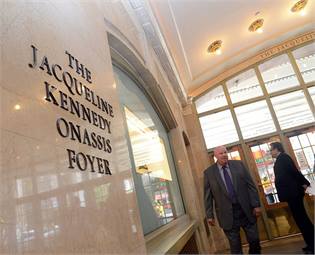
The major features of the historic restoration of the main entry vestibule include repair and cleaning of vintage glass lighting fixtures; fully renovated, cleaned and polished marble walls and floors, including removal and restoration of the inscription lettering over the doors leading into Vanderbilt Hall; extensive door refurbishments; a new, safety-enhanced, non-slip, entry mat banded with a brass border; energy-efficient lighting atop the cornices to help enhance illumination levels; and repainting of the walls and ceiling.
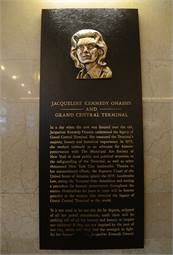
New features of the foyer include a plaque honoring Mrs. Onassis’ work to save the Terminal; the name rendered in bronze letters on the wall and painted along the arch leading to 42nd Street; and two display vitrines rotating digital imagery that recount Onassis’ life and the 101-year history of the Terminal, including its preservation and renovation.
The unique plaque, mounted on the foyer’s west wall, is 43” high and 18” wide, made of bronze with an artist-created bronze relief of Onassis and a narrative describing her role in saving the Terminal. The historic restoration of the main entry vestibule at 89 East 42nd Street and its dedication as the Jackie Kennedy Onassis Foyer was performed for approximately $465,000.
“The dedication of the Jacqueline Kennedy Onassis Foyer is a significant moment for Grand Central and for Metro-North,” said MTA Metro-North Railroad President Joseph Giulietti. “Mrs. Onassis is one of America’s most cherished historical figures, and she is considered by many a renowned savior of Grand Central. This landmark building, universally acclaimed as one of the world’s great public spaces, is still here today because of her leadership. Today, Grand Central Terminal recognizes Mrs. Onassis’ achievements.”
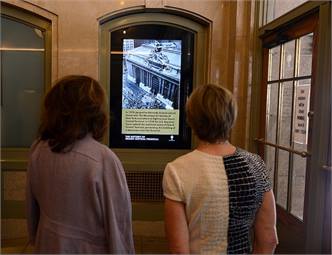
Renovation plans were initially conceived during Grand Central’s 2013 Centennial celebrations, when Metro-North was developing a “legacy project” that would make a permanent improvement to the space and recognize the crucial role Mrs. Onassis played in helping the Terminal reach its Centennial.
The plans for the foyer were reviewed by Ambassador Caroline Kennedy, who served as Honorary Chair of the Centennial Committee and spoke at the Centennial celebration.
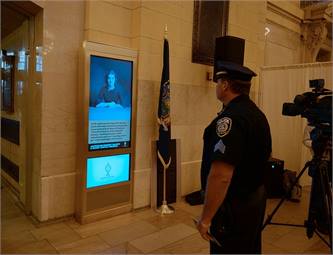
Grand Central Terminal opened in 1913 on the site of the Grand Central Depot, which had been conceived by “Commodore” Cornelius Vanderbilt. The Vanderbilt family led the N.Y. Central Railroad in building the current Grand Central Terminal.
More Management

COTA Launches First Customer Experience Action Plan to Improve Transit Service
The new plan outlines improvements to service reliability, accessibility, communication, and the overall rider experience across Central Ohio's transit system.
Read More →
LA Metro September Ridership Climbs 3.9%, Led by Rail Growth
The agency recorded more than 27.2 million boardings, with rail ridership increasing 12.4% year over year and the D Line posting the largest gains.
Read More →
Utilimarc Launches SmartReplace to Optimize Fleet Replacement Decisions
AI-powered SmartReplace helps fleets prioritize vehicle replacements, model budget scenarios, and build more defensible long-term strategies.
Read More →
APTA Honors 2026 Award Winners, Hall of Fame Inductees at TRANSform & EXPO
Innovations in autonomous and zero-emission transportation, standout transit systems, and industry leadership took center stage among this year's honorees.
Read More →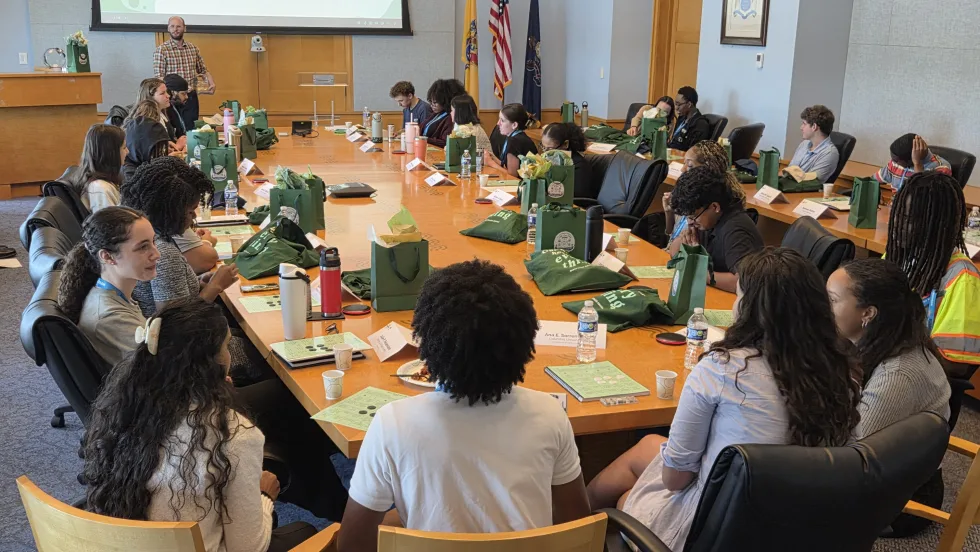
7 Ways to Build a Better Transit Internship Program
Lessons from DRPA/PATCO’s approach to creating a meaningful internship experience—and developing the next generation of transportation professionals.
Read More →
Scenes from APTA TRANSform & EXPO 2026
Transit leaders, manufacturers, and industry professionals gathered in Chicago to explore new technologies, share ideas, and discuss the future of public transportation.
Read More →
Building Stronger Leaders, More Resilient Transit Teams
Dr. Carol Parker Walsh discusses leadership development, employee retention, workplace culture, and preparing transit’s workforce for AI and automation.
Read More →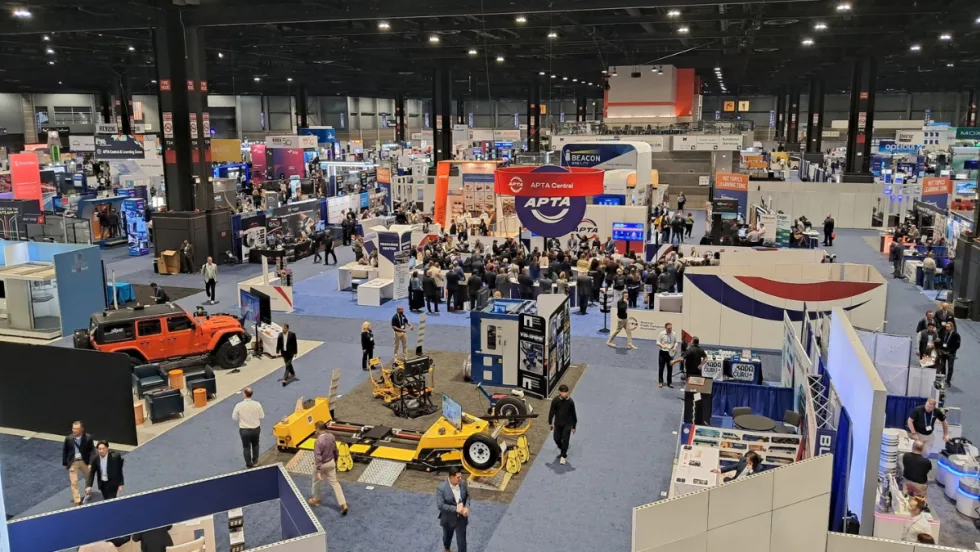
APTA 2026 TRANSform & EXPO Kicks Off in Chicago
After 45 years, APTA returns to Chicago with a focus on next-generation fleets, AI, connected transit networks, and the funding strategies shaping public transportation’s future.
Read More →
New York MTA Warns Federal Tariffs Could Add $1 Billion to Rolling Stock Costs
The agency said tariffs on specialized imported components could reduce the purchasing power of its $23 billion investment in new subway cars, railcars, and buses.
Read More →
From the Show Floor: What Happened at APTA TRANSform & EXPO 2026
See the latest product launches, partnerships, technology updates, and transit industry announcements from APTA TRANSform & EXPO in Chicago.
Read More →