Transit reliability could stimulate ridership, reduce congestion
The report, which analyzes the D.C. Metro system, proposes that greater reliability of transit schedules could motivate more people to leave their vehicles at home and ride the bus.
Greater reliability of transit schedules could motivate more people to leave their vehicles at home and ride the bus, according to a new peer-reviewed report.
The report, “Reliability of Bus Transit Schedules in Washington D.C.,” was authored by Stephen Arhin, PhD, Errol D. Noel, PhD, and Janet Thomas, all of Howard University and working under the sponsorship of the Mineta National Transit Research Consortium.
Ad Loading...
“Before they decide to ride transit, people place great importance on its reliability, especially in urban areas,” said Dr. Arhin. “Will the bus or train arrive on time? Can passengers make their connections? Will they be standing in the rain waiting for a late bus? This is why most transit agencies set certain performance criteria, including on-time arrival and departure. Our research goal was to determine whether the Washington Metropolitan Transit Authority (Metro) achieved its own performance criterion for timeliness and to recommend improvements.”
The generally accepted standard for “on time” is one minute early and five minutes late. The Metro criterion was broader — two minutes early and seven minutes late. After analyzing 15 Metro lines for one year, the researchers found the bus system met its own performance goal 75% of the time, on average.
However, it met the industry standard criterion only 61% of the time, on average. The report includes individual performance results for each of the 15 studied lines.
The research team recommended that Metro adapt the industry standard criterion for on-time performance. A second recommendation stipulated that scheduled arrival studies should be conducted periodically on several representative Metro bus lines and routes so adjustments could be made and progress could be monitored.
A third recommendation suggested Metro conduct a travel and run-time study using automated data collection to gauge the efficiency of bus travel on heavily traveled and patronized routes.
Ad Loading...
The team also recommended data should be routinely compiled and analyzed for Metro’s performance or reliability indicators on three-year to five-year cycles, because characteristics of routes could change over time.
In addition to the on-time arrival metric at bus stops, industry literature recommended travel time, dwell time at stops, run time and transit level of service should also be considered in evaluating schedule performance. One reliability survey noted its transit riders generally have a favorable opinion of transit reliability, whereas non-riders of non-frequent riders generally do not.
The 52-page report includes 19 figures and 12 tables. To download the full report at no cost, click here.
The agencies, San Diego MTS and NCTD - San Diego Railroad, which share a fare system (PRONTO), proposed the changes to help address their respective financial sustainability strategies.
The project was awarded under the Washington State Contract, enabling FAX to streamline its procurement processes while ensuring value and quality from an experienced transit solutions provider, said officials.
The historic initiative represents the first time since MARTA began bus operations in the early 1970s that the entire system has been redrawn from scratch.
In Part 1, Blandon shares his journey from the U.S. Marines to a leadership role in public transit, along with insights on mentorship and professional growth within the industry.
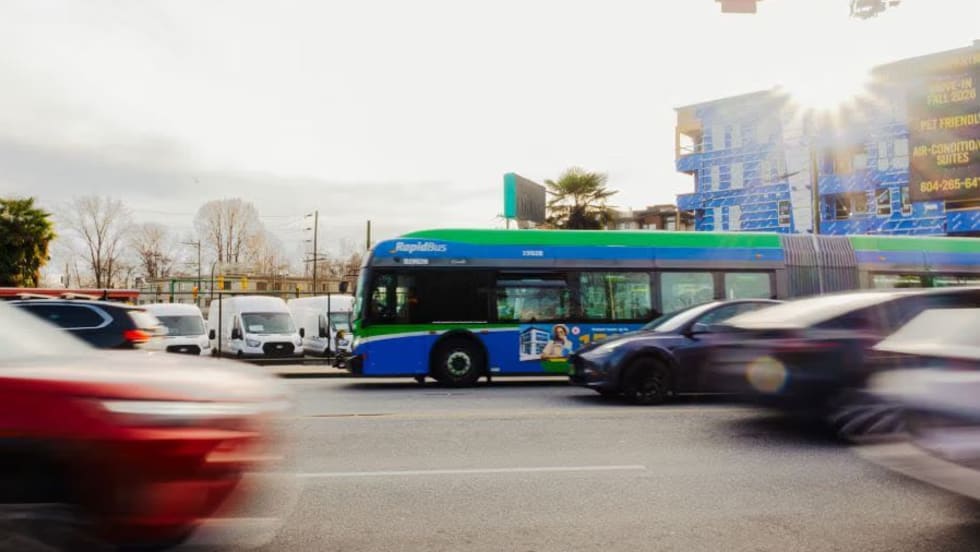
Funded through the 2025 Investment Plan, the new R2 Marine–Willingdon RapidBus is expected to begin service in September, more than three months ahead of schedule.
Complete Parts features new branding with a new logo, a new contact telephone number, a dedicated order desk, enhanced processes and inventory, all designed to provide the parts bus operations need.
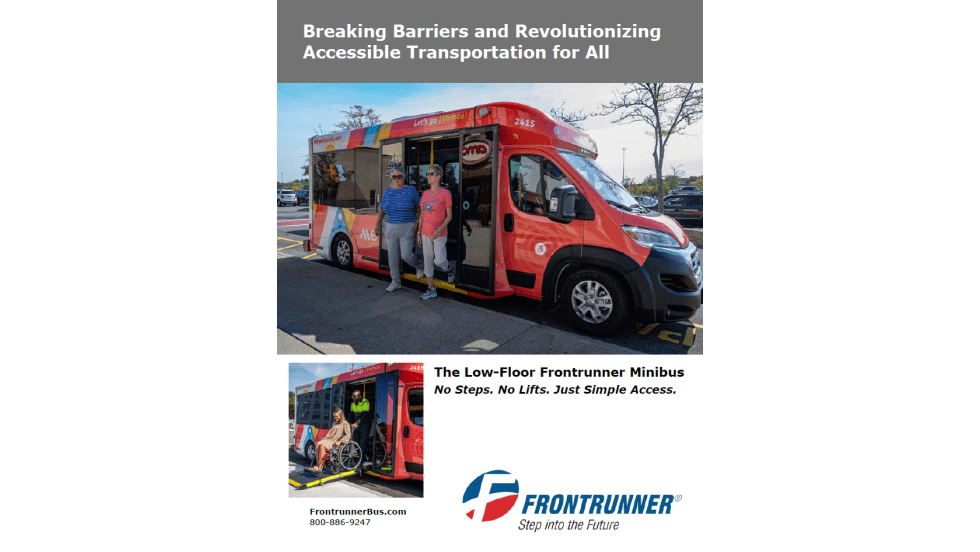
Accessible transit isn’t a feature—it’s a responsibility. This whitepaper explores how the Low-Floor Frontrunner is redefining mobility with a breakthrough design that removes barriers, empowers riders, and delivers measurable operational advantages for agencies. Discover why this next generation minibus is setting a new standard for inclusive transportation.