



L.A. Metro Expands On-Demand Pilot Project
Metro Micro, the agency’s new ride-hailing service that offers shared rides operated by Metro employees in partnership with RideCo. Inc., will begin operating services in the Compton/Artesia, El Monte, and North Hollywood/Burbank service zones beginning Jan. 25.
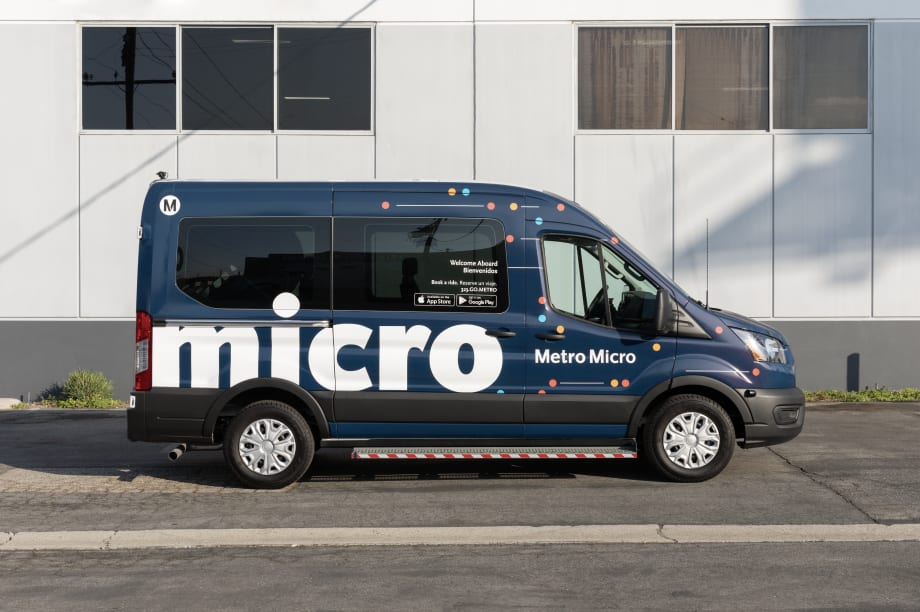
During the COVID-19 pandemic, Metro expanded the Mobility on Demand project to include essential locations such as grocery stores and hospitals while continuing to offer rides at no cost.
LA Metro
The Los Angeles County Metropolitan Transportation Authority (Metro) is expanding Metro Micro into three new zones in Compton/Artesia, El Monte, and North Hollywood. These areas are currently served by Metro’s Mobility on Demand pilot project, which will end Jan. 24 after two successful years of partnering with private ridesharing company Via.
Metro Micro, the agency’s new ride-hailing service that offers shared rides operated by Metro employees in partnership with RideCo. Inc., will begin operating services in the Compton/Artesia, El Monte, and North Hollywood/Burbank service zones beginning Jan. 25. Rides cost an introductory rate of $1 per ride (transfer not included) for the first six months. Rides must begin and end within each zone.
Metro Micro is designed to replace short, solo trips by offering a flexible, on-demand service operated by Metro employees in vehicles that hold up to 10 passengers. Along with other safety measures, capacity is currently limited to five passengers to reduce risk during the COVID-19 pandemic.
The Mobility on Demand pilot began by offering shared rides to or from transit stations in those zones to expand equitable, affordable, and efficient access to Metro’s existing transit network. During the COVID-19 pandemic, Metro expanded to include essential locations such as grocery stores and hospitals and continued to offer rides at no cost. The project also began delivering food and diapers to families in need in partnership with First 5 LA as the pandemic grew.
“We’re incredibly proud of the successful conclusion of our Mobility on Demand pilot project and excited that the lessons learned will be applied to continue to provide our riders new, high-quality mobility options,” said Metro CEO Phillip A. Washington. “Metro Micro has taken up that mantle of innovation and experimentation and we expect even more success as we expand its footprint to better help our riders get around Los Angeles County for essential trips while reducing traffic.”
Metro’s Mobility on Demand pilot was launched with private ridesharing company Via in 2019 and funded in part by a Federal Transit Administration Mobility on Demand grant and designed to offer a flexible, new option for first- and last-mile trips to and from transit. In its two years of operation, this pilot project provided more than 250,000 rides and met or exceeded project goals, including average wait times, ridership, and average ride ratings, at 4.9 stars out of 5.
Even with the COVID-19 pandemic, ridership grew by 178% in 2020 as compared to the previous year, demonstrating the value and importance of on-demand technology for essential trips for vulnerable communities.
During the COVID-19 pandemic, Metro expanded the Mobility on Demand project to include essential locations such as grocery stores and hospitals while continuing to offer rides at no cost. The project also began delivering food and diapers to families in need in partnership with First 5 LA as the pandemic grew. Metro will continue these essential goods delivery programs for families in partnership with First 5 LA and its partner organizations during the COVID-19 pandemic.
The addition of the three Metro Micro service zones will be accompanied by a request from the Metro Board of Directors for just under $6 million at their Jan. 28 meeting to cover the cost of operations in these new zones beyond the current fiscal year.
More New Mobility

ENC Unveils ZAVIR Medium-Duty Electric Shuttle at APTA EXPO
The new ZAVIR brand targets shuttle and paratransit operations with battery-electric and range-extended electric vehicle options.
Read More →
Public Transit Conference Returning to GFX in 2027, Call for Papers Now Open
The Call for Papers is now open, allowing transit agency professionals and industry experts to help shape the PTC educational program by submitting session ideas for consideration.
Read More →
Everett Transit, Community Transit Outline Consolidation Agreement
The proposed agreement calls for a 50% increase in bus service in Everett, a new microtransit zone, continued paratransit service, and the transfer of Everett Transit operations to Community Transit.
Read More →
What Multimodal Data Can Tell Transit Agencies About Rider Demand
See how bike-on-bus data is giving transit agencies new insight into rider demand, capacity constraints, and gaps in first- and last-mile connections.
Read More →
From Hardware to Digital Partner: Luminator Charts Its Next Chapter
CEO Magnus Friberg discusses Luminator’s shift toward becoming a digital partner, the growing importance of software and interoperability, and how AI can help agencies improve operations and passenger experience.
Read More →
Biz Briefs: Alstom Lands Canadian Contract, LYT to Supply California TSP, and More
In METRO's latest installment, we take a look at recent news from Complete Coach Works, Beep, FlixBus, and more partnerships making headlines across the transportation sector.
Read More →
CharterUP’s Armir Harris on Technology, AI, and the Future of Group Mobility
In a recent episode of METROspectives, CharterUP Founder/CEO Armir Harris discussed the company’s evolution from an online charter bus marketplace into a technology platform supporting public- and private-sector mobility and much more.
Read More →
Jacksonville’s NAVI Project Charts a New Course for Autonomous Public Transportation
Through its NAVI program, JTA is showing how autonomous vehicles, intelligent infrastructure, and coordinated operations can work together to deliver everyday public transportation.
Read More →
Biz Briefs: Luminator Marks Milestone and More
From manufacturers and suppliers to transit agencies and motorcoach operators, these updates offer a snapshot of the projects, partnerships and business moves driving the industry forward.
Read More →
New Tricks for Old Bureaucracies: Joshua Schank on Making Transit Innovation Stick
Former LA Metro Chief Innovation Officer Joshua Schank discusses why good ideas aren't enough, how transit agencies can overcome resistance to change, and why today's challenges demand more innovation.
Read More →