



METRO Magazine Logo
MenuMENU
SearchSEARCH

How One Vehicle Can Expose Agencies to Liability, Brand Damage

Whether a transit agency has a few non-revenue/supervisor vehicles or many distributed among several bus yards — every agency can benefit from having their entire fleet protected with video surveillance.

by Daniel Pulskamp
April 22, 2021
How One Vehicle Can Expose Agencies to Liability, Brand Damage

Video surveillance systems can help support an agency by ensuring supervisors operate their vehicles in a safe manner and conduct themselves with diplomacy and tact.

Credit:

Safe Fleet

4 min to read


Your fleet isn’t fully protected if a portion of it isn’t safeguarded with video surveillance. Whether you operate one non-revenue/supervisor vehicle or several, the importance of protecting your entire fleet applies equally. 

Most transit agencies understand the value of video surveillance on their fixed-route vehicles. They make use of systems to protect their drivers and passengers by gathering irrefutable evidence in the event of an incident or accident. They also rely on the use of surveillance systems to encourage all bus occupants to demonstrate acceptable personal conduct, including that of the bus driver.

Ad Loading...

In many ways, supervisor vehicles or non-revenue vehicles present the same exposure risks. An agency still has the need for an irrefutable version of the truth that will stand up in court, as well as the means to encourage their staff to present the best versions of themselves during commonplace and difficult interactions with other drivers and the general public. Unlike fixed-route buses, non-revenue vehicles also present the dilemma of not following a set route. In addition to the gaps noted above, a transit agency also faces the challenge of not knowing where their non-revenue vehicles are and where they’ve traveled. Without video surveillance, supervisor vehicles present an uncomfortable number of liability risks to the transit agency.  

Value of irrefutable evidence

Not knowing exactly what happened or who was at fault can be extremely costly and set actions in motion that can be detrimental to the agency. Take an example that occurred in a parallel industry that has similar challenges to those faced by transit authorities. In this case, the driver of a commercial vehicle collided with a passenger vehicle, severely injuring one of the occupants. The police report found fault with the driver of the commercial vehicle, which resulted in a $40 million lawsuit. Fortunately for the commercial organization, their vehicles were outfitted with video surveillance systems. Footage pulled from the commercial vehicle in question told a different story and ultimately aided in a complete dismissal of the lawsuit. 

Best behavior/behavior coaching 

Video surveillance systems can help support an agency by ensuring supervisors operate their vehicles in a safe manner and conduct themselves with diplomacy and tact. Cameras can ensure the agency knows they are employing safe drivers with footage that shows they are not texting, talking on their phones, or distracted from their jobs. Audio helps confirm drivers are conducting themselves in accordance with agency guidelines. Surveillance telematics data also tells the agency their driver obeys posted speed limits, doesn’t make erratic lane changes, or practices harsh braking. This same system can support driver coaching for the same practices — safe behavior and professionalism. 

Ad Loading...

Knowing where your vehicles are

There’s money to be saved by being efficient. If a transit agency knows what’s going on with their entire fleet and exactly where their vehicles are on a regular basis, they can make better business decisions that ultimately reflect on better use of their non-revenue fleet. Smaller agencies with non-revenue fleets of less than 10 vehicles are just as impacted by not knowing where their non-revenue vehicles are. Agencies that operate larger non-revenue fleets and multiple bus yards/depots must also contend with not being able to locate vehicles within their bus yards, or within their agency’s jurisdiction. Surveillance systems that employ GPS location-based technology can address these challenges. Agencies that know where their non-revenue vehicles are located, and how they are being used, can increase their efficiency, saving both money and time. 

Fully protecting your fleet

Whether a transit agency has a few non-revenue/supervisor vehicles or many distributed among several bus yards — every agency can benefit from having their entire fleet protected. Fully protected, defendable data that they own and can easily access just like their fixed-route vehicles. Data that can enable increased situational awareness, increased coaching ability for consistent and safe behavior, more efficient use of supervisor fleet vehicles, and the ability to know where each one of their vehicles are.

If an agency is not already using video surveillance for supervisor or non-revenue vehicles, they can’t afford not to learn more. 

Ad Loading...

Daniel Pulskamp is VP, Transit Bus & Rail, Safe Fleet.

AngelTrax

Capture traffic coming, going, and beside the bus with the patent-pending exterior Parallax camera’s 210-degree field of view. Each EXTPARLX4K camera captures a view wide enough to include the exterior sidewall of the bus, from front bumper to back bumper. The camera exceeds cinema 4K resolution without the fisheye effect of many wide-angle lenses.

www.angeltrax.com/parallax


PureTech Systems

PureTech Systems’ PureActiv® software solution automates wide-area and perimeter protection where high probability of detection and low nuisance alarm rates are mandatory. AI Video Analytics provide a scalable, layered automated detection, classification, tracking, and deterrent solution for protecting critical infrastructures, transit agencies, facilities, and borders. PureTech guarantees near-zero nuisance alarm rates and high probabilities of detection, providing a superior level of perimeter security. 

www.puretechsystems.com


REI

Strengthen passenger, driver, and vehicle safety with HD video surveillance solutions. REI surveillance solutions feature cameras for crystal-clear images, up to 12 channels of HD recording, and ARMOR™, an optional cloud-based video management software suite. Enhance exterior safety with REI’s 3D 360˚ System for driver assistance during lane changes, turns, and parking. Its views change dynamically according to the selected turn and reverse signals. 

www.radioeng.com 


Safe Fleet 

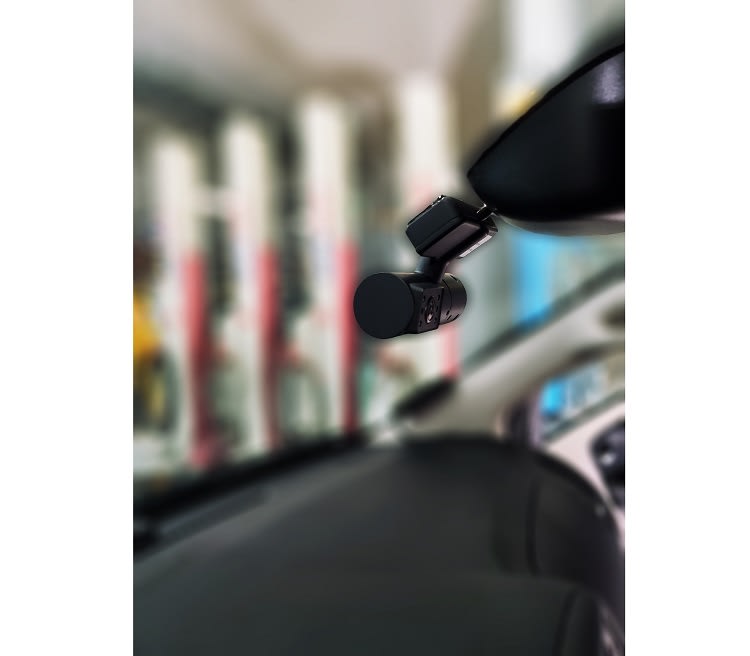
Safe Fleet Duet is a small footprint dual-lens camera and recorder combination, purpose-built for supervisor/non-revenue vehicles to help reduce liability, improve situational analysis, and increase efficiency. The system features storage of up to 1TB, fixed usage costs, and full transit ownership of their own data, as well as the ability to add cameras and turn on future functionality.

www.safefleet.net

Subscribe to Our Newsletter

More Technology

An OCTA ZEB
Technologyby Alex RomanJuly 31, 2026

Biz Briefs: OCTA Taps Clean Energy for Hydrogen Station, Stadler to Supply Via Rail Vehicles, and More

From manufacturers and suppliers to transit agencies and motorcoach operators, these updates offer a snapshot of the projects, partnerships and business moves driving the industry forward.

Read More →
A CharterUP branded Holon AV
New Mobilityby Alex RomanJuly 31, 2026

CharterUP Expands Into New Mobility and Autonomous Transportation

Vice President of New Mobility Stephen Joos discusses how CharterUP is leveraging its nationwide transportation network, technology platform, and autonomous vehicle partnerships to expand into workforce mobility, campus shuttles, and transit solutions.

Read More →
Driving Change: Award Winners Redefine Industry Standards
Technologyby Staff and News ReportsJuly 29, 2026

METRO Magazine Announces 2026 Innovative Solutions Awards Winners

Projects Recognized for Advancing Mobility Through Technology, Accessibility, Workforce Innovation, and Operational Excellence

Read More →
Ad Loading...
Cummins Charts Its Next Move
Technologyby Staff and News ReportsJuly 24, 2026

Cummins Introduces Phased Model Year 2027 Launch Strategy

According to officials, the approach is designed to maintain regulatory compliance, support customer production schedules, and provide additional time to ramp production in a disciplined manner that helps ensure a successful transition for the industry.

Read More →
A photo of an Amtrak train with a logo
Managementby Alex RomanJuly 24, 2026

Biz Briefs: STV teams with Amtrak, Motorcoach Operators Boost Fleet and Land Contracts, and More

From manufacturers and suppliers to transit agencies and motorcoach operators, these updates offer a snapshot of the projects, partnerships and business moves driving the industry forward.

Read More →
Nathaniel P. Ford Sr., named President/CEO at DART
Managementby Alex RomanJuly 22, 2026

DART Taps Nathaniel P. Ford Sr. as Next President/CEO

Since 2012, Ford has served as the CEO of the Jacksonville Transportation Authority

Read More →
Ad Loading...
Maintenance Leadership for a Changing Industry
Managementby Alex RomanJuly 22, 2026

AC Transit’s Cecil Blandon on Building the Next Generation of Transit Maintenance Leaders

The agency’s maintenance chief discusses leadership, workforce development, zero-emission technology, and preparing technicians for the future of public transportation.

Read More →
California High Speed Rail in High Desert Corridor
Railby Alex RomanJuly 21, 2026

California High-Speed Rail Authority Signs MOU to Advance High Desert Corridor

The agreement deepens collaboration between the California High-Speed Rail Authority and the High Desert Corridor Joint Powers Agency, supporting design integration, cost savings, and faster delivery of a key Southern California rail link.

Read More →
TechnologyJuly 20, 2026

Building the Next Generation of Transit Technology

In this edition of METROspectives, Luminator CEO Magnus Friberg discusses the company's transformation, the growing role of AI and software, and what's next for transit technology.

Read More →
Ad Loading...
What Transit Agencies Get Wrong About Data METROspectives episode with strada360's Steve Lassey
Sponsoredby Alex RomanJuly 20, 2026

How Data, Strategy, and Community Engagement Are Reshaping Transit

In this edition of METROspectives, strada360 CEO Steve Lassey discusses how transit agencies can better align planning with operations, leverage data to improve decision-making, and build public trust as they prepare for the future of mobility.

Read More →







