



So. Cal's Metrolink Unveils First Formal Climate Action Plan
The plan addresses climate change, air quality, and other pressing sustainability issues to help advance the regional railway’s aggressive goal for zero emissions by 2028.
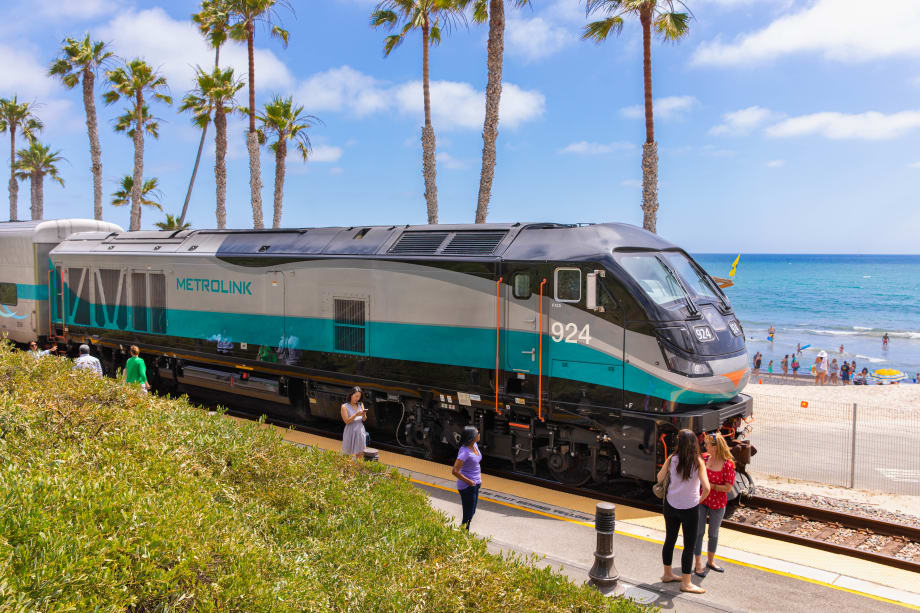
Currently, a pilot program is underway utilizing a single Tier 2 locomotive to test renewable plant-based diesel fuel.
Metrolink
Metrolink unveiled a new Climate Action Plan that charts a course toward a greener future for the agency. The plan, Metrolink’s first formal environmentally focused initiative, addresses climate change, air quality, and other pressing sustainability issues to help advance the regional railway’s aggressive goal for zero emissions by 2028.
While the plan sets a framework for improvements over the next decade, Metrolink is embarking on more immediate measures to reduce its carbon footprint. Currently, a pilot program is underway utilizing a single Tier 2 locomotive to test renewable plant-based diesel fuel — the latest, greenest alternative fuel on the market that is chemically similar to petroleum diesel, but 100% renewable and sustainable. Metrolink hopes to see a reduction in greenhouse gas and criteria pollutant emissions during the pilot period. If the Tier 2 pilot proves successful, testing will begin on a single new Tier 4 locomotive. If all goes well with the Tier 4 locomotive, then Metrolink can transition its entire fleet to renewable diesel fuel.
"As the premiere passenger rail system in the state, we are investing in a sustainable future of our mega-region. We’re in the process of launching exciting pilot programs that could potentially put our entire fleet on a plant-based diet in the near future — and we’ll continue to explore emerging business solutions tied to measurable goals and targets outlined in the plan that strengthen our resiliency and contribute to a healthier tomorrow,” said Stephanie Wiggins, CEO of Metrolink.
Metrolink will build upon the foundational sustainable accomplishments the agency has achieved to date. Since 2018, Metrolink has replaced all its “dirty” Tier 0 trains and currently operates 39 Tier 4 trains that uphold the most rigorous air quality standard to date by the Environmental Protection Agency (EPA). Final Tier 4 deployment is expected by spring 2021.
Also, over the past decade, Metrolink has done its part to reduce its footprint in the 250,000 square-feet of maintenance yards, dispatch centers, and administrative offices. Metrolink’s administrative and dispatching offices uphold stringent green standards for building energy and resource conservation. The agency has made significant strides forward with such sustainability efforts as storm drain upgrades, recycling, and composting, and lighting system retrofitting. Last year, its Central Maintenance Facility was recognized by the Los Angeles Department of Water and Power (LADWP) with its Sustainability Impact Award in Energy Management for Metrolink’s Maintenance Yard lighting upgrades, which resulted in a 32.45% reduction in annual energy consumption.
In recent years, Metrolink facilities have been certified with USGBC Leadership in Energy and Environmental Design (LEED) rating designations, a globally recognized symbol of sustainability achievement. In 2017, the agency’s Los Angeles Headquarters received a LEED Gold certification for sustainability and is equipped with thermal energy storage, backup generator pads, and technology to optimize oxygen, light, and acoustic levels. Meanwhile, Metrolink's Dispatch & Operations Center (DOC) Building in Pomona is Silver LEED certified and equipped with highly efficient, and cost-saving green design technology.
To view Metrolink’s Sustainability Targets, click here.
More Rail

Report Examines NJ TRANSIT Reliability, Funding Challenges
The Garden State Initiative analysis examines the roles of Amtrak infrastructure, fleet management, and agency operations while recommending a more performance-based approach to improving reliability.
Read More →
Stadler, CapMetro Sign Long-Term Rail Fleet Support Agreement
Beginning in 2027, Stadler will provide on-site technical expertise, spare parts support, training, and obsolescence management to help extend the reliability and longevity of CapMetro’s GTW fleet.
Read More →
Biz Briefs: Alstom Lands Canadian Contract, LYT to Supply California TSP, and More
In METRO's latest installment, we take a look at recent news from Complete Coach Works, Beep, FlixBus, and more partnerships making headlines across the transportation sector.
Read More →
CATS Gold Line Marks 5 Years of Service, 2.8M Passenger Trips
With a six-mile expansion planned, the Charlotte streetcar is positioned to connect more neighborhoods and major transit hubs across the region.
Read More →
Why Simulating Pedestrian Movement Has Become Essential for Modern Rail Stations
Pedestrian microsimulation is helping rail planners identify bottlenecks, test station designs, and prepare complex transit hubs for growing passenger volumes.
Read More →
Amtrak Begins Major Construction at New York’s Sunnyside Yard
The new maintenance facility will support Amtrak’s Airo trainsets while improving maintenance efficiency and turnaround times in New York.
Read More →
Chicago Leaders Unveil Plans for O’Hare Airport Express Train
The privately developed project would offer a 15-minute trip between downtown and O’Hare’s Terminal 2, with trains operating every 15 minutes on a dedicated track. The service would use battery-electric trains and three existing freight rail rights-of-way.
Read More →
OCTA Maps Out 30-Year Strategy to Protect Coastal Rail Corridor
The draft feasibility report identifies strategies to protect the coastal rail line for decades as the agency continues near-term stabilization and sand placement efforts.
Read More →
The Business Voice Behind Public Transportation
As chair of APTA’s Business Members Board of Governors, Ray Melleady explains how more than 850 business members are partnering with transit agencies to advance funding, innovation, and industry-wide collaboration.
Read More →
FRA Announces $5.3B in Rail Investments, Including $2B for Amtrak
Funding will support grade-crossing improvements, infrastructure upgrades, and new Amtrak equipment in 23 states.
Read More →