



APTA Honors WSP, MARTA for Sustainability Practices
Public transit agencies and businesses voluntarily choose to join the APTA Sustainability Commitment program. The organizations are recognized based on specific measurable achievements.
The American Public Transportation Association (APTA) has recognized two of its member organizations for continued achievements in sustainability.
Public transit agencies and businesses voluntarily choose to join the APTA Sustainability Commitment program and pledge to implement processes and actions that create continuous improvements in environmental, social, and economic sustainability. Based on specific measurable achievements, organizations are given Platinum, Gold, Silver and Bronze Level recognition.
This year, the Platinum-level recognition was given to WSP USA and the Gold-level recognition was awarded to Metropolitan Atlanta Rapid Transit Authority (MARTA). (MARTA previously received APTA’s Bronze-level recognition in 2015.)
PLATINUM Level – WSP USA
A founding signatory to the Sustainability Commitment Program, WSP is the first business member to earn the Platinum recognition. In their role, the greatest benefit WSP can provide is through its services offered and projects delivered. For example, through WSP’s global Future ReadyTM innovation program, WSP helps its transit clients create a more sustainable, prosperous, and resilient society by evaluating how each project can anticipate and prepare for future changes in societal needs, resource availability, technology, and climate.
Among WSP’s achievements include supporting the California High Speed Rail Authority in recently achieving Envision platinum certification, and having a commitment to achieve net zero emissions across its value chain by 2040, which is supported by science-based greenhouse gas emissions reduction targets approved by the Science-Based Targets initiative (SBTi).
GOLD Level – MARTA
MARTA is committed to operating an environmentally, socially, and economically sustainable public transit system. Notably, MARTA has successfully achieved ISO 55000 certification for their asset management program and ISO 14001:2015 Environmental Management System certification at nine of its facilities.
Outside its facilities and operations, MARTA has participated in a number of community programs over the recent years. MARTA constructed a low-impact business village near transit, plus they are working on expanding the Transit-Adjacent Development program. Also, in the face of evolving mobility landscape, MARTA contributed to improving multimodal accessibility by partnering with the City of Atlanta in the Relay Bikes, a bike share program, and installed bike racks and fix-it stations. Lastly, as electric vehicles (EV) become more commonplace in Atlanta, MARTA has started and will add EV charging stations to rail and bus station parking lots and structures, as well as maintenance facilities for employees to use.
“We are thrilled to welcome our first APTA business member, WSP, to the Platinum level of our sustainability program and to recognize the continued work of MARTA as it builds its service for a more sustainable future,” said APTA President/CEO Paul P. Skoutelas. “From the supply chain changes at WSP to the growth at MARTA building better transit-oriented development and providing more accessibility for bike access to transit, these are just a few of the ways our members are making our industry more sustainable.”
First started in 2009, 126 public transit agencies and businesses have signed on to the APTA Sustainability Commitment. Currently, 48 signatories have received higher level recognition.
More Zero Emissions
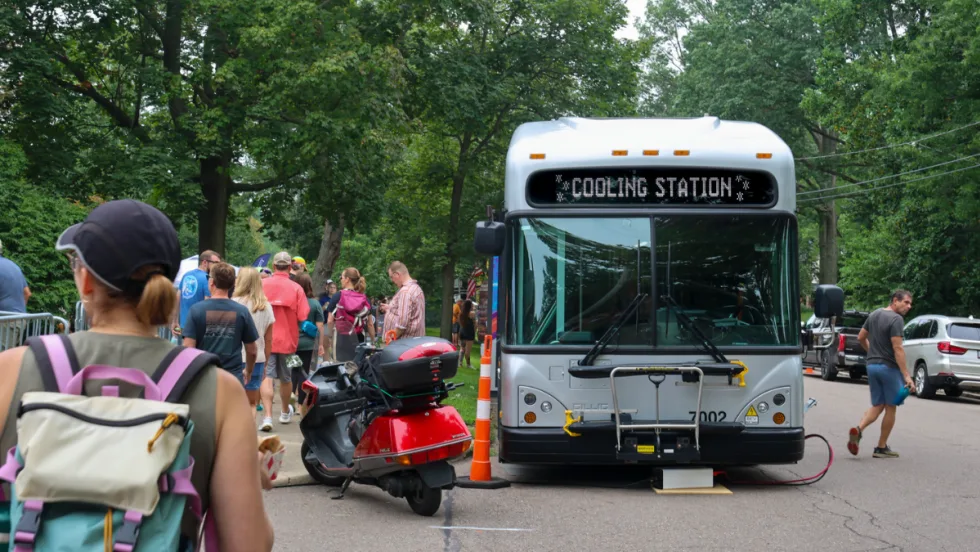
Ohio’s METRO RTA Turns Electric Buses into Mobile Power Sources at PorchROKR
See how three Gillig battery-electric buses powered festival stages while the agency’s new Park & Ride service carried approximately 1,000 attendees, demonstrating another potential use for transit agencies’ electric fleets.
Read More →
CALSTART and Forth Combine to Form Catalyst Mobility
The new name represents a renewed vision for the nonprofit focused on advancing clean, equitable, and affordable transportation solutions that move people and goods.
Read More →
Building a Flexible Path to Transit Electrification
John Hroncich discusses BAE Systems’ modular and scalable approach, lessons learned from decades of real-world operations, and how agencies can identify electrification strategies that fit their fleets.
Read More →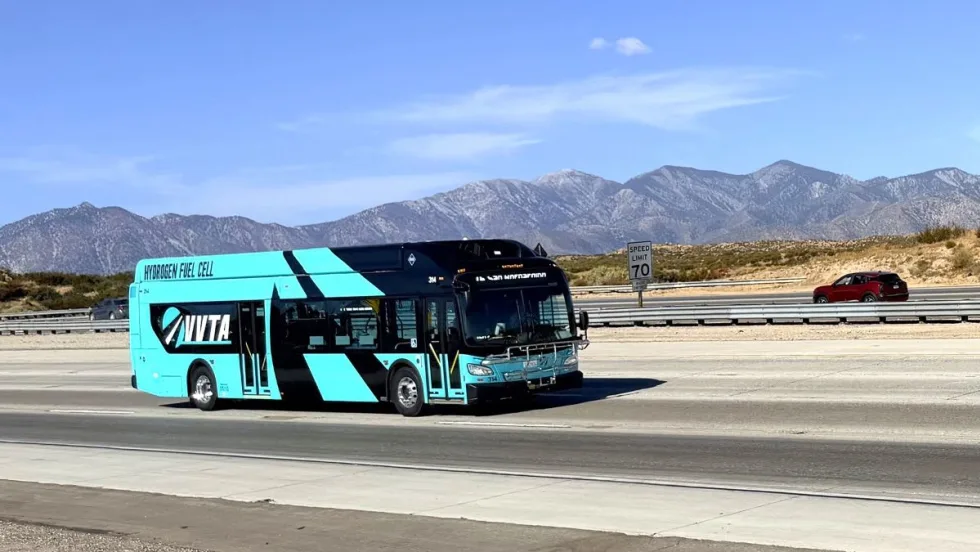
California's VVTA Begins Phased Rollout of Hydrogen Fuel Cell Buses
The agency is introducing 13 zero-emission buses into revenue service while evaluating performance across its urban, rural, and long-distance routes.
Read More →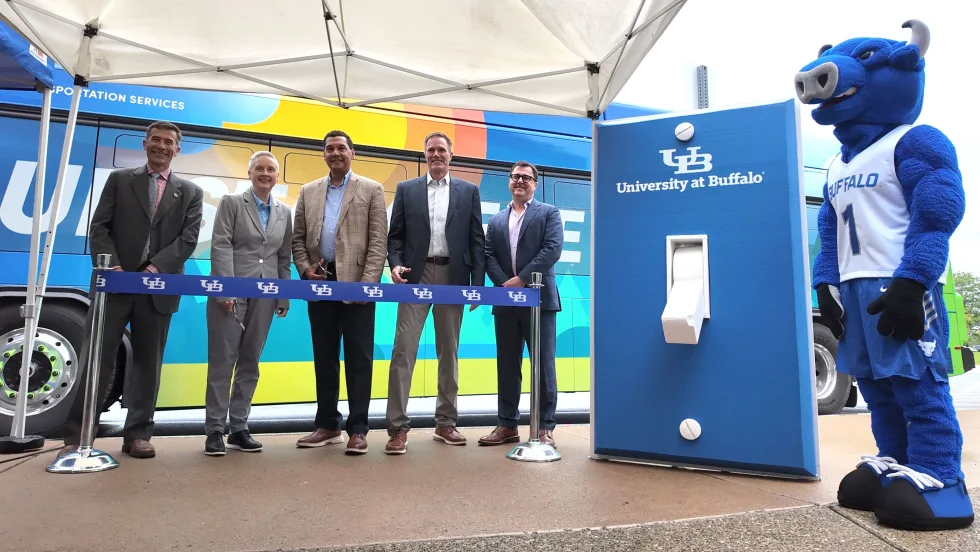
Inside Look: University at Buffalo Puts First 8 Electric Buses Into Stampede Service
UB, transportation solutions provider WeDriveU, and fleet electrification specialist Zenobē marked the deployment in the presence of students, university administrators, and local officials.
Read More →
Biz Briefs: OCTA Taps Clean Energy for Hydrogen Station, Stadler to Supply Via Rail Vehicles, and More
From manufacturers and suppliers to transit agencies and motorcoach operators, these updates offer a snapshot of the projects, partnerships and business moves driving the industry forward.
Read More →
AC Transit’s Cecil Blandon on Building the Next Generation of Transit Maintenance Leaders
The agency’s maintenance chief discusses leadership, workforce development, zero-emission technology, and preparing technicians for the future of public transportation.
Read More →
CTDOT Taps STV for Electric Bus Facility Design
The firm will work with CTDOT and RVT to define the facility layout, operational requirements, and long-term flexibility for RVT’s growing electric fleet.
Read More →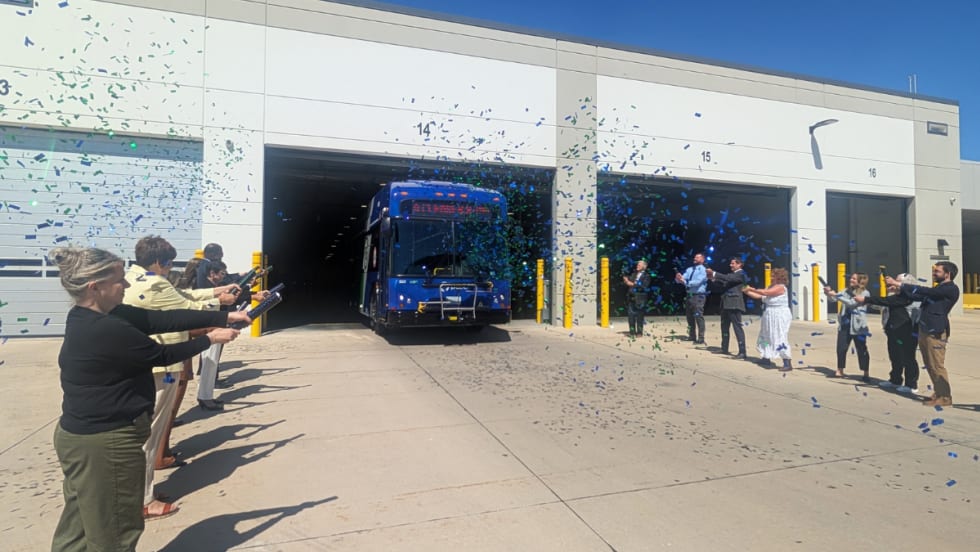
Chicago’s Pace Deploys 24 Hybrid-Electric Buses in Will County
The new buses reduce emissions and fuel consumption while advancing the agency's long-term goal of transitioning to a fully zero-emission fleet.
Read More →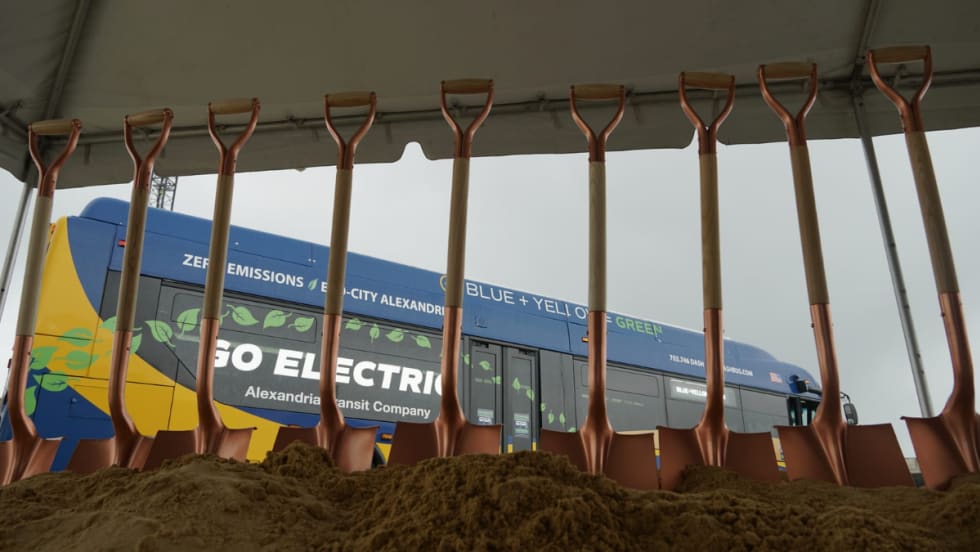
DASH Breaks Ground on First On-Route Electric Bus Chargers in D.C. Region
The fast-charging infrastructure will help extend electric bus range, improve fleet utilization, and support DASH's goal of transitioning to a fully zero-emission fleet.
Read More →