



How The U.S. Will Deploy Intelligent Transit Networks That Enable Connected Vehicles
While America’s transportation infrastructure continues to be one of the country’s greatest historical accomplishments, as well as the lifeblood of the American economy, the system itself continues to have serious challenges during the last two decades.

On average, American drivers lost approximately 26 hours in traffic during 2020, down from 99 hours in 2019.
Getty Images/ferrantraite
While America’s transportation infrastructure continues to be one of the country’s greatest historical accomplishments, as well as the lifeblood of the American economy, the system itself continues to have serious challenges during the last two decades.
This is mainly due to the rise in traffic congestion, which has ensnarled hundreds of cities across the country. Even in suburban areas, traffic congestion is a rising issue, especially when more delivery trucks are competing for road and curb space delivering our online shopping orders. What’s more, competing modes of transportation are also tying up traffic patterns.
On average, American drivers lost approximately 26 hours in traffic during 2020, down from 99 hours in 2019. While this number shows an improvement year-over-year, this trend was largely due to the COVID-19 pandemic and the resulting millions of people reducing their transportation commuting by working from home. As more businesses invite employees back to the office, traffic problems are expected to rise again.
All areas of the U.S. transportation system are focused on curbing this growing traffic trend by introducing and leveraging technologies and solutions that utilize data analytics to create a better traffic flow. Carmakers are also promoting more connected vehicle technologies to make cars and trucks on the roads smarter and more efficient by connecting to any number of databases and platforms that can help vehicles read traffic patterns in real-time.
Advanced Transportation Systems Being Implemented
Intelligent transportation systems (ITS) and connected vehicles are the future of reshaping this infrastructure. ITS systems are the application of sensing, analysis, and communications technologies to ground transportation to improve safety, mobility, and efficiency. While this technology shows great promise, they are only as good as the platforms on which they run.
To fully realize the promise of ITS and connected vehicles, transit agencies are now revisiting Transit Signal Priority (TSP) systems in the hopes of restoring route reliability and on-time performance. Over the last few decades, transit signal priority systems haven’t evolved much from being a transmitter on buses that send messages to receivers installed on traffic signals. The hardware cost to both signals and buses is quite high and requires annual maintenance to guarantee operation. Furthermore, it’s hard to determine whether the system is working because the equipment generally doesn’t produce event logs. When making such a large capital investment, it is very important to know whether the system is working so further expansion can be appropriately determined.
However, these systems, when leveraged with state-of-the-art technologies, are proving to be extremely effective. According to a recent survey, most city officials from communities leveraging transit prioritization technologies said they’re seeing growing improvements in on-time performance of their transit network.
In today’s age of highly reliable large-scale communication access, there exists the opportunity to eliminate the hardware cost of transit signal priority solutions while maximizing the investment on current solutions. Many of today’s signal controller firmware vendors have software functionality to facilitate the function of placing virtual priority calls. The information needed to place these virtual calls can be found at the transit agency. To better manage their fleet, agencies typically have implemented tracking devices on each of their vehicles to report to their computer-aided dispatch and automatic vehicle location (CAD/AVL) software. With vehicle locations known in near real-time, software and networking can now be used to bridge the gap between transit vehicles and city signals to facilitate transit priority in a more reliable, sustainable, and intelligent way.
This removes the need for vehicle detection hardware at the intersection because vehicle location is known through the CAD/AVL system, which enables both priority calls from greater distances away from signals and priority calls coordinated among a group of signals. Furthermore, the system provides real-time insights on which buses are currently receiving priority along with daily reports of performance metrics.

On average, American drivers lost approximately 26 hours in traffic during 2020, down from 99 hours in 2019.
Marc A. Hermann
Prioritizing Traffic Flow & Optimizing Patterns
The right method of placing priority calls to traffic signals is more sophisticated and is not constrained to fixed-point locations. Unlike the current state-of-the-art of placing priority calls from the detection of buses at specific locations that starts a pre-programmed time of arrival, today’s solutions use a “vectorized” approach. In mathematics, a vector is an arrow representing a magnitude and a direction. In today’s advanced traffic management software, the arrow points in the direction of the traffic light and the magnitude is the travel time.
When the system is set up, traffic signals, bus routes, and bus stops all receive a digital representation on this vector. This produces a digital geospatial map where software can then track bus progression along bus routes. This results in a system that can dynamically place transit calls regardless of its location. Instead, the system makes precise priority calls based on the expected time of arrival, which is the basis for all TSP check-in calls supported by all signal controller vendors. And due to the nature of the tracking algorithm, any significant changes to ETA can be adjusted. For example, if a bus was predicted to skip a bus stop but didn't, the system will detect the change and adjust the priority call accordingly.
The Need for the Right Cloud-based Platform
Just like today’s technology-heavy electric vehicles cannot truly exist without a network and infrastructure of charging stations, connected vehicles alone cannot solve the problem of today’s traffic problems, and ITS systems are only as good as the data-sharing platforms they operate on.
These data-sharing platforms have been proven to be highly effective, but only when cities and municipalities that oversee transportation systems make them open for proper data sharing. Many municipalities remain locked into contracts with smart-traffic solution providers who are unwilling to operate under an open data platform, and these cities severely restrict themselves from the true possibilities that a cloud-based platform can provide.
This is problematic since 71% of community officials said their current electronic data provider does not allow for the integration of transit vehicle data with other systems. This issue must be addressed since 90% of these officials believe they own their transit vehicle data, not the provider.
Cities could and should provide their open sourced-data for a more fluid platform that relies on Automation-as-a-Service and defines the rules of engagement between public and private transport operators, ultimately ensuring that urban mobility delivers benefits for all rather than just a few.
Cloud-based TSP systems take the global picture of a route into account and use machine learning to predict the optimal time to grant the green light to transit vehicles at just the right time. It minimizes the interference with crisscrossing routes and simultaneously maximizes the probability of a continuous drive.
With this technology now at our fingertips, cities and municipalities have the technology they need to properly accelerate the buildout of intelligent transit networks to benefit everyone in the region.
Timothy Menard is CEO and Founder of LYT, an intelligent connected traffic technology provider that offers a cloud-based platform that orchestrates today’s Intelligent Transportation Systems. For more information please visit LYT.ai.
More Technology
ETA CEO John Maglio on Transit Technology, Innovation, and Building Agency Trust
ETA founder and CEO John Maglio explores the evolution of transit technology, the importance of reliable systems, and how stronger partnerships can help agencies improve operations and the passenger experience.
Read More →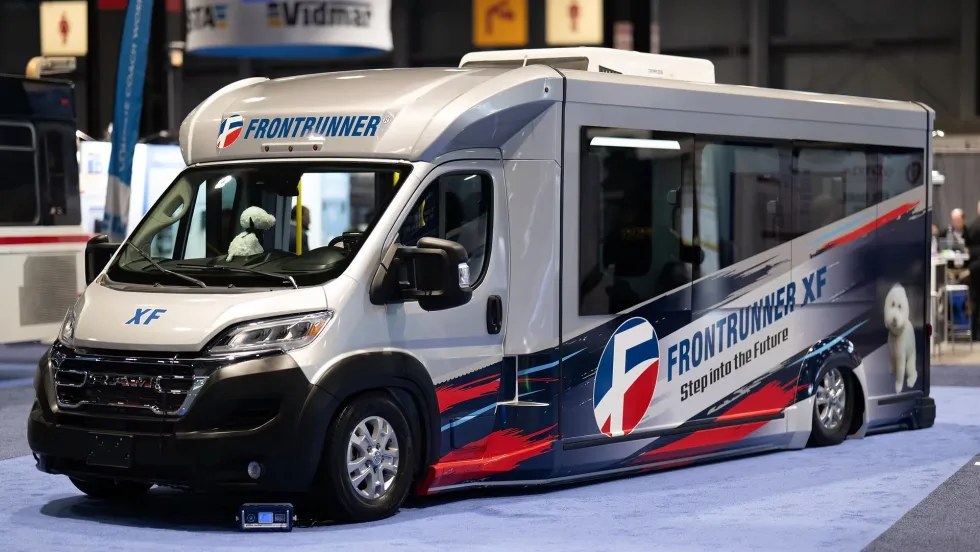
Frontrunner Bus Group Introduces XF Low-Floor Bus with Enhanced Accessibility
The new mid-sized bus features a full flat-floor design, eight-inch curbside step-in height, and zero-entry rear ramp to improve passenger access and operational flexibility.
Read More →
Building a Flexible Path to Transit Electrification with BAE's John Hroncich
John Hroncich discusses BAE Systems’ modular and scalable approach, lessons learned from decades of real-world operations, and how agencies can identify electrification strategies that fit their fleets.
Read More →
Scenes from APTA TRANSform & EXPO 2026
Transit leaders, manufacturers, and industry professionals gathered in Chicago to explore new technologies, share ideas, and discuss the future of public transportation.
Read More →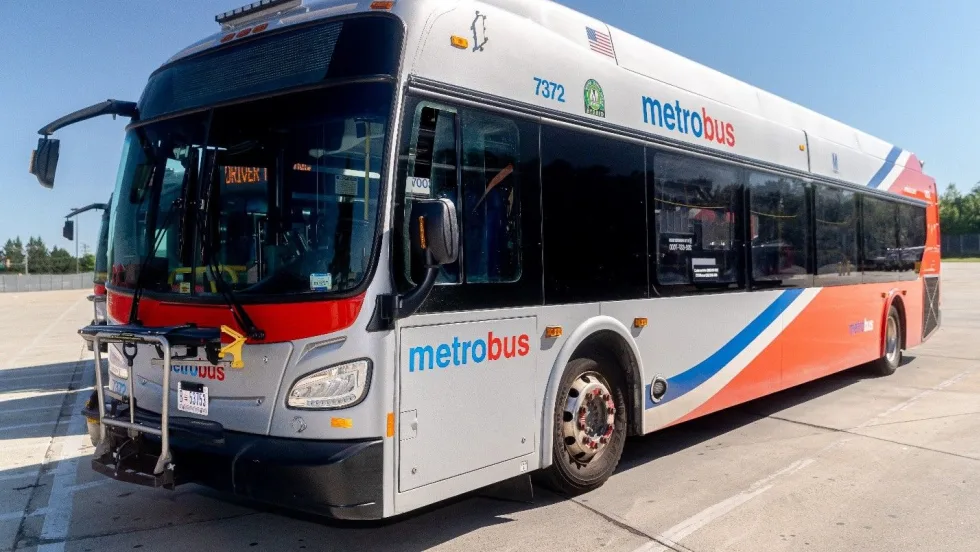
Biz Briefs: New Flyer Secures Additional 100-Bus Order from WMATA and More
In METRO's latest installment, we also take a look at recent news from Masabi, MCI, Samsara, and more partnerships making headlines across the transportation sector.
Read More →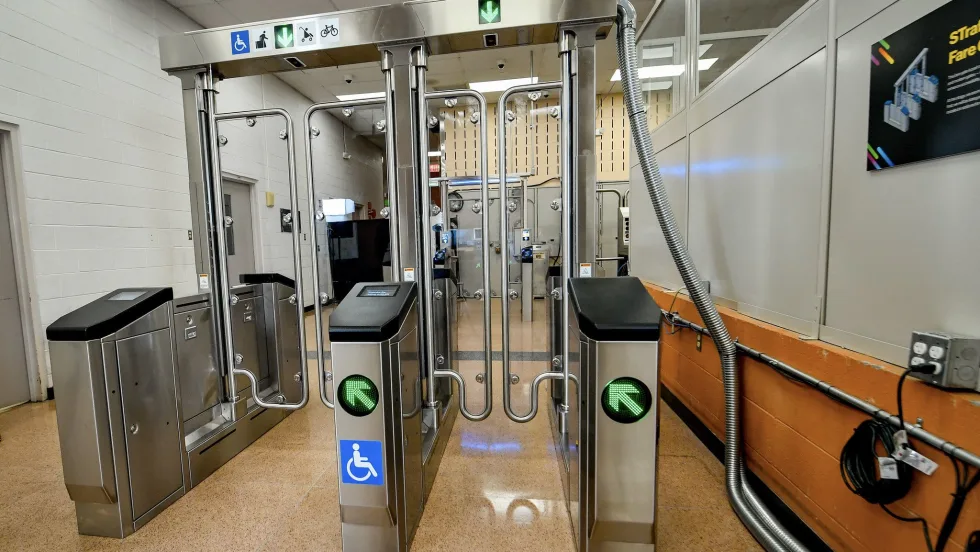
MTA Fare Gate Pilot Reduces Fare Evasion by 35%
Following a 20-station pilot, the agency plans to install new fare gates at 20 additional subway stations as part of a $1.1 billion modernization initiative.
Read More →
California Law Extends AC Transit’s Bus Lane Camera Enforcement
The new law allows AC Transit to continue using forward-facing bus cameras to enforce parking violations in bus-only lanes and at bus stops.
Read More →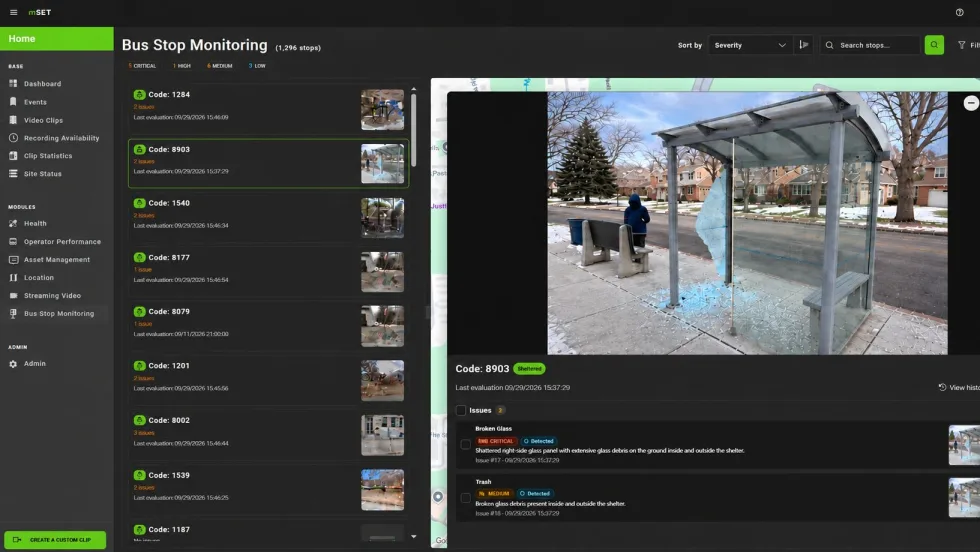
Biz Briefs: Luminator Launches AI Technology to Monitor Bus Stop Conditions and More
In METRO's latest installment, we also take a look at recent news from Masabi, Troman Industries, ioki, CCW, and more partnerships making headlines across the transportation sector.
Read More →
Public Transit Conference Returning to GFX in 2027, Call for Papers Now Open
The Call for Papers is now open, allowing transit agency professionals and industry experts to help shape the PTC educational program by submitting session ideas for consideration.
Read More →
ENC Lands MATA Contract and More in Biz Briefs
In this edition of Biz Briefs, we spotlight the latest developments shaping the future of mobility.
Read More →