



Biz Briefs: Master's Motors Unveils New Shuttle Buses, Fare Collection, and More
In this edition of Biz Briefs, we spotlight the latest developments shaping the future of mobility.

The customizable models feature the industry's first major structural redesign in decades, with improvements aimed at enhancing safety, lowering maintenance costs, and addressing long-standing fleet challenges, according to the company.
Master's Motors LLC
- The transportation industry is rapidly evolving through strategic partnerships, acquisitions, service expansions, and technology investments.
- Recent updates highlight key projects and business moves from companies like Modeshift and Masabi influencing the future of mobility.
- Master's Motors LLC has released new customizable shuttle bus models, MM23 and MM29, aimed at government and commercial fleets.
*Summarized by AI
From strategic partnerships and acquisitions to service expansions and technology investments, the transportation industry continues to evolve at a rapid pace.
In this edition of Biz Briefs, we spotlight the latest developments shaping the future of mobility. From manufacturers and suppliers to transit agencies and motorcoach operators, these updates offer a snapshot of the projects, partnerships and business moves driving the industry forward.
In METRO's latest installment, we take a look at recent news from Modeshift, Masabi, and more partnerships making headlines across the transportation sector.
Master's Motors Launches New Shuttle Bus Product Line
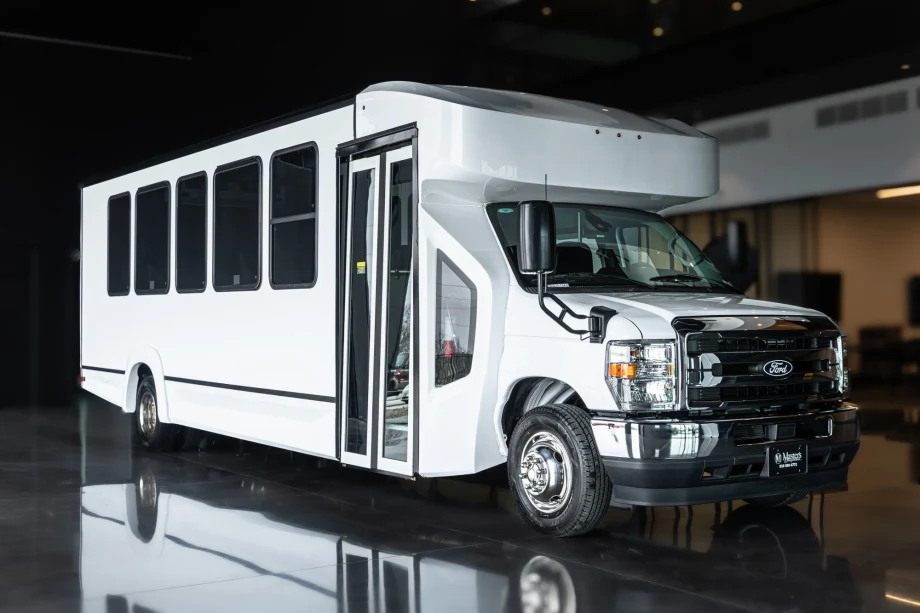
Master's Motors LLC launched a new line of shuttle buses designed specifically for government and commercial fleets. Built at the company's Kansas City headquarters, the MM23 and MM29 have completed safety testing and are now available nationwide.
The customizable models feature the industry's first major structural redesign in decades, with improvements aimed at enhancing safety, lowering maintenance costs, and addressing long-standing fleet challenges, according to the company.
Master’s Motors offers two new models: the traditional 23-foot option that meets most municipalities’ needs and a 29-foot shuttle for fleets that need extra space. The shuttles offer upgraded features in the standard package, including a 6061-T-6 aluminum cage construction joined at the floor and ceiling and aluminum track-style floor decking that supports multiple seat and wheelchair configurations.
A wider interior, uniform stepwell, plug-and-play electrical harnesses, and standard heated rear-view mirrors and backup cameras round out the design. The buses meet FMVSS 220 rollover protection standards and are fully ADA-compliant.
San Joaquin Regional Transit District Launches Open Payments with Masabi
California’s San Joaquin Regional Transit District (RTD) and Masabi launched Open Payments across RTD services.
Riders can now pay their fare simply by tapping a contactless payment card or using a mobile wallet on their phone with no ticket or reload required.
The launch marks another milestone in RTD’s commitment to innovation and convenience for its riders. Previously, RTD was the first agency in the pioneering EZHub/Vamos App network to install Masabi’s Justride Validators on board vehicles, setting a regional standard for fare modernization. Now, it is the first agency in the network to introduce Open Payments, delivering faster, easier, and more accessible transit experiences, officials said.
With fare capping automatically applied, riders will never pay more than $1.50 per day or $65 per month, ensuring equitable access to the best fares. Through account linking, riders can connect their contactless card to their account to access discounts or concessions, view trip and payment history, and manage preferences via the RTD’s JustRide web portal.
RTD serves Stockton, California, and surrounding communities, including Lodi, Manteca, Tracy, Ripon, Thornton, French Camp, and Lathrop. The agency operates 26 local fixed routes, including five BRT Express lines, providing efficient, sustainable transportation throughout the Central Valley.
Pennsylvania’s CamTran Teams with Modeshift to Launch Modern Fare Collection
The new CamTran PAY platform replaces legacy fare payment methods with digital tools that simplify fare purchasing, account management, and boarding, said officials.
Modeshift
Johnstown, Pennsylvania’s Cambria County Transit Authority (CamTran), in partnership with Modeshift, announced the launch of a new account-based fare collection platform across its transit network.
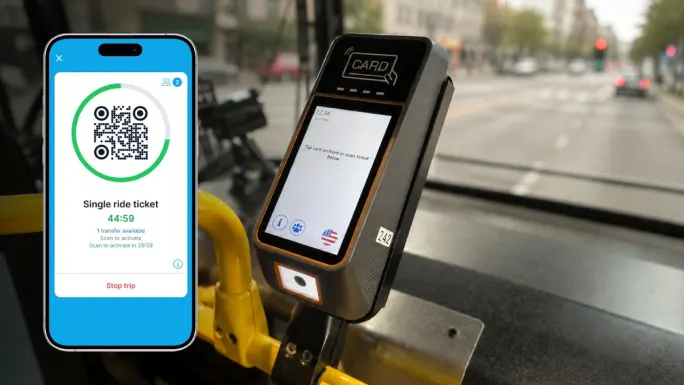
The modernized system introduces cashless fare payment options, including mobile ticketing and reloadable smart cards, along with real-time account management tools to enhance convenience, accessibility, and operational efficiency for riders throughout Cambria County.
The new CamTran PAY platform replaces legacy fare payment methods with digital tools that simplify fare purchasing, account management, and boarding, said officials. Riders can now purchase, manage, and validate fares using the CamTran PAY mobile app or a reloadable smart card, providing a faster, more flexible payment experience.
The fare collection platform also provides CamTran with real-time operational insights, reporting capabilities, and data analytics that support more informed planning, improved service delivery, and long-term system optimization, according to officials.
CCTA-Monotch to Showcase Real-Time Digital Infrastructure, Connected Mobility
Monotch and California’s Contra Costa Transportation Authority (CCTA) announced a project to demonstrate TLEX cloud deployment, showing how real-time connected mobility services can be enabled using US traffic signal standards.
Both organizations are active members of the Coast2Coast (C2C) transatlantic collaboration. This project initiative was born of a C2C visit to the Netherlands, including CCTA leadership, during which the nationwide deployment of the TLEX platform was demonstrated, according to officials.
During the one-year live demonstration period, TLEX establishes a real-time, bidirectional connection with Cubic Traffic Light Controllers (TLCs) in accordance with US standards. The first phase of deployment focuses on creating technical prerequisites for connected mobility in a US environment, including intersection topology, real-time data exchange, and automated data quality control.
Building on this foundation, the second phase of the project also explores connected mobility use cases and operational functions, including Green Light Optimized Speed Advisory (GLOSA) / Time-to-Green (TTG), holistic priority and pre-emption, support for management and maintenance processes, and multi-jurisdictional capabilities.
Quick Answers
The edition covers strategic partnerships, acquisitions, service expansions, and technology investments shaping the transportation industry.
*Summarized by AI
More Technology
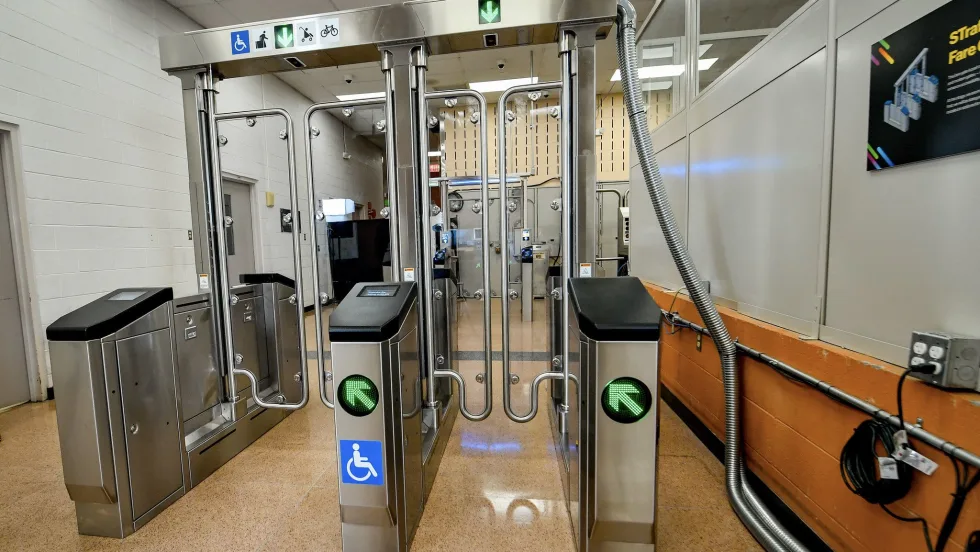
MTA Fare Gate Pilot Reduces Fare Evasion by 35%
Following a 20-station pilot, the agency plans to install new fare gates at 20 additional subway stations as part of a $1.1 billion modernization initiative.
Read More →
California Law Extends AC Transit’s Bus Lane Camera Enforcement
The new law allows AC Transit to continue using forward-facing bus cameras to enforce parking violations in bus-only lanes and at bus stops.
Read More →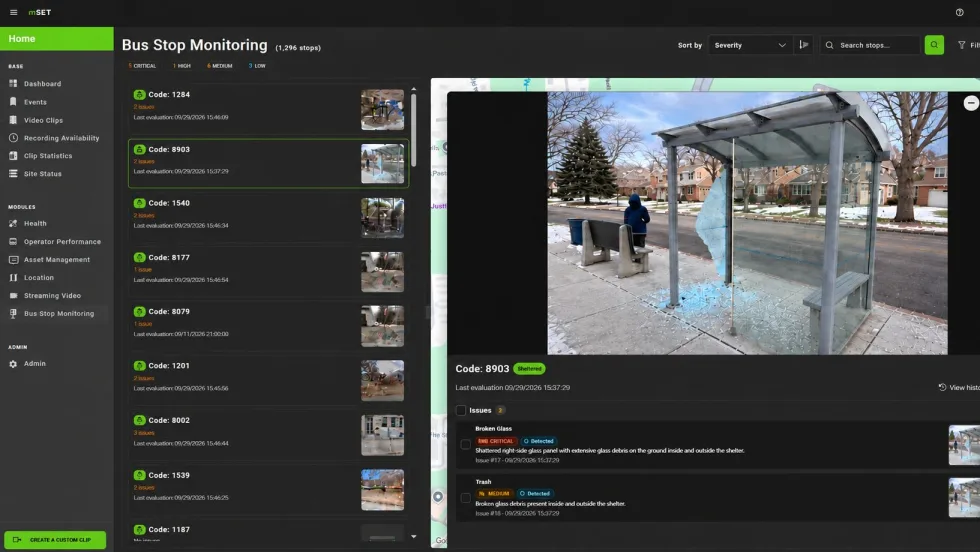
Biz Briefs: Luminator Launches AI Technology to Monitor Bus Stop Conditions and More
In METRO's latest installment, we also take a look at recent news from Masabi, Troman Industries, ioki, CCW, and more partnerships making headlines across the transportation sector.
Read More →
Public Transit Conference Returning to GFX in 2027, Call for Papers Now Open
The Call for Papers is now open, allowing transit agency professionals and industry experts to help shape the PTC educational program by submitting session ideas for consideration.
Read More →
ENC Lands MATA Contract and More in Biz Briefs
In this edition of Biz Briefs, we spotlight the latest developments shaping the future of mobility.
Read More →
Strada360’s Steve Lassey on Turning Transit Data Into Better Decisions
From breaking down data silos to preparing for AI, Strada360 CEO Steve Lassey discusses how transit agencies can use technology to improve operations, customer information, and long-term decision-making.
Read More →
Almaviva Looks to Open Architecture to Advance Transit Technology
Eric Reese discusses how interoperability, open architecture, and modular design can help transit agencies control costs, reduce vendor lock-in, and upgrade technology without starting over.
Read More →
Driving Smarter Paratransit
John Hanlon shares how AlphaRoute is leveraging AI-powered technology to help paratransit providers optimize operations, support frontline staff, and enhance the rider experience.
Read More →
From Hardware to Digital Partner: Luminator Charts Its Next Chapter
CEO Magnus Friberg discusses Luminator’s shift toward becoming a digital partner, the growing importance of software and interoperability, and how AI can help agencies improve operations and passenger experience.
Read More →
Beyond the Checklist: A Structured Approach to Transit Maintenance
Reliability-Centered Maintenance helps transit agencies move beyond routine checklists to focus limited resources on the assets and failures that have the greatest impact on safety, reliability, and service.
Read More →