



NY MTA Testing Q'Straint's Quantum Securement System
The system is designed to allow people using manual or power wheelchairs to independently secure themselves on a bus with just the push of a button.

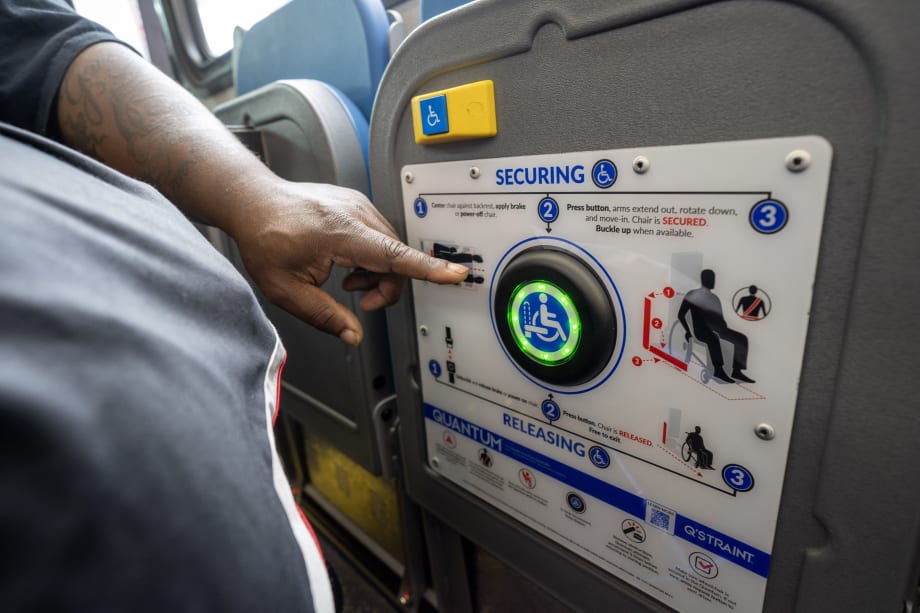
The MTA will be collecting customer and operator feedback on their experiences with Q'Straint's Quantum, as well as the operation and maintenance costs of the system.
Photo: MTA
New York’s Metropolitan Transportation Authority (MTA) launched a six-month pilot to test an automated wheelchair securement device, Q’Straint’s Quantum Self Securement Station, on 10 buses along the M7 route.
The system is designed to allow people using manual or power wheelchairs to independently secure themselves on a bus with just the push of a button. Currently, bus operators must leave their seat to secure a wheelchair in place and free the wheelchair from its position to let the customer off. Quantum streamlines that process by improving the experience for customers who use wheelchairs and speeding up the bus for all riders.
The Q’Straint, MTA Pilot
The M7 was chosen because of the high-volume of mobility device users along that route. Customers will be able to know if their bus has Quantum by a decal on the side of the bus near the front-boarding door. There will be one Quantum Self Securement Station on each of the 10 buses. Passengers will still have the option to use the traditional four-point securement with the assistance of a bus operator, if preferred. Whichever method a customer chooses, the bus operator will be available to help.
The addition of the Quantum is just the latest in the MTA’s work to celebrate Disability Pride Month. Last week, the MTA announced the expansion of new wayfinding tools, opened three new accessible stations, and held multiple events highlighting accessibility.
“We are excited to test this new automated technology that can greatly improve the commuting experience of passengers who use wheelchairs,” said New York City Transit President Richard Davey. “It allows customers to board and secure themselves more quickly and effortlessly, while requiring minimal to no assistance from the bus operator — promoting independence and autonomy over their own journey.”
The MTA will be collecting customer and operator feedback on their experiences with Quantum, as well as the operation and maintenance costs of the system. Data and feedback collected during this pilot will be used to determine whether the pilot is extended and whether to further invest in new securement technologies.
More Paratransit
People Movement: Metrolink's Kettle Announces Retirement, Feakins to CEO at UZURV, and More
In this edition, we also cover recent appointments and announcements at King County Metro, SilverRide, and more, showcasing the individuals helping to shape the future of transportation.
Denver RTD Committee to Review Paratransit Services, Improve Accessibility
The committee will oversee an independent study of paratransit operations, gather customer feedback, and recommend improvements to service reliability, accessibility, and accountability.
Laketran Cuts Fuel Costs, Boosts Efficiency with Propane-Powered Fleet
The Ohio transit agency is using propane-powered vehicles and on-site fueling infrastructure to cut fuel and maintenance costs while meeting growing demand for paratransit services.

Pierce Transit Moves to Expand Fleet Following Proposition 1 Approval
The agency authorized the purchase or refurbishment of up to 60 buses to support a 47% service expansion, as voters nationwide approved billions in new transit funding.
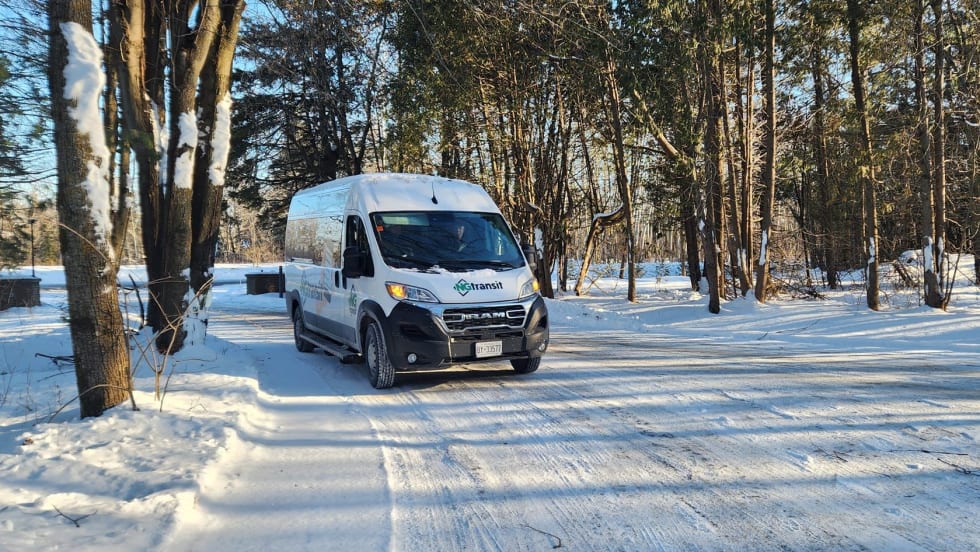
Right-Sizing Rural Transit: Lessons from North Grenville’s On-Demand Model
A small municipality shows how flexible service, rider needs, and public accountability can expand mobility with limited resources.
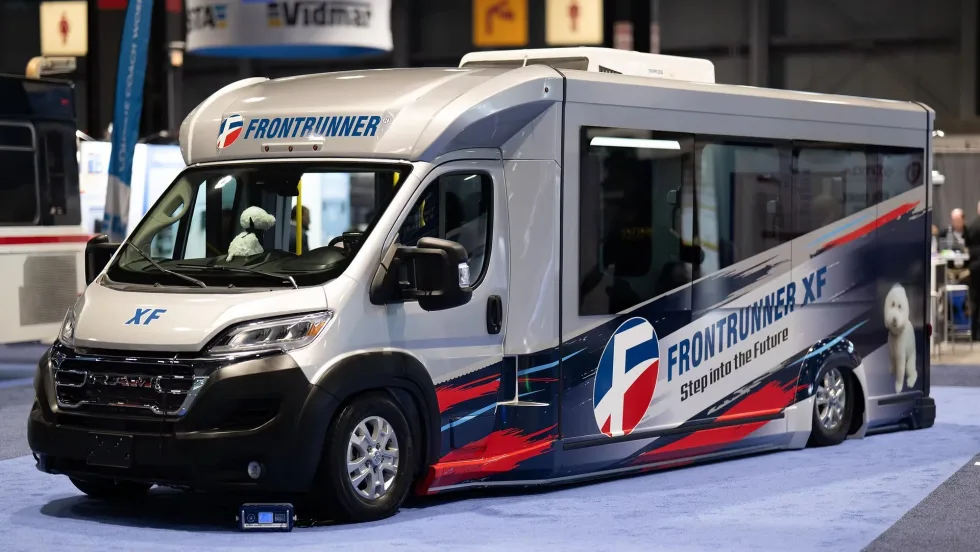
Frontrunner Bus Group Introduces XF Low-Floor Bus with Enhanced Accessibility
The new mid-sized bus features a full flat-floor design, eight-inch curbside step-in height, and zero-entry rear ramp to improve passenger access and operational flexibility.
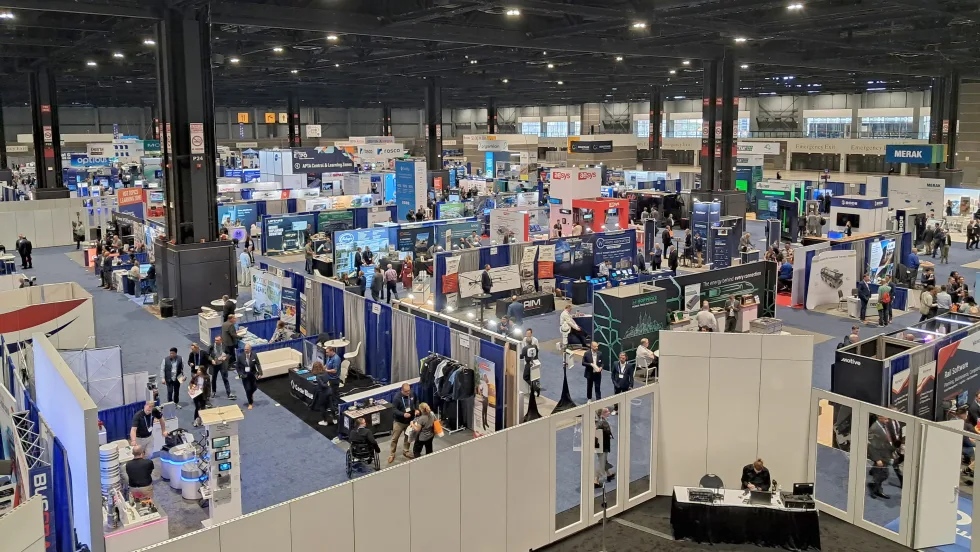
Scenes from APTA TRANSform & EXPO 2026
Transit leaders, manufacturers, and industry professionals gathered in Chicago to explore new technologies, share ideas, and discuss the future of public transportation.
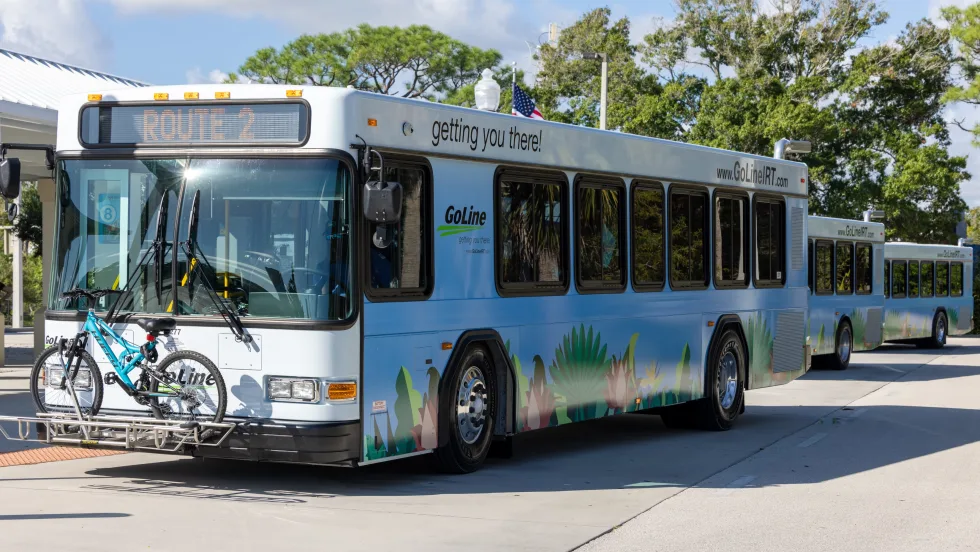
Indian River Transit’s Community-Focused Approach Earns National Recognition
Named APTA’s 2026 Outstanding Public Transportation System in its size category, Florida’s Indian River County transit system continues to grow ridership through fare-free service and a focus on evolving community needs.
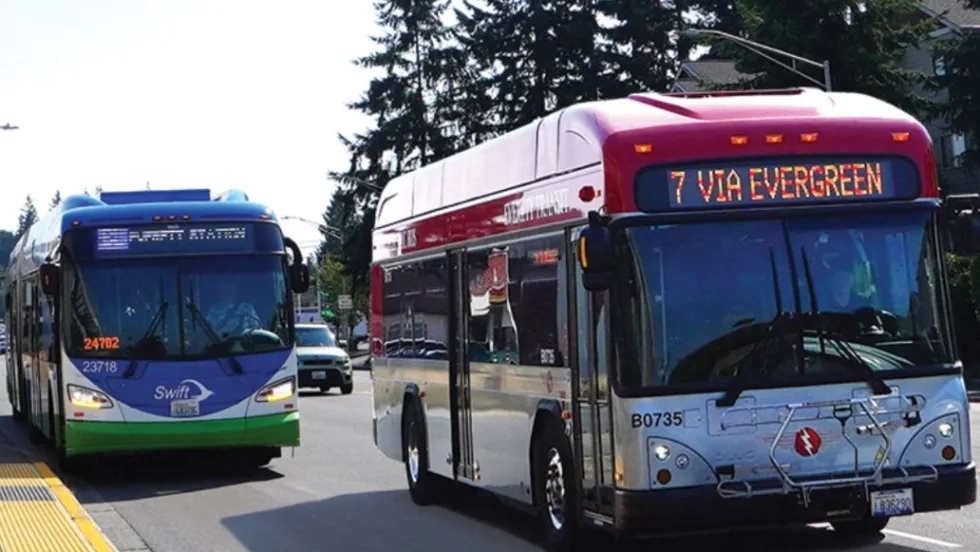
Everett Transit, Community Transit Outline Consolidation Agreement
The proposed agreement calls for a 50% increase in bus service in Everett, a new microtransit zone, continued paratransit service, and the transfer of Everett Transit operations to Community Transit.
Driving Smarter Paratransit
John Hanlon shares how AlphaRoute is leveraging AI-powered technology to help paratransit providers optimize operations, support frontline staff, and enhance the rider experience.