




Read More: AngelTrax, REI Highlight Latest Surveillance Products
Safety Tech Introduces CMS, Driver Protection Door
Safety Tech’s CMS Smart-Vision, already chosen by about 100 operators and 40 bus and coach OEMs for 100 types of vehicles, will be showcased along with driver alert information systems for the side and the front of the bus.
October 6, 2023
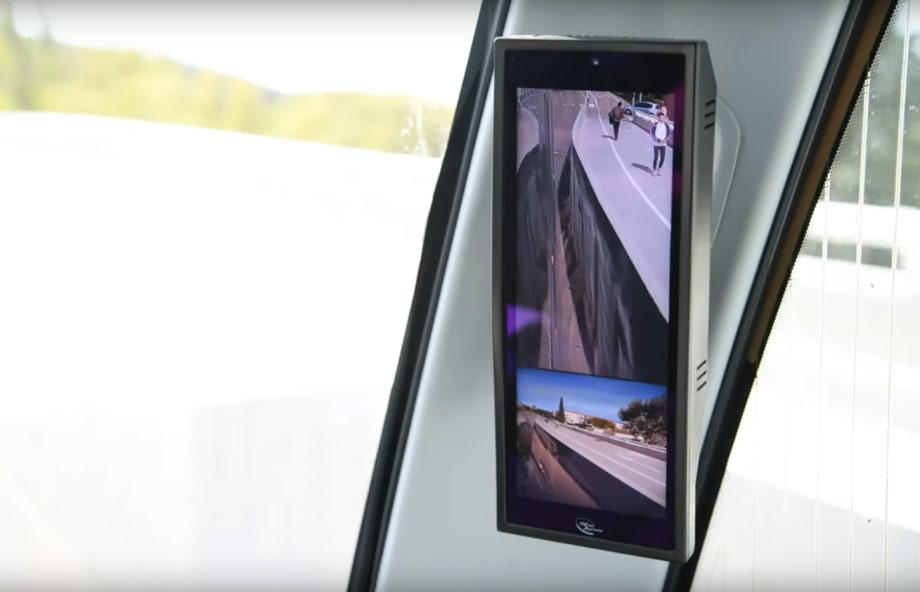
Smart-Vision is a compact system that replaces mechanical rearview mirrors with high-definition cameras and interior displays to offer optimized visibility and enhanced ergonomics.
Photo: Safety Tech
2 min to read
Following the launch of its Camera Monitor System Smart-Vision and bus driver security barrier Savety-Door in Europe, Safety Tech announced it will present its solutions to the bus and coach operators and OEMs at the 2023 APTA Expo.
Safety Tech’s CMS Smart-Vision, already chosen by about 100 operators and 40 bus and coach OEMs for 100 types of vehicles, will be showcased along with driver alert information systems for the side and the front of the bus, SafetySide Blind Spot Information System and Safety Front Moving Off Information System, that eliminate blind spots and alert the driver to avoid accidents.
Safety Tech's Smart-Vision
Smart-Vision is a compact system that replaces mechanical rearview mirrors with high-definition cameras and interior displays to offer optimized visibility and enhanced ergonomics.
In addition to eliminating lateral blind spots, the solution offers functions such as parking and maneuvering aid, and guidance assistance allowing a shorter turning radius.
Smart-Vision improves maneuverability and minimizes the risk of collision between the mirror and tree branches or road signs, which lowers maintenance costs linked to potential damages while enhancing the vehicle’s availability.
Other Solutions at APTA Expo
Safety Tech will also showcase its newest ADAS solutions, SafetySide and SafetyFront, which mitigate blind spots.
Blind spots are a major cause of accidents involving buses and coaches. The UN regulations R151 and R159 on Blind Spot Information Systems (BSIS) and Moving Off Information System (MOIS) help avoid collisions with Vulnerable Road Users.
The regulation requires the system to inform the driver of the presence of a nearby cyclist who could be endangered when turning away from the driver so that the driver can stop the bus before crossing their path, and when a pedestrian or bicyclist is in close proximity in front of the vehicle during drive-off.
SafetySide and SafetyFront offer wider detection area, allow the detection of all vulnerable road users, and SafetySide is available for both sides of the vehicle. It can be integrated into the Smart-Vision solution without any additional display.
More Technology

From Hardware to Digital Partner: Luminator Charts Its Next Chapter
CEO Magnus Freiberg discusses Luminator’s shift toward becoming a digital partner, the growing importance of software and interoperability, and how AI can help agencies improve operations and passenger experience.
Read More →
Beyond the Checklist: A Structured Approach to Transit Maintenance
Reliability-Centered Maintenance helps transit agencies move beyond routine checklists to focus limited resources on the assets and failures that have the greatest impact on safety, reliability, and service.
Read More →
NJ TRANSIT Advances Bus Technology Upgrades Across Statewide Fleet
More than 1,500 buses now feature upgraded technology designed to improve arrival predictions and provide free Wi-Fi, with deployment expected to reach nearly 2,000 buses by the end of 2026.
Read More →

Building a Flexible Path to Transit Electrification
John Hroncich discusses BAE Systems’ modular and scalable approach, lessons learned from decades of real-world operations, and how agencies can identify electrification strategies that fit their fleets.
Read More →
Biz Briefs: Alstom Lands Canadian Contract, LYT to Supply California TSP, and More
In METRO's latest installment, we take a look at recent news from Complete Coach Works, Beep, FlixBus, and more partnerships making headlines across the transportation sector.
Read More →
Sponsored•September 8, 2026
From Legacy Silos to Conversational Intelligence
What if transit leaders could ask any operational question and get a trusted answer in seconds? Conversational AI is transforming how agencies use their data.
Read More →
USDOT Announces Rail Vehicle Replacement Grants, Chattanooga AV Shuttle Funding
More than $191 million in federal funding will help three transit agencies replace aging rail vehicles and support a new autonomous shuttle service in Chattanooga.
Read More →
Bus Tech Talk: Keeping Transit Technicians Ahead of the Technology Curve
LA Metro’s Obed Mejia discusses technician training, evolving maintenance technology, fleet replacement, and strategies for getting the most out of today’s transit fleets.
Read More →
Biz Briefs: RIPTA Unveils New Frontrunners, Clevland RTA Adds New Siemens, and More
In METRO's latest installment, we take a look at recent news from Siemens, Prevost, Dodge, and more partnerships making headlines across the transportation sector.
Read More →
Why Simulating Pedestrian Movement Has Become Essential for Modern Rail Stations
Pedestrian microsimulation is helping rail planners identify bottlenecks, test station designs, and prepare complex transit hubs for growing passenger volumes.
Read More →