



From Legacy Silos to Conversational Intelligence
What if transit leaders could ask any operational question and get a trusted answer in seconds? Conversational AI is transforming how agencies use their data.

Strada 360
- Conversational AI allows transit leaders to quickly access operational insights through easy-to-ask questions.
- The integration of AI into data systems is transforming how transit agencies interact with their data.
- The shift to conversational intelligence increases efficiency by providing fast, reliable answers to complex queries.
*Summarized by AI
Public transit agencies generate enormous volumes of data every day. Bus fleets, light rail vehicles (LRVs), fare systems, scheduling platforms, and customer service applications continuously create millions of data points. Yet answering a simple operational question often remains a slow and frustrating process for transit leaders.
When a Transit Director or Program Manager needs insight into system performance, the request typically passes through IT, analysts manually combine data from multiple databases, and a report may not arrive for days. By then, the operational issue may already have passed. The challenge is not a lack of information. It is the inability to access and connect information quickly.
To improve operational agility, agencies must move beyond proprietary vendor silos, establish a unified transit data mart based on open standards such as GTFS and GTFS-Realtime (GTFS-RT), and provide leadership with conversational AI tools that transform raw data into actionable intelligence.
In many transit agencies, information is fragmented across separate business units:
- Operations: CAD/AVL and fleet management systems track vehicle location and performance but often store data in proprietary formats.
- Planning: Scheduling and workforce systems manage timetables and crewing while having limited visibility into real-time operational conditions.
- Commercial: ERP platforms such as SAP and fare collection systems monitor costs and revenues but are seldom integrated with service reliability metrics.
- Customer Experience: CRM systems record complaints concerning delays, missed connections, and early departures, yet these records are typically disconnected from vehicle telemetry.
Because these systems rarely communicate effectively, managers often face conflicting versions of reality. Schedules may indicate one outcome, vehicle tracking systems another, and fare collection data a third.
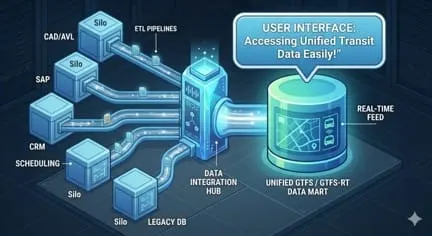
Figure 1. Simple architecture connects Legacy disconnected silos to a Central, standardized Data Mart, providing easy access to unified Transit Data.
Strada 360
The Foundation: A Standardized Transit Data Mart
The first step toward modernization is creating a centralized Transit Data Mart that serves as a single source of truth. Rather than relying on custom integrations between SAP, CAD/AVL, scheduling platforms, and fare systems, agencies should normalize data into vendor-neutral standards.
Using GTFS for route and schedule information and GTFS-RT for vehicle positions, trip updates, and service alerts establishes a common language across the organization. When operational, maintenance, workforce, and financial data are transformed into a standardized relational model, traditional boundaries between bus and light rail operations begin to disappear.
For the first time, agencies can evaluate asset performance, financial results, workforce utilization, and service delivery through a unified platform. This creates the foundation necessary for meaningful analytics and enterprise-wide decision making.
Conversational Intelligence: Natural Language as the New BI
Building a centralized repository solves only part of the problem. The real transformation occurs when leadership changes how it accesses information.
Traditional business intelligence tools such as Tableau and Power BI provide valuable dashboards, but they are limited to predefined reports and visualizations. They can only answer questions that were anticipated when the dashboard was created.
By introducing a natural-language interface powered by Generative AI, agencies can transition from static reporting to conversational intelligence. The AI interprets a user's plain-language question, maps it to the underlying data model, retrieves relevant information, and delivers a narrative, chart, or table within seconds.
Instead of searching through dashboards, leaders simply ask questions and receive immediate answers.
Practical Applications
Auditing Operator Performance: The system can identify early departures and correlate them with specific routes, operators, and scheduling assumptions.
Improving Multi-Modal Connections: The AI can evaluate rail arrival performance against connecting bus schedules and identify recurring transfer failures.
Enhancing Fleet Reliability: Maintenance and ERP information can be consolidated into complete incident lifecycle reports that reveal operational bottlenecks.
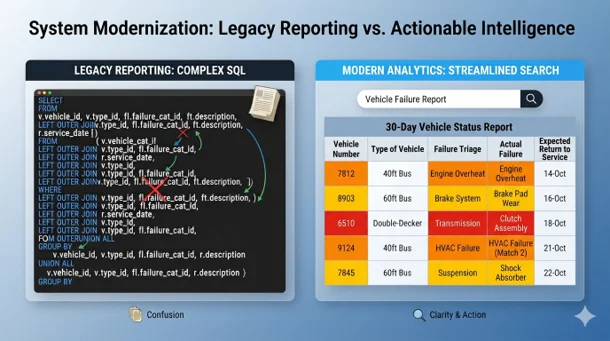
Figure 2. No SQL or BI. Conversational Language Interface provides simpler, real-time access.
Strada 360
Unifying Agency Health
The benefits of a conversational data mart extend across the organization. Fleet managers can identify vehicles with unresolved defects scheduled for service. Operations teams can compare absenteeism against spare-board availability. Customer service representatives can validate passenger complaints using telemetry and operational records. Financial leaders can link service performance directly to cost and revenue metrics.
A Pragmatic Roadmap
Agencies should mandate open standards, build secure ETL pipelines, and deploy enterprise AI tools governed by strong security and privacy controls.
By democratizing access to information, transit agencies can move from reactive firefighting to proactive, data-driven stewardship. The future of public transportation will not be defined by collecting more data, but by empowering leaders to ask any operational question and receive an immediate, trusted answer.
This article reflects the views of Strada 360 and does not necessarily represent the views of MET or Bobit Business Media.
Quick Answers
Conversational AI refers to technologies that allow people to interact with computer systems using natural language. It transforms transit operations by enabling leaders to quickly access and utilize data through intuitive queries, improving decision-making and operational efficiency.
*Summarized by AI
More Technology
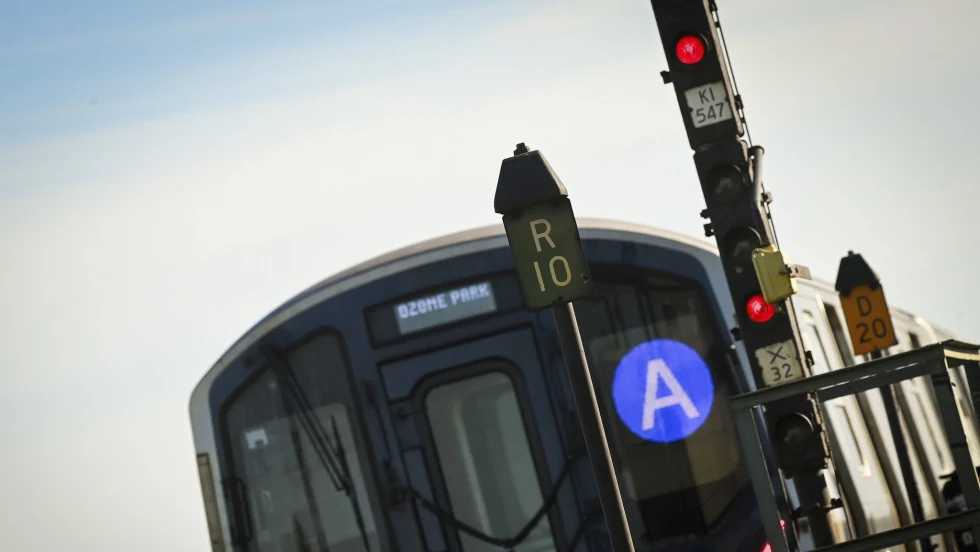
New York MTA Launches Historic $1.9B Signal, Track Modernization Project
Funded in part by congestion pricing revenue, the project will replace nearly century-old signals along the A and C lines in Brooklyn and Queens.
Read More →
Biz Briefs: New Electric Offering from Alexander Dennis/Volvo, Transdev in Boston, and More
In METRO's latest installment, we also take a look at recent news from STV, WSP, Prevost, and more partnerships making headlines across the transportation sector.
Read More →
Roman Cornell on ABC Companies’ Evolution and the Future of Passenger Transportation
The company’s CEO discusses carrying forward a third-generation family legacy, ABC’s continued evolution in passenger transportation, support for increasingly complex fleets, and how technology and continued investment could help operators improve uptime.
Read More →
ETA CEO John Maglio on Transit Technology, Innovation, and Building Agency Trust
ETA founder and CEO John Maglio explores the evolution of transit technology, the importance of reliable systems, and how stronger partnerships can help agencies improve operations and the passenger experience.
Read More →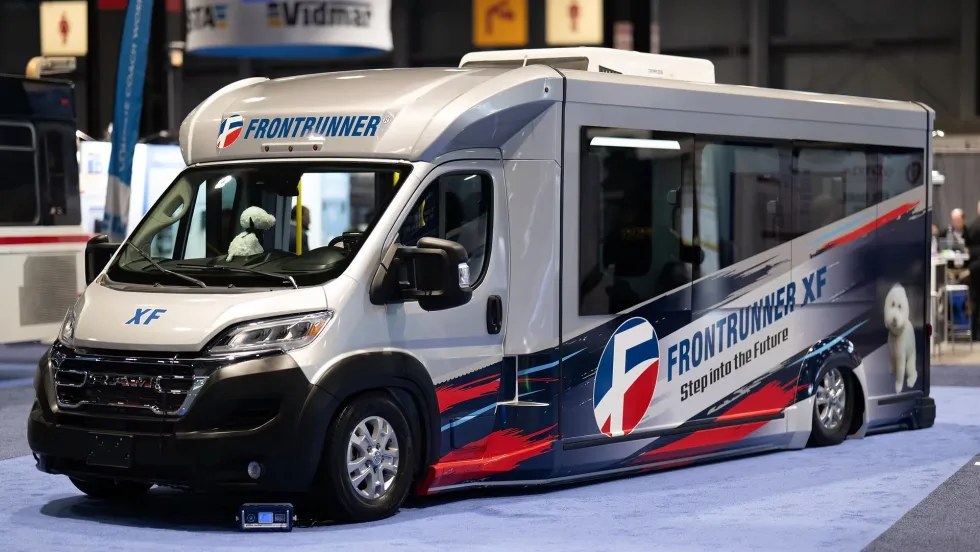
Frontrunner Bus Group Introduces XF Low-Floor Bus with Enhanced Accessibility
The new mid-sized bus features a full flat-floor design, eight-inch curbside step-in height, and zero-entry rear ramp to improve passenger access and operational flexibility.
Read More →
Building a Flexible Path to Transit Electrification with BAE's John Hroncich
John Hroncich discusses BAE Systems’ modular and scalable approach, lessons learned from decades of real-world operations, and how agencies can identify electrification strategies that fit their fleets.
Read More →
Scenes from APTA TRANSform & EXPO 2026
Transit leaders, manufacturers, and industry professionals gathered in Chicago to explore new technologies, share ideas, and discuss the future of public transportation.
Read More →
Biz Briefs: New Flyer Secures Additional 100-Bus Order from WMATA and More
In METRO's latest installment, we also take a look at recent news from Masabi, MCI, Samsara, and more partnerships making headlines across the transportation sector.
Read More →
MTA Fare Gate Pilot Reduces Fare Evasion by 35%
Following a 20-station pilot, the agency plans to install new fare gates at 20 additional subway stations as part of a $1.1 billion modernization initiative.
Read More →
California Law Extends AC Transit’s Bus Lane Camera Enforcement
The new law allows AC Transit to continue using forward-facing bus cameras to enforce parking violations in bus-only lanes and at bus stops.
Read More →