D.C.'s Fleet of the Future to be Showcased at the National Mall
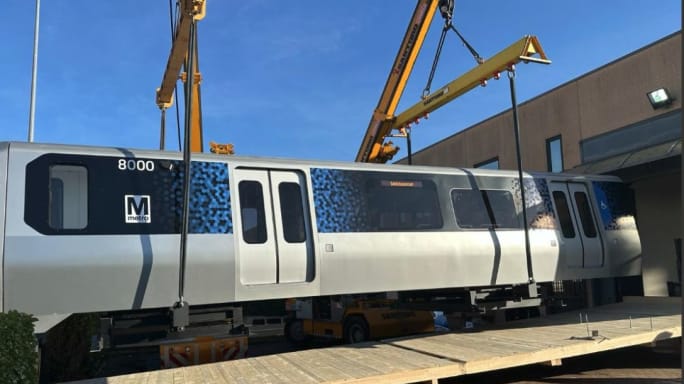
The multi-week event is the first time WMATA has hosted the public to see a mock-up of its newest trains on the National Mall since the first 1000-series train cars in 1968.
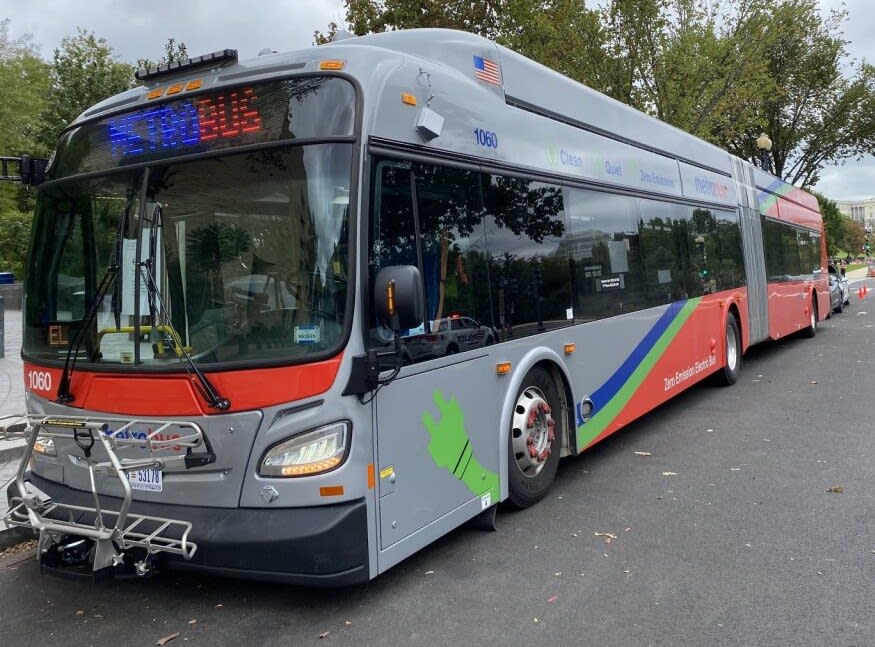
WMATA’s new 60-foot New Flyer battery-electric buses have zero tailpipe emissions, which means improved air quality.
Photo: WMATA
3 min to read
The Washington Metropolitan Area Transit Authority (WMATA) is giving the public a sneak peek at its all-digital, world-class new railcars and zero-emissions buses at the National Mall beginning March 20.
The multi-week event is the first time WMATA has hosted the public to see a mock-up of its newest trains on the National Mall since the first 1000-series train cars in 1968.
Ad Loading...
WMATA’s GM/CEO Randy Clarke called it a historic and generational opportunity.
“Unveiling the Fleet of the Future marks a major step for Metro,” Clarke said. “We took best practices from all over the world — open gangways, more space, better digital screens for real-time information, enhanced video systems to improve safety, a more sustainable aluminum shell, and eye-catching design — and put them in this train. We are proud of all the improvements we were able to pack into this new fleet and welcome everyone to come out and see the future of America’s transit system.”
Hitachi Rail will assemble the 8000-series trains in Hagerstown, Md., with additional options of up to 800 total cars.
Photo: WMATA
WMATA’s Next-Gen Railcars
The 82-feet long and 10-feet wide railcar mock-up is not a full-size replica of the two connected open gangway cars, but rather features portions of each to give customers an idea of what the trains will feel like.
The trains feature the agency’s first open passageway design for moving between two cars, increasing safety, passenger flow, and capacity. Eight-car trains will be made up of four sets of two-car pairs and six-car trains will be made up of three sets of two-car pairs.
They also feature more seating along the walls to allow more standing room for passengers and dedicated spaces for people who use mobility devices. The trains will also have more flexible space for bikes, strollers, and luggage.
Ad Loading...
Technology is improved with larger and more visible digital information screens and more energy-efficient radiant heated floors.
Hitachi Rail will assemble the 8000-series trains in Hagerstown, Md., with additional options of up to 800 total cars. WMATA's goal is to replace its oldest trains, the 2000- and 3000-series from the 1980s, to create a more reliable fleet.
New 60-Foot New Flyer BEBs
WMATA’s new 60-foot New Flyer battery-electric buses have zero tailpipe emissions, which means improved air quality. They’re also quieter and have a smoother ride with less vibration since electric buses don’t have an internal combustion engine. Improved customer amenities include digital passenger information screens, USB charging ports, and new fare boxes.
“Two of these buses have entered service on and customers have given us an overwhelmingly positive response,” Clarke said. “More electric buses are on the way later this year, and we wanted to give our community a chance to check out these incredibly quiet and environmentally friendly vehicles at the Fleet of the Future Expo.”
In 1968, a prototype train was built and displayed across the region, including on the White House lawn, where President Lyndon B. Johnson toured the 1000-series train.
Photo: WMATA
Bringing Back the Old School
The Fleet of the Future exhibit is a throwback to WMATA’s history.
Ad Loading...
In 1968, a prototype train was built and displayed across the region, including on the White House lawn, where President Lyndon B. Johnson toured the 1000-series train.
Future riders also saw the mocked-up train on the National Mall and at regional malls like Prince George’s Plaza and L’Enfant Plaza.
CEO Magnus Friberg discusses Luminator’s shift toward becoming a digital partner, the growing importance of software and interoperability, and how AI can help agencies improve operations and passenger experience.
Reliability-Centered Maintenance helps transit agencies move beyond routine checklists to focus limited resources on the assets and failures that have the greatest impact on safety, reliability, and service.
More than 1,500 buses now feature upgraded technology designed to improve arrival predictions and provide free Wi-Fi, with deployment expected to reach nearly 2,000 buses by the end of 2026.
John Hroncich discusses BAE Systems’ modular and scalable approach, lessons learned from decades of real-world operations, and how agencies can identify electrification strategies that fit their fleets.
In METRO's latest installment, we take a look at recent news from Complete Coach Works, Beep, FlixBus, and more partnerships making headlines across the transportation sector.
What if transit leaders could ask any operational question and get a trusted answer in seconds? Conversational AI is transforming how agencies use their data.
More than $191 million in federal funding will help three transit agencies replace aging rail vehicles and support a new autonomous shuttle service in Chattanooga.
LA Metro’s Obed Mejia discusses technician training, evolving maintenance technology, fleet replacement, and strategies for getting the most out of today’s transit fleets.
In METRO's latest installment, we take a look at recent news from Siemens, Prevost, Dodge, and more partnerships making headlines across the transportation sector.
Pedestrian microsimulation is helping rail planners identify bottlenecks, test station designs, and prepare complex transit hubs for growing passenger volumes.