



Chicago Updates All Stations Accessibility Program
The comprehensive plan was first unveiled in 2018 and is an evolving document that will be updated over time to reflect the ongoing planning, modernization, and construction work as envisioned by CTA’s capital program.

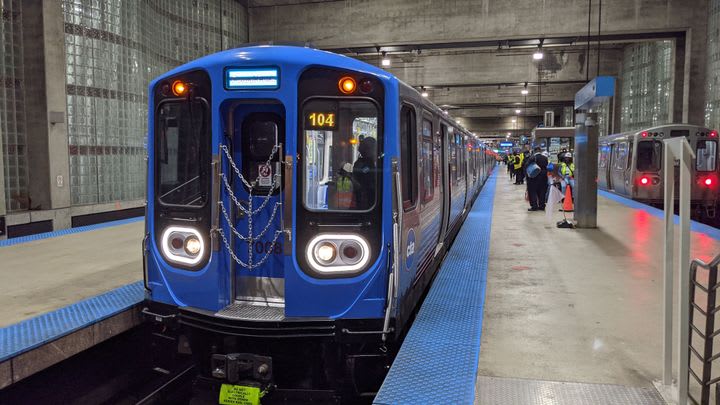
The updated ASAP plan incorporates new external input, changes to project phasing, updates cost estimates, new information about additional funding sources, and various other updates to ensure the plan reflects the region’s current needs.
Photo: CTA
The Chicago Transit Authority (CTA) released the first update to its All Stations Accessibility Program (ASAP) Strategic Plan, reaffirming the agency’s commitment to serving customers with disabilities by becoming the first completely accessible legacy transit system within the next 20 years.
The comprehensive plan was first unveiled in 2018 and is an evolving document that will be updated over time to reflect the ongoing planning, modernization, and construction work as envisioned by CTA’s capital program.
CTA’s ASAP Plan
The updated ASAP plan incorporates new external input, changes to project phasing, updates cost estimates, new information about additional funding sources, and various other updates to ensure the plan reflects the region’s current needs.
“Since the ASAP plan launched in 2018, we have secured $740.8 million in funding and construction has begun at numerous stations,” said CTA President Dorval R. Carter Jr. “We look forward to welcoming our customers to six newly accessible CTA rail stations in 2025: Lawrence, Berwyn, Bryn Mawr, and Argyle as part of the Red Purple Modernization Project in addition to the Forest Park Branch Racine and Lake Street Line — Austin stations.”
The program is broken into four phases. Stations with higher needs and lower complexity scores were prioritized for near-term improvement plans.
More complex stations that require more time for planning, design, construction, agency coordination, and community input are listed as part of long-term project plans.
Phase One is fully funded at $423.5 million and will be completed by 2027.
Phase Two projects are currently 45% funded and projected to be completed by 2028. The total projected budget for Phase Two is $617.5 million.
The ASAP Plan
The ASAP plan exceeds federal requirements and includes the rehabilitation and/or replacement of all 162 existing station elevators, as well as enhancements to rail system signage and wayfinding to make it easier and more intuitive for people who are DeafBlind, blind, and visually impaired.
The plan also creates spaces that support riders with a range of physical, sensory, and cognitive abilities to be able to independently use CTA services.
Systemwide elevator replacement has $37 million funded to-date. It is expected that elevator replacements will also start in 2025.
While updating the plan CTA also updated the overall cost for the program. When the plan was published in 2018, the program cost was estimated at $2.1B.
The revised cost of the ASAP program is $4.9B, which is reflective of industry trends and largely the result of market conditions and cost escalation.
The CTA has not yet received funding for stations in Phases Three and Four of the project. CTA continues to seek out available funding options for remaining projects outlined in the ASAP Plan.
More Paratransit

Biz Briefs: RIPTA Unveils New Frontrunners, Clevland RTA Adds New Siemens, and More
In METRO's latest installment, we take a look at recent news from Siemens, Prevost, Dodge, and more partnerships making headlines across the transportation sector.
Read More →
King County Metro Makes ADA Paratransit Easier to Navigate
METRO's Innovative Solutions Award winner replaces complex service-area descriptions with an accessible, interactive map that puts paratransit information directly in customers’ hands.
Read More →
Jacksonville’s NAVI Project Charts a New Course for Autonomous Public Transportation
Through its NAVI program, JTA is showing how autonomous vehicles, intelligent infrastructure, and coordinated operations can work together to deliver everyday public transportation.
Read More →
Driving Smarter Paratransit
John Hanlon shares how AlphaRoute is leveraging AI-powered technology to help paratransit providers optimize operations, support frontline staff, and enhance the rider experience.
Read More →
METRO Magazine Announces 2026 Innovative Solutions Awards Winners
Projects Recognized for Advancing Mobility Through Technology, Accessibility, Workforce Innovation, and Operational Excellence
Read More →
Biz Briefs: STV teams with Amtrak, Motorcoach Operators Boost Fleet and Land Contracts, and More
From manufacturers and suppliers to transit agencies and motorcoach operators, these updates offer a snapshot of the projects, partnerships and business moves driving the industry forward.
Read More →
Biz Briefs: Masabi Teams with St. Louis Metro and More
In METRO's latest installment, we take a look at recent news from Transdev, Hitachi, and more partnerships making headlines across the transportation sector.
Read More →
New York MTA Leverages Zoning Program to Advance Station Accessibility
Accessibility enhancements at Nevins St Station will be financed through a development agreement tied to the MTA's Zoning for Accessibility initiative.
Read More →
Reinventing Fleet Maintenance with Real-time Visibility and AI
Transit leaders need to know what needs fixing, where to look, who is responsible, when work is completed, and what it costs without having to chase information across disconnected systems.
Read More →
SamTrans Sets Priorities for Potential Connect Bay Area Revenue
The board-approved framework allocates future funding to maintaining service, rider improvements, equity initiatives, and infrastructure repairs.
Read More →