



Amtrak Breaks Ground on New Connecticut River Bridge
The modern, more resilient, moveable bridge now being constructed by Amtrak will feature a trunnion bascule span design with modern track, signal, catenary, power, communication, and other supporting rail infrastructure.

The existing Connecticut River Bridge, which opens for maritime traffic several times a day in peak boating season, was completed in 1907 and today serves more than 50 daily Amtrak Northeast Regional and Acela trains, CTrail Shore Line East commuter service trains, and freight trains.
Photo: Amtrak
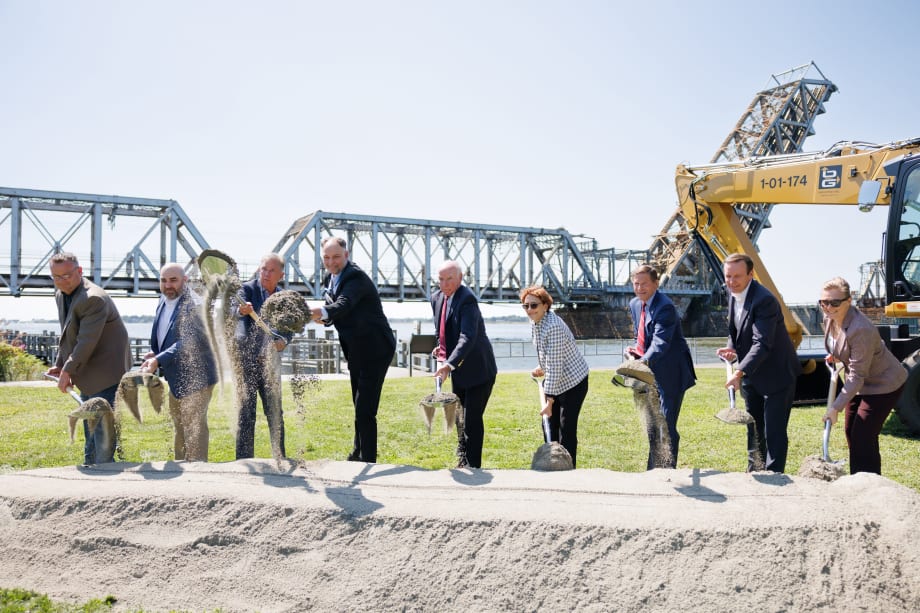
Amtrak CEO Stephen Gardner joined U.S. Department of Transportation Deputy Secretary Polly Trottenberg, Connecticut Gov. Ned Lamont, and other local and federal dignitaries to celebrate the start of construction for Amtrak’s new Connecticut River Bridge between Old Saybrook and Old Lyme, Conn.
The existing Connecticut River Bridge, which opens for maritime traffic several times a day in peak boating season, was completed in 1907 and today serves more than 50 daily Amtrak Northeast Regional and Acela trains, CTrail Shore Line East commuter service trains, and freight trains.
The Connecticut River Bridge
The aging bridge’s failure to open and close consistently can result in cascading delays to rail and maritime traffic.
The modern, more resilient, moveable bridge now being constructed by Amtrak will feature a trunnion bascule span design with modern track, signal, catenary, power, communication, and other supporting rail infrastructure.
It will support a maximum train operating speed of 70 mph, a 55% increase from today’s maximum speed of 45 mph.
Maritime navigation and safety will also improve due to the increased vertical clearance of the new bridge compared to the existing bridge.
Connecting the NEC
The investment will ensure continued connectivity along the Northeast Corridor (NEC) — America’s busiest passenger rail corridor — while enabling plans to expand intercity passenger rail service in the region and across the nation.
Earlier this summer, Amtrak awarded a construction contract for the new bridge and held a pre-construction public meeting to educate community members about the upcoming work.
Rail traffic will remain in service throughout the project, which is expected to conclude by 2031.
This $1.3 billion project is supported by a $826.64 million Federal-State Partnership for Intercity Passenger Rail grant from the Federal Railroad Administration (FRA), made possible by the Biden-Harris Administration’s Bipartisan Infrastructure Law.
The remaining portion will be funded by Amtrak and the State of Connecticut.
“Amtrak is thrilled to join our partners to break ground on the new Connecticut River Bridge, a project decades in the making,” said Amtrak CEO Stephen Gardner. “When completed, this modern bridge will improve the customer experience by eliminating delays, providing faster journeys, and modernizing another critical infrastructure asset in Connecticut that benefits the entire Northeast Corridor.”
More Rail

New York MTA Advances Final Contract for Second Avenue Subway Expansion
Contract Four is the largest in the Second Avenue Subway Phase 2 project and includes construction of station infrastructure, tracks, and signals for the subway expansion, MTA officials said. Work on Contract Four will begin in 2027.
Read More →
San Diego MTS Breaks Monthly Trolley Ridership Record
Agency officials said July’s ridership indicates MTS’s continued recovery from the pandemic.
Read More →
Report Examines NJ TRANSIT Reliability, Funding Challenges
The Garden State Initiative analysis examines the roles of Amtrak infrastructure, fleet management, and agency operations while recommending a more performance-based approach to improving reliability.
Read More →
Stadler, CapMetro Sign Long-Term Rail Fleet Support Agreement
Beginning in 2027, Stadler will provide on-site technical expertise, spare parts support, training, and obsolescence management to help extend the reliability and longevity of CapMetro’s GTW fleet.
Read More →
Biz Briefs: Alstom Lands Canadian Contract, LYT to Supply California TSP, and More
In METRO's latest installment, we take a look at recent news from Complete Coach Works, Beep, FlixBus, and more partnerships making headlines across the transportation sector.
Read More →
CATS Gold Line Marks 5 Years of Service, 2.8M Passenger Trips
With a six-mile expansion planned, the Charlotte streetcar is positioned to connect more neighborhoods and major transit hubs across the region.
Read More →
Why Simulating Pedestrian Movement Has Become Essential for Modern Rail Stations
Pedestrian microsimulation is helping rail planners identify bottlenecks, test station designs, and prepare complex transit hubs for growing passenger volumes.
Read More →
Amtrak Begins Major Construction at New York’s Sunnyside Yard
The new maintenance facility will support Amtrak’s Airo trainsets while improving maintenance efficiency and turnaround times in New York.
Read More →
Chicago Leaders Unveil Plans for O’Hare Airport Express Train
The privately developed project would offer a 15-minute trip between downtown and O’Hare’s Terminal 2, with trains operating every 15 minutes on a dedicated track. The service would use battery-electric trains and three existing freight rail rights-of-way.
Read More →
OCTA Maps Out 30-Year Strategy to Protect Coastal Rail Corridor
The draft feasibility report identifies strategies to protect the coastal rail line for decades as the agency continues near-term stabilization and sand placement efforts.
Read More →