MBTA Launches NextGen Bus Navigation Pilot Program
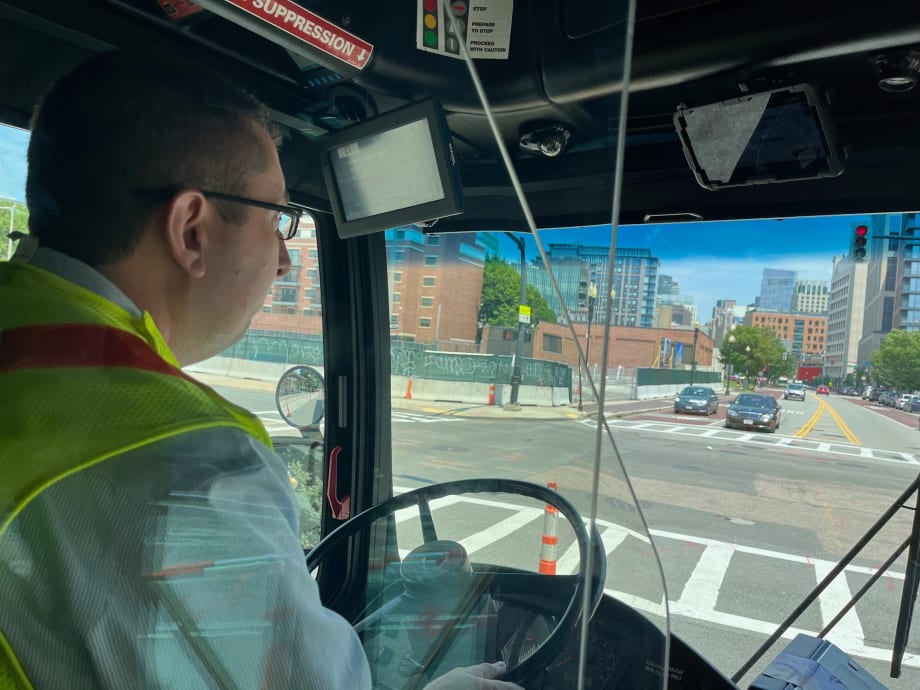
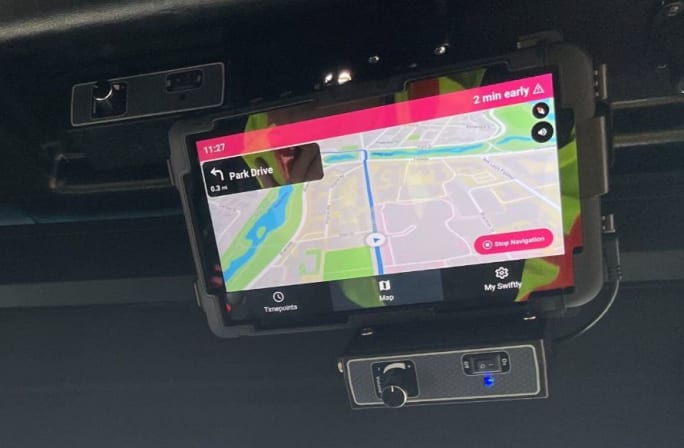
In partnership with Swiftly, off-the-shelf tablet technology will be piloted in the operator cabs of up to 100 buses by the end of the year, providing turn-by-turn directions similar to navigation apps like Google Maps or Apple Maps.
For almost a year, the MBTA and Swiftly iterated and tested with bus operators, inspectors, and dispatchers, ensuring that the turn-by-turn software and new detour features in Skate reflect the input and expertise of front-line staff.
Photo: MBTA
4 min to read
Boston’s MBTA announced the beginning of its new NextGen Bus Navigation Pilot Program, a new initiative designed to assist bus operators in navigating detours and other road challenges.
In partnership with Swiftly, a transit technology company committed to open data and interoperability, off-the-shelf tablet technology will be piloted in the operator cabs of up to 100 buses by the end of the year, providing turn-by-turn directions similar to navigation apps like Google Maps or Apple Maps.
Ad Loading...
MBTA’s NextGen Bus Navigation Pilot
The NextGen Bus Navigation Pilot is supported by major new features in Skate, the MBTA’s internally managed bus dispatching app, which allow the MBTA’s Operations Control Center to map out, monitor, and manage unplanned bus detours on-the-fly.
“As we continue to improve bus service for our riders, it’s important to put our workforce in a better position to succeed. We all know how the ability to navigate our road network can vary from day to day, and even hour by hour, affecting travel times. We are utilizing technology to give our dispatchers and operators the tools to make timely decisions and deliver improved and more reliable travel for our riders. The NextGen Bus Navigation Pilot does just that,” said MBTA GM/CEO Phillip Eng.
Automobile drivers increasingly use navigation apps like Google Maps or Apple Maps for turn-by-turn directions, which typically provide the fastest, most efficient route.
However, the needs of the MBTA’s buses, which operate along fixed routes making hundreds of scheduled stops at bus stops, are very different.
During special events, closed streets, and unplanned subway service suspensions, MBTA buses follow approved detours and shuttle bus accommodations provided by the Control Center, which can sometimes be complicated by narrow and winding streets.
Ad Loading...
Addressing Challenges
In designing and implementing the NextGen Bus Navigation Pilot, the MBTA addressed these challenges by:
Using modern practicesfrom the technology industry: Rather than relying purely on proprietary systems, the MBTA combined its in-house software engineering staff experts with an in-development tool from Swiftly.
Centering safety: Minimizing distractions is even more important for bus operators than for most drivers given their varied responsibilities keeping riders safe. The MBTA’s Safety Division has been engaged since this pilot’s inception, orchestrating testing and planning that helped Swiftly and internal technology staff ensure that the pilot technology is supportive, not distracting, for bus operators.
Listening to frontline staff: For almost a year, the MBTA and Swiftly iterated and tested with bus operators, inspectors, and dispatchers, ensuring that the turn-by-turn software and new detour features in Skate reflect the input and expertise of front-line staff.
“Providing safe and reliable service is the core to everything we do at the T — and that starts with supporting our operators,” said MBTA Director of Bus Safety Asia Williams. “Turn-by-turn navigation will ensure a seamless transition as the T continues to update its routes and reinforce bus operators’ existing knowledge, giving them more confidence. We tested this feature with our operators and instructors to ensure that the technology works seamlessly in real-world conditions, creating a safer on-board experience.”
The NextGen Bus Navigation Pilot is supported by major new features in Skate, the MBTA’s internally managed bus dispatching app, which allow the MBTA’s Operations Control Center to map out, monitor, and manage unplanned bus detours on-the-fly.
Photo: MBTA
Swiftly’s Solution
Swiftly’s navigation solution will provide bus operators audible and visual turn-by-turn directions from a low-cost, off-the-shelf tablet.
Concurrently, new features in the internal Skate app allow bus dispatchers to draw detours on a map from the Control Center — Skate then allows these detour maps to be shared with inspectors and other staff who manage service in real time across the system.
Ad Loading...
The MBTA plans to eventually push these detour directions to the in-cab Swiftly tablets, and ultimately, also to bus riders via industry-standard real-time open data feeds.
By building on a combination of in-house tools, off-the-shelf hardware, and modern vendors like Swiftly, the MBTA is preparing for future innovation and iteration.
In an industry where technology can often remain stagnant, the MBTA’s Technology Innovation Department can iterate quickly based on feedback from dispatchers and other front-line staff.
MBTA’s Path Forward
The MBTA will monitor the NextGen Bus Navigation Pilot over the fall and the winter 2024/2025.
Following this evaluation period, the new technologies will be prepared to roll out to all bus garages with detailed real-time bus detour information available for riders too.
CEO Magnus Friberg discusses Luminator’s shift toward becoming a digital partner, the growing importance of software and interoperability, and how AI can help agencies improve operations and passenger experience.
Reliability-Centered Maintenance helps transit agencies move beyond routine checklists to focus limited resources on the assets and failures that have the greatest impact on safety, reliability, and service.
More than 1,500 buses now feature upgraded technology designed to improve arrival predictions and provide free Wi-Fi, with deployment expected to reach nearly 2,000 buses by the end of 2026.
John Hroncich discusses BAE Systems’ modular and scalable approach, lessons learned from decades of real-world operations, and how agencies can identify electrification strategies that fit their fleets.
In METRO's latest installment, we take a look at recent news from Complete Coach Works, Beep, FlixBus, and more partnerships making headlines across the transportation sector.
What if transit leaders could ask any operational question and get a trusted answer in seconds? Conversational AI is transforming how agencies use their data.
More than $191 million in federal funding will help three transit agencies replace aging rail vehicles and support a new autonomous shuttle service in Chattanooga.
LA Metro’s Obed Mejia discusses technician training, evolving maintenance technology, fleet replacement, and strategies for getting the most out of today’s transit fleets.
In METRO's latest installment, we take a look at recent news from Siemens, Prevost, Dodge, and more partnerships making headlines across the transportation sector.
Pedestrian microsimulation is helping rail planners identify bottlenecks, test station designs, and prepare complex transit hubs for growing passenger volumes.