




More News: Transforming Mass Transit with AI and Advanced Analytics
Transportation Research Center Breaks Ground on New Impact Lab
TRC’s new impact laboratory will help with testing safety features in all kinds of vehicles as technology continues to advance.
October 4, 2024
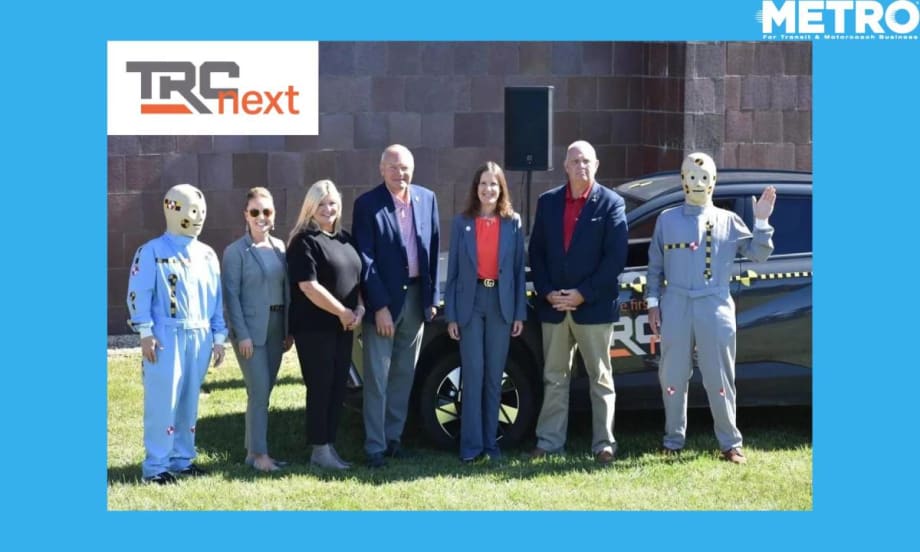
Transportation Research Center Inc. recently broke ground on their new impact laboratory which will include state-of-the-art technology for testing vehicles in high-impact collisions.
Photo: TRC
2 min to read
Transportation Research Center Inc. (TRC) broke ground this week on a new 66,000 square foot impact laboratory. When completed TRC’s 4,500-acre research campus will replace the center’s existing impact lab which has made crucial, lifesaving contributions to advanced highway safety technologies.
The new impact lab is made possible through a $24 million economic development grant from the state of Ohio. The grant was included in a recently passed capital budget to help the proving ground test the next generation of cars, trucks and buses, including electric and autonomous vehicles.
A New Testing Ground
Upgraded features in the new lab include robotic cameras, sensors and other state-of-the-art technology for testing vehicles in high-impact collisions. TRC estimates that it will take three years to complete the project.
“This new and expanded Impact Lab will have a positive impact on the region and entire state, further enhancing the work happening at the site to develop highway safety technologies,” said Ohio Lt. Governor Jon Husted, who joined TRC employees, state officials and other dignitaries at the groundbreaking ceremony. “For more than a century, Ohio has been at the heart of transportation manufacturing, innovation and research. This outstanding facility will be another big step toward extending that legacy.”
This major investment in TRC’s research capabilities comes at a time when the nonprofit, independent center is celebrating its 50th anniversary.
TRC's Other Facilities
Since TRC opened its proving grounds in 1974, they have attracted more than 1,000 clients from world-leading industries to Ohio. They have also partnered with decision makers in every sector to drive innovation in automotive safety and performance.
TRC’s East Liberty campus operates around the clock to conduct tests in a variety of advanced research facilities. Key research facilities include closed-road courses, rural lanes, a 7.5-mile high-speed oval test track, and a 50-acre vehicle dynamics area.
Recently, TRC created a specialized testing complex for autonomous and connected vehicles. This new 540-acre “SmartCenter” has already become a magnet for the world’s leading innovators, who come to Ohio to test and refine their transformational technologies.
Pushing Technology Forward
TRC has had key roles in the development of automotive innovations such as airbags, anti-lock brakes, lane assist, and adaptive cruise control. These were all tested and refined at TRC before they appeared on roadways.
Most recently TRC has developed pioneering testing facilities for the development of autonomous driving technologies.
More Technology

From Hardware to Digital Partner: Luminator Charts Its Next Chapter
CEO Magnus Friberg discusses Luminator’s shift toward becoming a digital partner, the growing importance of software and interoperability, and how AI can help agencies improve operations and passenger experience.
Read More →
Beyond the Checklist: A Structured Approach to Transit Maintenance
Reliability-Centered Maintenance helps transit agencies move beyond routine checklists to focus limited resources on the assets and failures that have the greatest impact on safety, reliability, and service.
Read More →
NJ TRANSIT Advances Bus Technology Upgrades Across Statewide Fleet
More than 1,500 buses now feature upgraded technology designed to improve arrival predictions and provide free Wi-Fi, with deployment expected to reach nearly 2,000 buses by the end of 2026.
Read More →

Building a Flexible Path to Transit Electrification
John Hroncich discusses BAE Systems’ modular and scalable approach, lessons learned from decades of real-world operations, and how agencies can identify electrification strategies that fit their fleets.
Read More →
Biz Briefs: Alstom Lands Canadian Contract, LYT to Supply California TSP, and More
In METRO's latest installment, we take a look at recent news from Complete Coach Works, Beep, FlixBus, and more partnerships making headlines across the transportation sector.
Read More →
Sponsored•September 8, 2026
From Legacy Silos to Conversational Intelligence
What if transit leaders could ask any operational question and get a trusted answer in seconds? Conversational AI is transforming how agencies use their data.
Read More →
USDOT Announces Rail Vehicle Replacement Grants, Chattanooga AV Shuttle Funding
More than $191 million in federal funding will help three transit agencies replace aging rail vehicles and support a new autonomous shuttle service in Chattanooga.
Read More →
Bus Tech Talk: Keeping Transit Technicians Ahead of the Technology Curve
LA Metro’s Obed Mejia discusses technician training, evolving maintenance technology, fleet replacement, and strategies for getting the most out of today’s transit fleets.
Read More →
Biz Briefs: RIPTA Unveils New Frontrunners, Clevland RTA Adds New Siemens, and More
In METRO's latest installment, we take a look at recent news from Siemens, Prevost, Dodge, and more partnerships making headlines across the transportation sector.
Read More →
Why Simulating Pedestrian Movement Has Become Essential for Modern Rail Stations
Pedestrian microsimulation is helping rail planners identify bottlenecks, test station designs, and prepare complex transit hubs for growing passenger volumes.
Read More →