



California's OCTA Advances Priority Coastal Rail Projects
The move is another decisive step in the ongoing effort to protect and stabilize the coastal rail line through San Clemente to help ensure safe and uninterrupted rail service.

To address these urgent concerns, OCTA has been actively collaborating with regulatory agencies to implement strategic solutions in the near future, while continuing to look at short and mid-term solutions to protect the rail line in place.
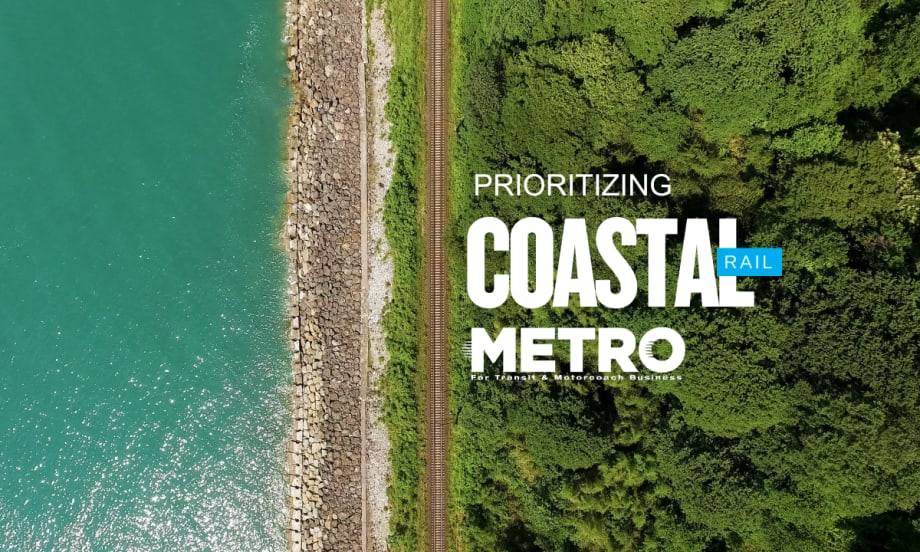
Photo: Metro Magazine
California’s Orange County Transportation Authority (OCTA) board voted to advance four priority projects under the Coastal Rail Stabilization Priority Project, marking a significant milestone in efforts to safeguard the rail corridor.
The move is another decisive step in the ongoing effort to protect and stabilize the coastal rail line through San Clemente to help ensure safe and uninterrupted rail service.
“This rail line is essential to safely moving passengers and freight, and I’m proud of the work we are doing with strong input from the community and all stakeholders to make sure this vital corridor remains operating smoothly,” said OCTA Chair Doug Chaffee.
Coastal Rail Issues
Since fall 2021, multiple bluff failures and landslides on privately owned land have, along with coastal erosion, have significantly impacted rail operations along the Los Angeles – San Diego – San Luis Obispo (LOSSAN) Rail Corridor, requiring emergency stabilization efforts. Subsequently, studies indicated that other areas through San Clemente are at risk.
To address these urgent concerns, OCTA has been actively collaborating with regulatory agencies to implement strategic solutions in the near future, while continuing to look at short and mid-term solutions to protect the rail line in place. OCTA is also working with the state toward long-term solutions.
OCTA staff has continued to engage with regulatory agencies to find ways to streamline the permitting processes and advance the four identified reinforcement areas.
The priority projects are currently under the environmental and preliminary engineering phase, which would help to ensure the timely implementation of protective measures while aiming to minimize future rail service disruptions.
OCTA advanced the following projects:
Reinforcement Area 3: A proposed catchment wall at Mariposa Point designed to protect from landslides will be expedited. This location does not require permits from the U.S. Army Corps of Engineers or the California State Lands Commission, allowing for accelerated project implementation.
Reinforcement Areas 1, 2, and 4: OCTA is evaluating multiple protective measures, including riprap repair, engineered revetments, seawalls, and sand nourishment to address coastal erosion risks.
Collaborative Efforts, Funding Secured
OCTA is working closely with geotechnical, structural, and coastal engineers, alongside key stakeholders, such as the City of San Clemente, State Parks, Southern California Regional Rail Authority (Metrolink), LOSSAN, Amtrak, and BNSF Railway.
The collaborative approach ensures the selection of the most resilient and cost-effective solutions that would protect the rail line.
Last fall, OCTA secured $305 million in state and federal funding, enabling the completion of design and construction for the Coastal Rail Stabilization Priority Project. This financial commitment underscores the urgency and importance of protecting the region’s transportation infrastructure.
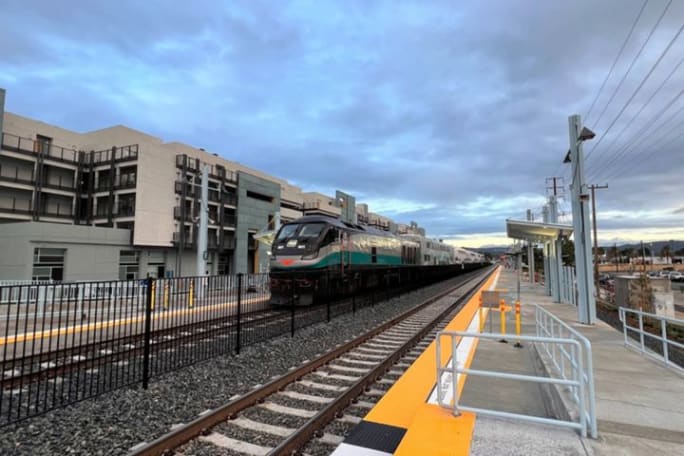
Since fall 2021, multiple bluff failures and landslides on privately owned land have, along with coastal erosion, have significantly impacted rail operations along the LOSSAN Rail Corridor, requiring emergency stabilization efforts
Photo: OCTA
Advancing the Project
OCTA continues to work with the U.S. Army Corps of Engineers, the California Coastal Commission, and the California State Lands Commission to advance the project under the standard regulatory framework, while looking for ways to expedite the effort. The work includes:
Submitting a Coastal Development Permit (CDP) application to the Coastal Commission.
Conducting geological and environmental assessments.
Identifying and securing sand sources to support beach nourishment.
In a series of public meetings, OCTA heard from and recognized the importance of incorporating sand nourishment into any proposed solutions. A critical component of the project includes a one-time infusion of approximately 540,000 cubic yards of sand for beach nourishment.
OCTA is exploring viable offshore and inland sand sources to support erosion control measures. Environmental studies and permitting processes are actively being pursued to expedite approvals and ensure efficient project implementation.
Project Timeline and Next Steps
The alternative analysis for Reinforcement Area 3 is expected to be finalized by March 2025, with preliminary engineering and environmental documentation completed by early 2026.
For Areas 1, 2, and 4, the alternatives analysis process is anticipated to conclude by mid-2025, with preliminary engineering and environmental documentation completed by early 2027. The timeline is subject to change.
Additionally, OCTA is coordinating with rail operators to minimize disruptions to passenger and freight rail services once construction begins.
OCTA is steadfast in its commitment to protecting Orange County’s coastal rail corridor through strategic, data-driven solutions to ensure continued reliability and resilience of one of the nation’s busiest rail corridors.
More Rail

The Business Voice Behind Public Transportation
As chair of APTA’s Business Members Board of Governors, Ray Melleady explains how more than 850 business members are partnering with transit agencies to advance funding, innovation, and industry-wide collaboration.
Read More →
FRA Announces $5.3B in Rail Investments, Including $2B for Amtrak
Funding will support grade-crossing improvements, infrastructure upgrades, and new Amtrak equipment in 23 states.
Read More →
Finding the ‘Happy Medium’: Optimizing Maintenance Without Sacrificing Reliability
The key to maintenance optimization isn’t doing less work—it’s doing the right work at the right time on the right assets.
Read More →
OKC Streetcar Makes Zero-Fare Service Permanent
Ridership increased an average of 71% compared with the same period a year earlier during the fare-free pilot.
Read More →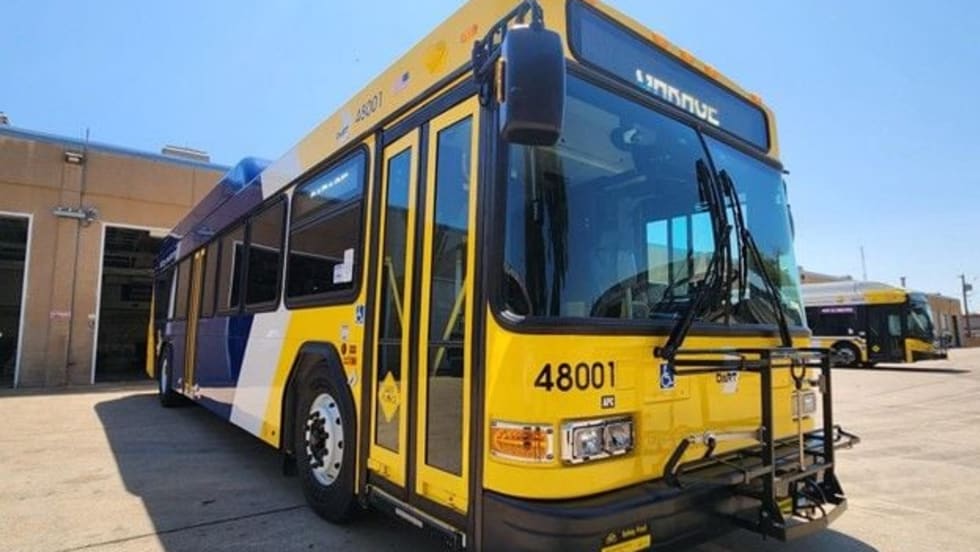
DART Customer Satisfaction Reaches Six-Year High
Overall satisfaction rose to 74.9%, while the agency’s Net Promoter Score reached a record 33.7.
Read More →
How DART's GoPass Is Redefining Regional Mobility
Serving 14 transit agencies, GoPass simplifies multimodal travel by allowing riders to plan, pay for, and manage an entire trip through one app.
Read More →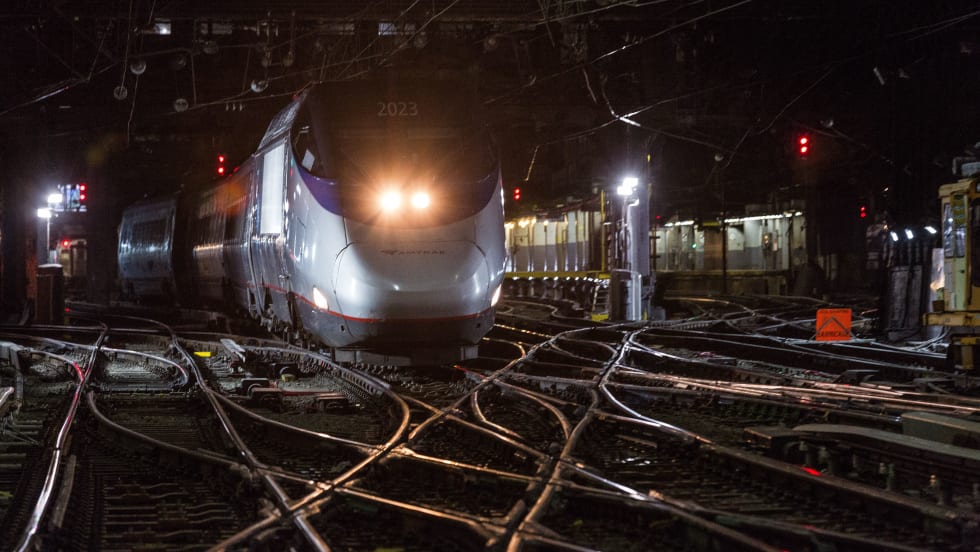
Amtrak Board Advances Plan to Restructure Organization, Seeks Public Input
The proposal, developed by Amtrak management and approved by the board for further consideration, is intended to modernize the organization's structure while improving accountability, operational efficiency, and customer service.
Read More →
Biz Briefs: STV teams with Amtrak, Motorcoach Operators Boost Fleet and Land Contracts, and More
From manufacturers and suppliers to transit agencies and motorcoach operators, these updates offer a snapshot of the projects, partnerships and business moves driving the industry forward.
Read More →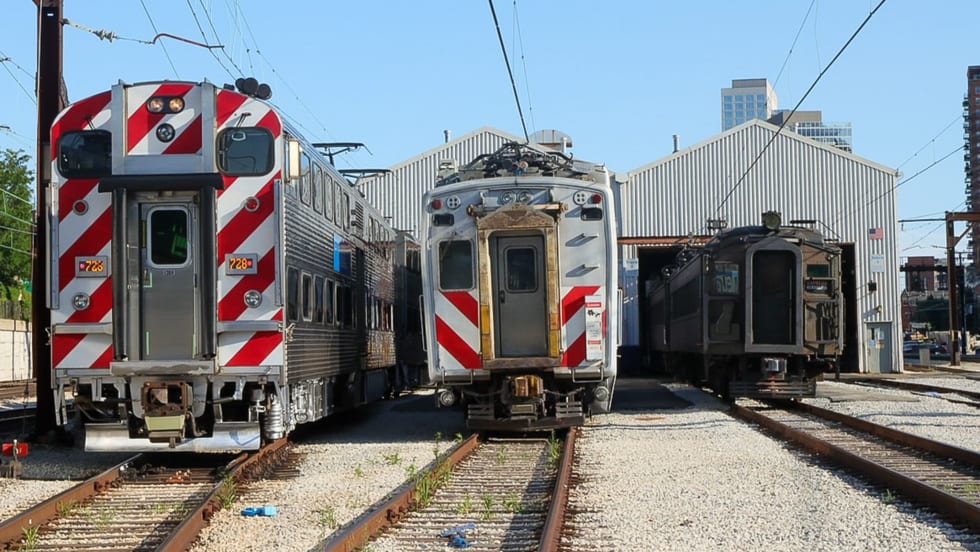
Metra Celebrates 100 Years of Electric Rail, Looks to the Future
The event was also a celebration of recent reforms to public transportation in the Chicago area, changes that could be as transformative in the future as the major civic achievement a century ago, said officials.
Read More →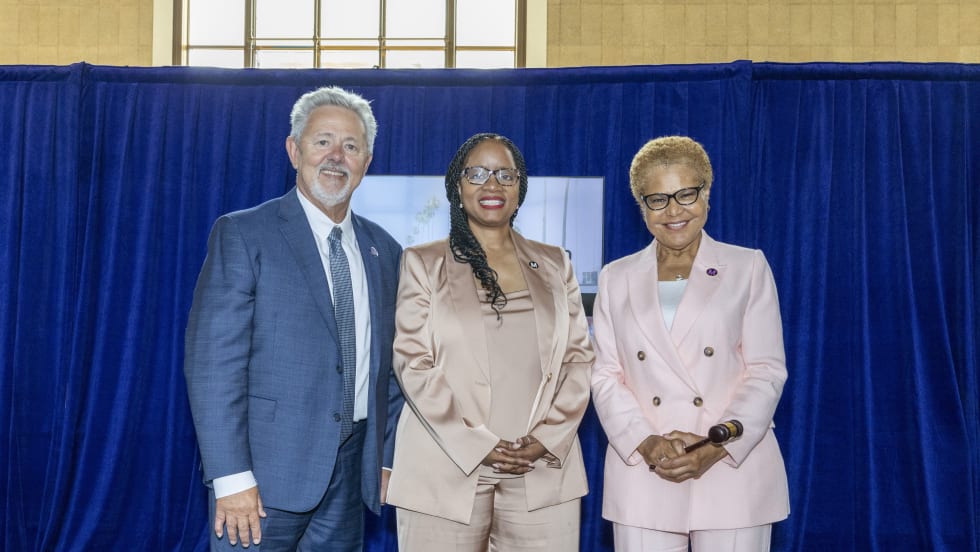
LA Metro Marks Banner Year, Sets Ambitious Goals for New Fiscal Year
Incoming LA Metro Board Chair and Los Angeles Mayor Karen Bass joined outgoing Board Chair Fernando Dutra and LA Metro CEO Stephanie Wiggins to review accomplishments from fiscal year 2026, which included the opening of new rail extensions, advancement of major transit projects, expanded safety programs, and new rider amenities.
Read More →