



Philadelphia's SEPTA Expands Contactless Payment to Regional Rail
Regional Rail riders can now simply tap any credit or debit card, in physical form or through mobile wallets using Apple Pay, Google Pay, and Samsung Pay, at a turnstile or platform validator.

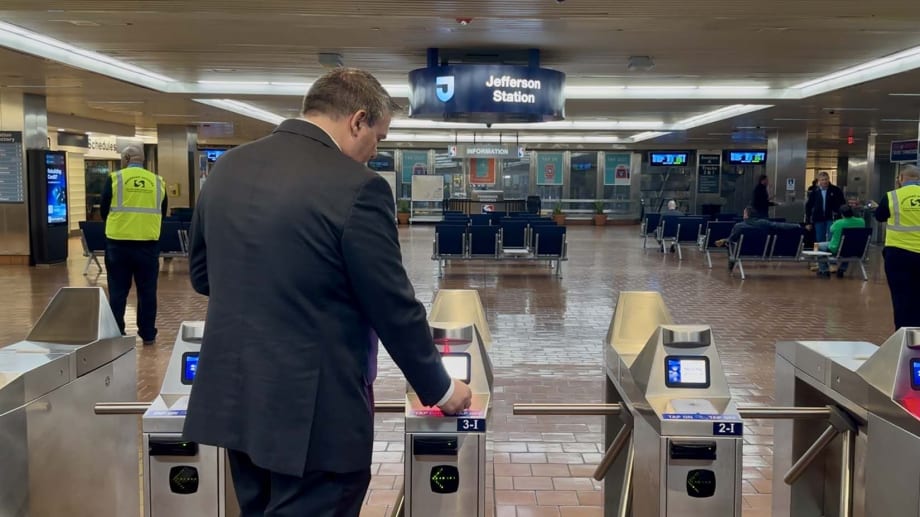
SEPTA launched contactless payment technology on Transit in September 2023. Since then, SEPTA has generated $31 million in revenue from contactless payments.
Photo: SEPTA
After a successful rollout on Transit, SEPTA is expanding contactless payment options to Regional Rail, meaning customers on all modes — trains, buses, subways, and trolleys — can easily tap on using their credit or debit card, or mobile wallet.
“Deploying this technology systemwide is a major achievement,” said SEPTA Board Chair Kenneth E. Lawrence Jr. “With this expansion to Regional Rail, SEPTA is the first commuter rail network in the country to accept contactless payments.”
Adding Contactless to Rail
Regional Rail riders can now simply tap any credit or debit card, in physical form or through mobile wallets using Apple Pay, Google Pay, and Samsung Pay, at a turnstile or platform validator.
Customers must tap on and tap off, just like the SEPTA Key Card. Regional Rail contactless fares are the same as the current Travel Wallet fares.
SEPTA launched contactless payment technology on Transit in September 2023. Since then, SEPTA has generated $31 million in revenue from contactless payments.
“This technology makes SEPTA more convenient for customers who may not want to plan their trips in advance, purchase a physical Key Card, or use cash to pay their fares – just tap and go,” said SEPTA Interim GM Scott A. Sauer. “Increasing efficiency will help us continue to rebuild our ridership and support the major events coming to Philadelphia in 2026.”
More Technology

ENC Lands MATA Contract and More in Biz Briefs
In this edition of Biz Briefs, we spotlight the latest developments shaping the future of mobility.
Read More →
Strada360’s Steve Lassey on Turning Transit Data Into Better Decisions
From breaking down data silos to preparing for AI, Strada360 CEO Steve Lassey discusses how transit agencies can use technology to improve operations, customer information, and long-term decision-making.
Read More →
Almaviva Looks to Open Architecture to Advance Transit Technology
Eric Reese discusses how interoperability, open architecture, and modular design can help transit agencies control costs, reduce vendor lock-in, and upgrade technology without starting over.
Read More →

Driving Smarter Paratransit
John Hanlon shares how AlphaRoute is leveraging AI-powered technology to help paratransit providers optimize operations, support frontline staff, and enhance the rider experience.
Read More →
From Hardware to Digital Partner: Luminator Charts Its Next Chapter
CEO Magnus Friberg discusses Luminator’s shift toward becoming a digital partner, the growing importance of software and interoperability, and how AI can help agencies improve operations and passenger experience.
Read More →
Beyond the Checklist: A Structured Approach to Transit Maintenance
Reliability-Centered Maintenance helps transit agencies move beyond routine checklists to focus limited resources on the assets and failures that have the greatest impact on safety, reliability, and service.
Read More →
NJ TRANSIT Advances Bus Technology Upgrades Across Statewide Fleet
More than 1,500 buses now feature upgraded technology designed to improve arrival predictions and provide free Wi-Fi, with deployment expected to reach nearly 2,000 buses by the end of 2026.
Read More →
Building a Flexible Path to Transit Electrification
John Hroncich discusses BAE Systems’ modular and scalable approach, lessons learned from decades of real-world operations, and how agencies can identify electrification strategies that fit their fleets.
Read More →
Biz Briefs: Alstom Lands Canadian Contract, LYT to Supply California TSP, and More
In METRO's latest installment, we take a look at recent news from Complete Coach Works, Beep, FlixBus, and more partnerships making headlines across the transportation sector.
Read More →
From Legacy Silos to Conversational Intelligence
What if transit leaders could ask any operational question and get a trusted answer in seconds? Conversational AI is transforming how agencies use their data.
Read More →