



L.A. Metro Board Approves Labor Deal, Expansion for Transit Ambassador Program
The move follows significant public support for the Transit Ambassador initiative and sets the stage for Metro to employ ambassadors, previously contracted through third-party vendors directly.

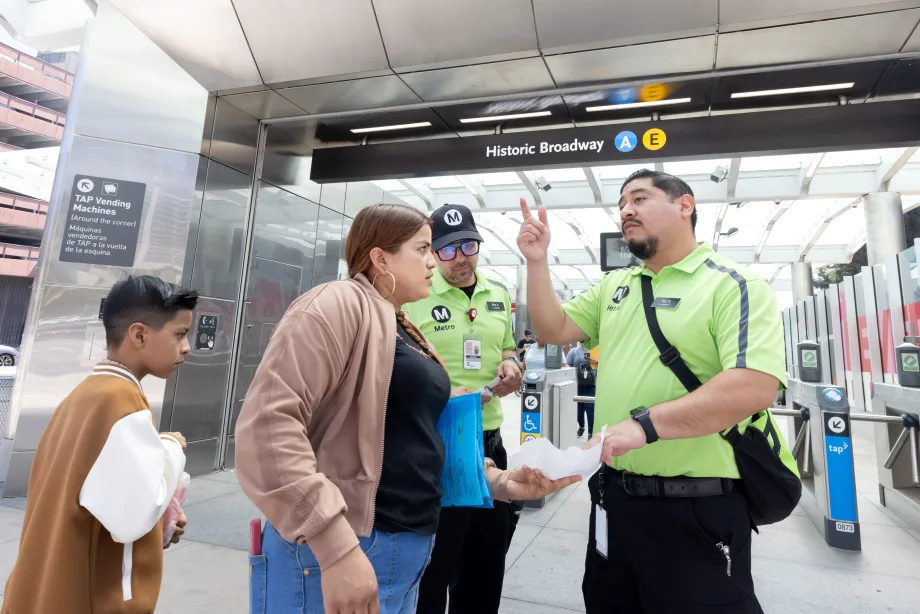
With this approval, Metro will begin onboarding existing ambassadors operating on the system and expand staff to improve coverage and rider support.
Photo: LA Metro
The Los Angeles County Metropolitan Transportation Authority (Metro) board officially approved a landmark collective bargaining agreement with the International Brotherhood of Teamsters, bringing Metro’s acclaimed Transit Ambassador program in-house and expanding its reach across the transit system.
In-House Operations and Program Expansion
The move follows significant public support for the Transit Ambassador initiative and sets the stage for Metro to employ ambassadors, previously contracted through third-party vendors directly.
As part of the board's decision, 85 new positions were added to support expanded coverage on more bus lines and newly opened stations by the end of 2025.
The transition to an in-house department was first authorized in October 2023. With this approval, Metro will begin onboarding existing ambassadors operating on the system and expand staff to improve coverage and rider support.
New Budget, New Roles
Metro amended its FY26 budget to include $11.8 million for new wages and benefits to support the collective bargaining agreement and expanded responsibilities.
The agreement creates 388 contract positions, including:
309 current ambassadors.
79 new ambassador roles.
49 field supervisors.
Two non-contract management positions to oversee daily operations, staff training, reporting, and customer experience enhancements.
The personnel will help staff high-priority projects, including the new Metro/LAX Transit Center, the A Line extension to Pomona, and the D Line extension to West Los Angeles.
Proven Impact on Rider Safety and Experience
The agency explained that Metro Ambassadors play a key role in the agency’s public safety framework, complementing security, law enforcement, and crisis response teams.
According to a 2023 Metro customer survey, 63% of riders who had seen Ambassadors reported feeling safer, a figure that rises notably among certain groups:
66% of women.
66% of riders earn less than $25,000/year.
68% of Hispanic/Latino riders and those under 18.
70% of Asian/Pacific Islander riders.
Beyond safety, Ambassadors connect riders with system resources, assist with navigation, and respond to emergencies. Their interventions have proven life-saving — 334 lives have been saved through suicide prevention and NARCAN administration, Metro officials said.
“Metro Ambassadors have been an incredible addition to our system, helping us make it friendlier and safer, while keeping a watchful eye out for issues that need to be addressed,” said Stephanie Wiggins, CEO of Metro. “They’re a key part of our customer experience and safety strategies, as we work to deliver the type of world-class transit service necessary for us to become the first choice for transportation among LA County residents and visitors.”
More Management

Brian Dickson on Building Stronger, More Resilient Transportation Organizations
Bus Business Consultants Founder Brian Dickson discusses the leadership principles, operational discipline, and strategic planning that separate transportation companies positioned for long-term success from those stuck in survival mode.
Read More →
LA Metro Breaks Ground on Vermont BRT Project
The 12.4-mile corridor is projected to serve 66,200 daily riders, reduce travel times by up to 24%, and create the nation's busiest bus rapid transit corridor.
Read More →
Building Stronger Leaders, More Resilient Transit Teams
Dr. Carol Parker Walsh discusses leadership development, employee retention, workplace culture, and preparing transit’s workforce for AI and automation.
Read More →
Roman Cornell on ABC Companies’ Evolution and the Future of Passenger Transportation
The company’s CEO discusses carrying forward a third-generation family legacy, ABC’s continued evolution in passenger transportation, support for increasingly complex fleets, and how technology and continued investment could help operators improve uptime.
Read More →
CATS Launches West Charlotte Microtransit Zone, Expands Transit Services
The new microtransit zone connects residents to key destinations as Charlotte Area Transit System rolls out the first phase of its 2055 Transit System Plan.
Read More →
VIA Bus Ridership Grows 10.1% Through August 2026
San Antonio's VIA Metropolitan Transit reported the highest bus ridership growth among major Texas transit systems. Federal Transit Administration data ranked it second among the nation's 50 largest transit systems.
Read More →
CSA Group Releases Climate Resilience Standard for Transit, Passenger Rail
Developed with support from the Standards Council of Canada, CSA D700 guides assessing climate-related risks and planning adaptation measures for transit and passenger rail systems.
Read More →
ETA CEO John Maglio on Transit Technology, Innovation, and Building Agency Trust
ETA founder and CEO John Maglio explores the evolution of transit technology, the importance of reliable systems, and how stronger partnerships can help agencies improve operations and the passenger experience.
Read More →
COTA Launches First Customer Experience Action Plan to Improve Transit Service
The new plan outlines improvements to service reliability, accessibility, communication, and the overall rider experience across Central Ohio's transit system.
Read More →
LA Metro September Ridership Climbs 3.9%, Led by Rail Growth
The agency recorded more than 27.2 million boardings, with rail ridership increasing 12.4% year over year and the D Line posting the largest gains.
Read More →