



How Propane is Keeping EVs on the Road
Propane-powered EV charging offers reliability and scalability without sacrificing emissions goals.

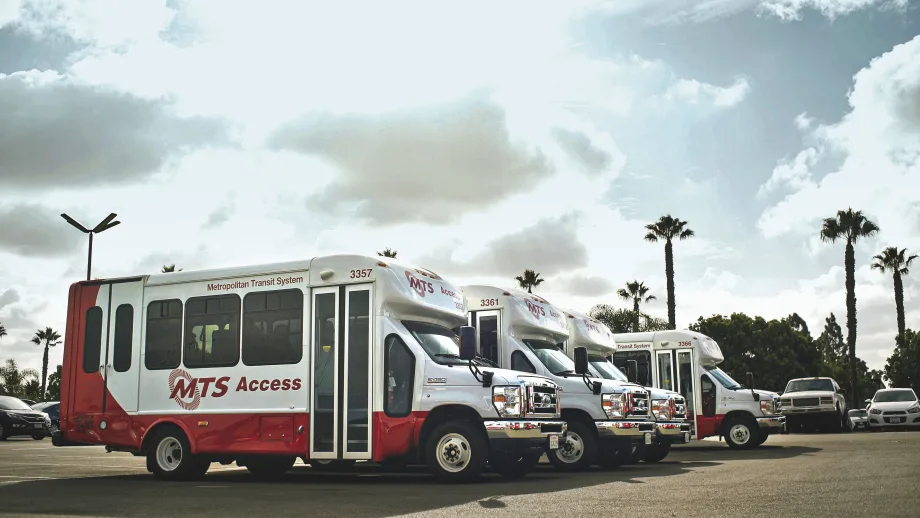
A significant advantage of investing in propane-powered EV charging is energy reliability, which is emerging as a top priority for fleets of all kinds.
Photo: PERC
- Propane-powered systems provide a reliable solution for charging electric vehicles.
- These systems offer scalability, making them suitable for various charging needs.
- The use of propane aligns with emission goals, ensuring environmental standards are met.
*Summarized by AI
As transit agencies across the country continue to seek ways to reduce their emissions, many are turning to electric buses, shuttles, and paratransit vehicles.
While EVs can be a sound choice for specific applications and duty cycles, there are still challenges to overcome — from the investment costs of cars and charging infrastructure, to the wait times for installation. These hurdles, coupled with an unreliable grid, leave fleet owners questioning how to make it all work.
This is where propane provides an innovative solution with off-grid, propane-powered EV charging units.
This new technology utilizes a small-scale, self-sufficient power grid system — known as a microgrid — powered by renewable energy sources, such as wind, solar, and a propane-powered generator, to provide DC level 3 charging for EV fleets. These rapidly deployable units provide electric fleets with an extra boost of reliability, cost savings, and sustainability.
Faster Deployment and Lower Infrastructure Costs
Propane-powered EV charging helps fleets electrify faster and at a lower cost. Traditional electric grid charging infrastructure often requires utility coordination, transformer upgrades, trenching, permitting, and other additional costs.
In some cases, installing grid-connected chargers for electric buses can take several years, depending on site conditions and the utility's responsiveness.
In contrast, deployment of propane-powered EV charging units is quick and straightforward.
In most cases, the units don’t require permits, electrical upgrades, or on-site construction, allowing for faster deployment in a matter of weeks. This translates to time and cost savings of up to 75% compared to traditional permanent EV infrastructure.
The modular and mobile design of propane-powered charging systems also provides operational flexibility. Agencies can move charging units between depots or designate them for remote locations without investing in additional infrastructure.
For fleet owners concerned about EV range, this provides a solution to extend routes. The abundant availability of propane in the U.S., likewise, makes it a convenient and affordable option for EV charging nationwide.
One example of this technology in use is the Los Angeles Department of Transportation (LADOT).
The organization installed a propane-powered charging unit for its 40-foot-long city buses in just two days. It requires 144 kWh or 20 gallons of propane per vehicle per night. To keep the microgrid supplied with fuel, the department houses a 1,000-gallon propane tank on site.
Energy Reliability That Keeps Buses Running
Another significant advantage of investing in propane-powered EV charging is energy reliability, which is emerging as a top priority for fleets of all kinds.
A recent report from the U.S. Department of Energy found that nationwide blackouts could increase 100 times by 2030 if grid infrastructure and power generation are not dramatically expanded. With natural disasters and increased demand continuing to threaten major grid disruptions, EV fleets that rely solely on the grid for power are at risk of being unable to charge their vehicles. For transit agencies, which must adhere to strict timetables, this is a non-starter.
Propane-powered EV charging solutions offer fleet owners added reliability by providing a power supply that’s independent of the primary electrical grid.
Even for EV fleets that already have permanent infrastructure or are currently building it, backup propane charging stations can supplement a fleet’s primary power source during periods of increased demand or grid interruptions.
Propane can be stored on-site, making it readily available whenever needed. Unlike diesel, it doesn’t degrade over time and can be stored almost indefinitely.
This technology is ideal for small- to mid-sized transit agencies or for those operating in remote areas that currently face challenges with the grid.
Many rural and tribal fleets face high costs and lengthy wait times to upgrade their electric infrastructure. Rather than delay electrification, these agencies can deploy propane-powered charging stations to support their new electric bus fleets immediately.
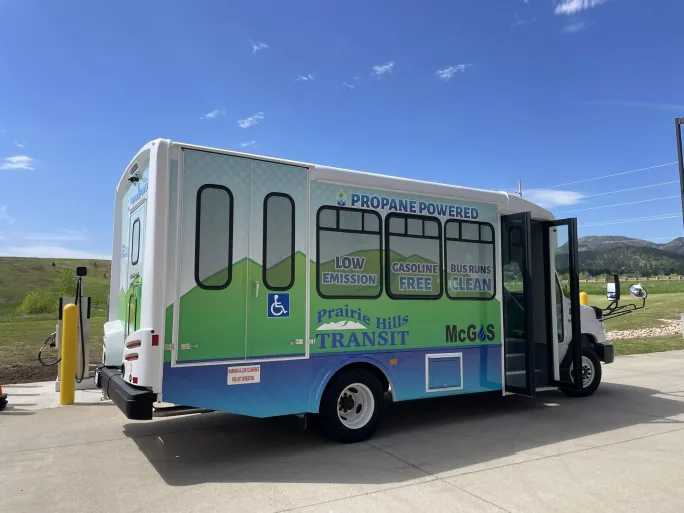
Propane can be stored on-site, making it readily available whenever needed. Unlike diesel, it doesn’t degrade over time and can be stored almost indefinitely.
Photo: PERC
Off-Grid Charging That Supports Decarbonization Goals
While some fleet owners are turning to similar off-grid charging solutions that use diesel generators, this option undermines the primary goal of EVs: reducing emissions.
Propane is a low-carbon energy source that reduces harmful emissions, accelerates decarbonization, and is non-toxic to groundwater and soil. For light commercial microgrid (<100kW generation system) applications, propane fuel cells result in near-zero nitrogen oxide (NOx) and carbon monoxide (CO) emissions, as well as a 24% reduction in carbon dioxide (CO2) emissions compared to diesel.
Diversifying Any Fleet for Optimal Resiliency
As reliability becomes increasingly critical, many fleet owners are also diversifying their energy mix by selecting multiple energy sources to work within the duty cycles for which each is best suited.
One popular solution is to operate both EVs and propane autogas paratransit vehicles — EVs for shorter routes with a smaller payload, and propane autogas for routes that require a longer range and greater reliability.
Propane autogas paratransit buses have a range of up to 400 miles, allowing them to operate in all weather conditions and across various terrains.
In instances where fleets operate with both energy sources, propane can serve a dual purpose: charging EVs with the microgrid and refueling propane autogas vehicles from the same tank. A local propane supplier can help fleets determine the right-sized tank and the propane autogas refueling infrastructure to create a customizable, scalable solution.
A Clean, Reliable Backup for EV Fleets
EV fleets can be brought to a halt when the grid goes down, but with the right off-grid solutions, transit agencies can keep their vehicles on schedule.
Propane-powered EV charging offers owners a way to electrify their fleets more quickly, efficiently scale their infrastructure, maintain reliability, easily diversify their energy mix, and rein in costs.
Quick Answers
Propane is used in propane-powered EV charging stations, offering a reliable and scalable solution for charging electric vehicles.
*Summarized by AI
More Blog Posts

2022 Bringing Renewed Energy
Having already been on the road for a couple of conferences, both folks in the public transit and motorcoach sectors have a lot of optimism the ship is starting to correct itself, and it’s good to see all the energy out on the show floors and in the halls.
Read More →
Have you thanked your 'essential' service worker today?
When panic surrounding the coronavirus began to ramp up in my area, I’ll admit, I was right there with everyone else stockpiling up...
Read More →
Leadership should ride transit — 'just like us'
Recently, media outlets in Boston were all atwitter when Massachusetts Gov. Charlie Baker was spotted riding the T.
Read More →
Transit can no longer ignore the benefits linked to offering free fares
Six years ago, Tallinn, the capital of Estonia, became “the world's first" to introduce free public transport for all its residents.
Read More →
Safeguard my personal data — our democracy depends on it
“Cities and private companies must take steps to safeguard data and ensure that individual privacy — a foundation of democratic society — is protected.”
Read More →
Fighting against human trafficking is everyone's duty
U.S. traffickers have been shown to use all modes of transportation to find their next victims. Initiatives are being placed to combat trafficking and empower operators to act.
Read More →
Focusing on ‘abilities’ gives those with disabilities a ‘sense of purpose’
I recently learned about a program offered by Transport for London that provides “people with mild to moderate learning disabilities and those on the autism spectrum the chance to gain skills and work experience.”
Read More →
Come Together to Shut Down the Shutdown, Fund a Transit Bill
As I write this, we are a few days away from another potential government shutdown if negotiations on border security are not hammered out.
Read More →
New Year, New Hopes for the Motorcoach Industry
Hiring and retaining drivers is the greatest challenge facing motorcoach operators, according to 70% of respondents of METRO Magazine's 2019 Motorcoach Survey. The public transit industry is not immune to this issue either.
Read More →
When voting 'yes' says 'no' to funding for transportation
I’m crossing my fingers that by the time you read this, the proposition repealing California’s gas tax and vehicle fees (SB 1) will have failed.
Read More →