




A Leader’s Guide Through Disruption, Uncertainty, and Change
Smarter Surveillance, Safer Transit: Tackling Incivility with Data and Innovation
From fare evasion analytics to audio-triggered alerts, Axis Communications camera systems are helping transit leaders target issues more precisely without compromising privacy or public trust.
November 17, 2025
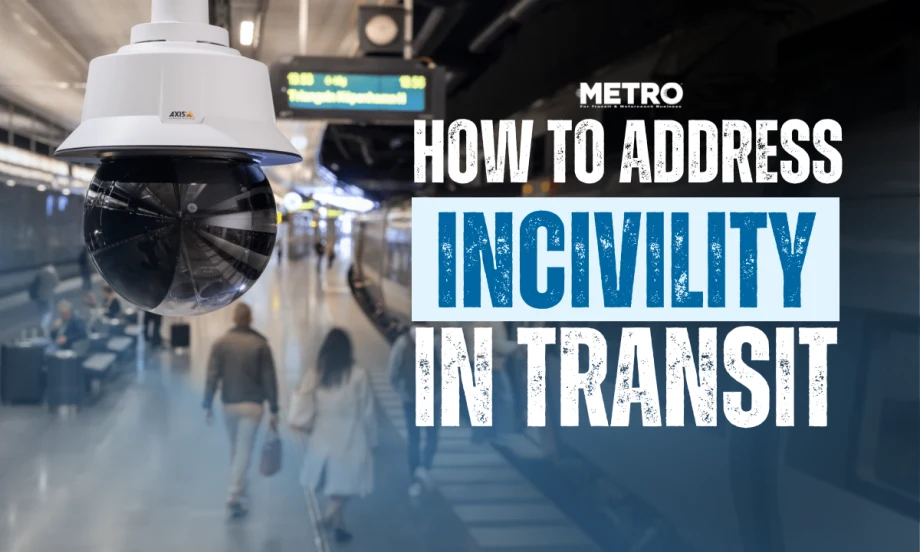
While not always criminal, offensive behaviors can create a sense of insecurity, but what can be done to preserve a safe environment on public transit?
Photo: Axis Communications/METRO
5 min to read
- Axis Communications camera systems enhance transit safety by using fare evasion analytics and audio-triggered alerts.
- These innovations enable transit authorities to address specific issues accurately while maintaining privacy.
- The approach fosters public trust by offering precise solutions without compromising individual rights.
*Summarized by AI
Across North America, transit agencies are grappling with a growing concern for incivility, which affects both the rider experience and operator well-being. From fare evasion and verbal altercations to disregard for onboard rules, these behaviors can undermine safety, delay service, and erode public confidence in transit systems.
According to Sophie Laplante, business development manager for public safety at Axis Communications in Canada, although the issue is widespread, technology is increasingly part of the solution.
"Fare evasion is a big one," she said. "It impacts the budget, and it's incredible how often I see it when I take the subway. There's also aggressive or disrespectful behavior, especially to the driver, and rule violations like smoking and vaping."
While not always criminal, offensive behaviors can create a sense of insecurity, but what can be done to preserve a safe environment on public transit?
Confronting Safety Challenges in Transit
In recent years, transit operators across Canada and the U.S. have reported sharp increases in confrontations and disruptive behavior since the pandemic.
Laplante recalled a statistic from the Toronto Transit Commission, which revealed that "73% of their employees were victims of physical or verbal violence in 2022."
On January 16, 2025, the Federal Transit Administration published "Responses to General Directive 24-1: Required Actions Regarding Assaults on Transit Workers," which included an analysis showing that "more than two-thirds of transit agencies determined that safety risk mitigations are necessary to reduce the risk of assaults on transit workers."
"I think in the end, it's about community," said Laplante. "How do we want to solve transportation incivility with a community approach?"
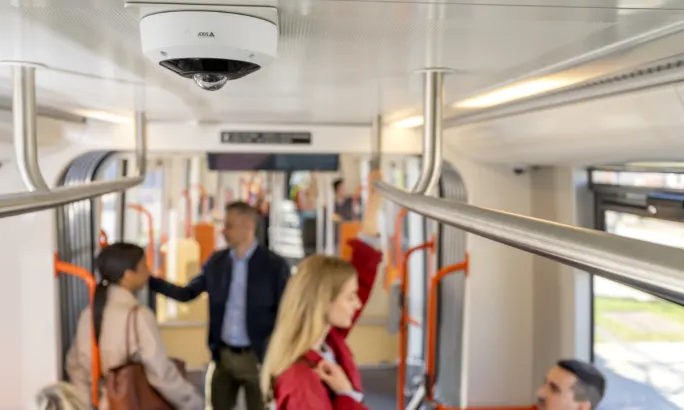
In addition to live intervention, the cameras are used not only to collect imagery but also to gather data points.
Photo: Axis Communications
Proactive Security Through Intelligent Video and Audio
A potential solution? Axis Communications, a provider of network cameras and intelligent video systems, collaborates closely with agencies to design camera solutions that extend beyond basic recording. Increasingly, transit systems are using video analytics to identify patterns, detect violations, and proactively address incidents.
"We get asked for analytics on fare evasion and disruptive behavior," said Laplante. "Vandalism, for example, and destruction of property also impact the financial aspect."
However, modern camera systems can do more than capture footage. They can detect unusual movement, alert operators to crowding or aggression, and provide data that helps agencies make targeted policy and security decisions.
Laplante noted that Axis began developing audio about 10 years ago, an endeavor that pushed the company to be more proactive in security. Suppose a camera catches a "bad incident" happening. In that case, operators will likely see it after the fact, and there's nothing much else they can do than try to identify the people in the video.
However, a camera with an audio sensor, adhering to privacy protections and not recording conversations, will sense audio levels. When a peak gets too high, that signals an abnormality in the system, triggering an alarm of the agency's choice.
The alarm could be a "visual strobe that will start blinking, or a speaker can play a pre-recorded message, or be accessed by someone monitoring the cameras." In a way, it allows real-time intervention and collaboration from central stations.
Laplante said at times, depending on the "crime," it's amusing to see how pre-recorded messages have "changed the game." We're so accustomed to seeing cameras every single day that we aren't really aware we're being watched; therefore, adding audio as a feature makes it feel more realistic.

When an audio peak gets too high, that signals an abnormality in the system, triggering an alarm of the agency's choice, which can be a blinking strobe or playback of a pre-recorded message.
Photo: Axis Communications
How Analytics Transform Efficiency and Prevention
In addition to live intervention, the cameras are used not only to collect imagery but also to gather data points. Laplante said that using the data to run operational efficiency statistics is the primary benefit, but it can also aid in policy decisions and prevention.
"The camera is collecting images, but it can also transmit the metadata," she said. "Now you know that this number of people have jumped over the fence and this many people didn't."
The statistical evidence enables the implementation of more targeted policies, which can be tailored to specific areas, such as those where fare evasion is most prevalent.
"Instead of tackling the problem broadly, you can be more tactical, more precise, start in a certain district, and the commissioners may be more lenient and understanding," said Laplante.
Enforcing new policies in areas that don't require them can divert resources, like transportation security or law enforcement, away from areas that need them more.
The cameras can also record routes experiencing daily overcrowding, which may require more buses or additional routes per day, or more staff to be allocated to a specific station to assist with automatic ticketing issues.
Protecting Privacy in a Connected Transit World
As agencies look to technology to manage behavior, transparency, and privacy remain top of mind. Laplante stated that Axis collaborates closely with partners to ensure compliance, particularly as a European company subject to the General Data Protection Regulation (GDPR), which makes privacy an integral part of its operations.
"It's interesting because [privacy] varies from province to province. British Columbia is a very, very strong proponent for privacy," she said.
Attending city halls and committee meetings is the perfect place to start discussing technology and showcasing its evolution. For Axis's camera products, masking individuals captured on video is a standard feature.
"We make sure that the camera masks the face or body of a person, and the mask can be listed or retracted by a person of authority," said Laplante.
However, suppose an agency detects something very intense or "heavy" happening on screen. In that case, they can decide to "unmask" the video and contact the person to determine how to proceed if consequences are necessary. Making these features known to the public helps Axis "sensibilize the population."
Technology offers new tools to improve safety and civility on transit, but as Laplante reminds us, actual progress does depend on partnerships. When data, transparency, and community engagement work together, agencies can develop systems that are smarter and more effective in their use.
Quick Answers
Axis Communications utilizes fare evasion analytics to help transit leaders identify and address fare evasion issues effectively and efficiently.
*Summarized by AI
Subscribe to Our Newsletter
More Security and Safety

Transit Agencies Highlight Safety Gains at National Summit
Leaders from 15 major transit systems shared crime-reduction results and safety initiatives while discussing the role of continued federal support.
Read More →
DART Launches Major Security, Fare Enforcement Initiative
The 90-day demonstration will deploy coordinated security teams at five light rail stations while testing controlled access and gathering data to guide future investments.
Read More →
RTD Launches NextRide App to Consolidate Trip Planning, Fares, Security Reporting
The app expands on RTD’s existing NextRide web application and allows customers to view real-time vehicle locations and service alerts, purchase and store digital fares, and access customer support.
Read More →

TAPTCO Updates OSHA Compliance Training for Transit Maintenance Operations
The revamped program addresses 26 OSHA standards for maintenance facilities, with TAPTCO pointing to training, documentation, and everyday shop hazards as continuing challenges for transit operations.
Read More →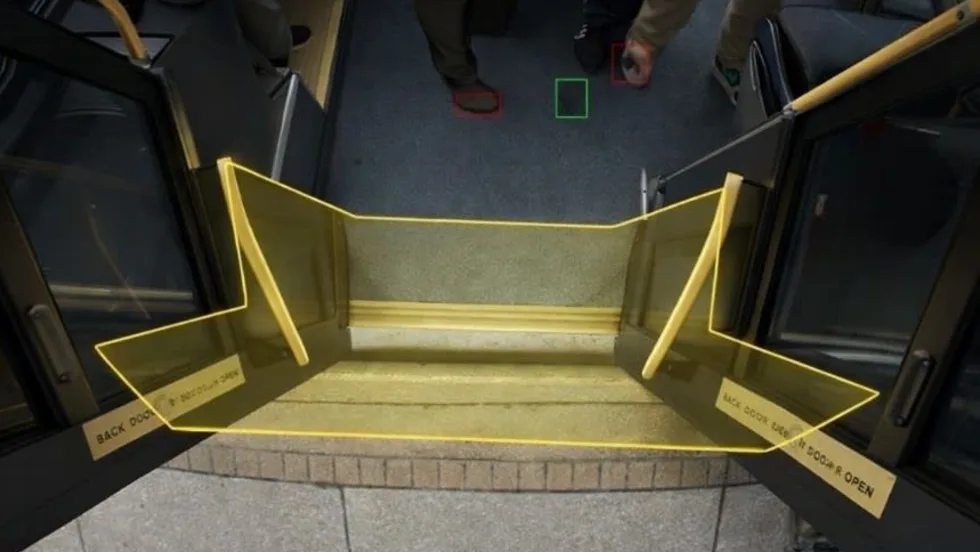
Sponsored•August 18, 2026
How VaporVision Adds Value to Transit Door Systems
Wabtec engineers explain how the system improves doorway detection, strengthens diagnostics and gives transit agencies and OEMs greater operating flexibility.
Read More →
FRA Announces $5.3B in Rail Investments, Including $2B for Amtrak
Funding will support grade-crossing improvements, infrastructure upgrades, and new Amtrak equipment in 23 states.
Read More →
Chicago, Maryland Expand Non-Law-Enforcement Safety, Rider Support
The CTA and MTA are launching new programs aimed at de-escalation, crisis response, rider assistance, and greater transparency.
Read More →
LA Metro, City of West Hollywood, and Partners Advance Smarter Bus Lane Enforcement
The award-winning partnership combines AI-powered detection with human oversight to improve bus reliability, accessibility, and enforcement efficiency.
Read More →
LA Metro Reports 57% Decline in Homelessness on Transit System Since 2024
The agency's latest homelessness count offers new data on how care-based services and cross-sector partnerships can complement traditional transit security strategies.
Read More →
FTA Launches 'Transit Moves America' Dashboard to Highlight Agency Safety and Performance
The online dashboard transforms National Transit Database information into a public-facing resource that allows users to compare transit agencies on key operational and safety metrics.
Read More →