



2015 Top 50 Motorcoach Fleets Survey
Many operators are tailoring their marketing and sales practices to attract millennials and baby boomers. Meanwhile, 77% of respondents report having issues recruiting, hiring and training drivers.
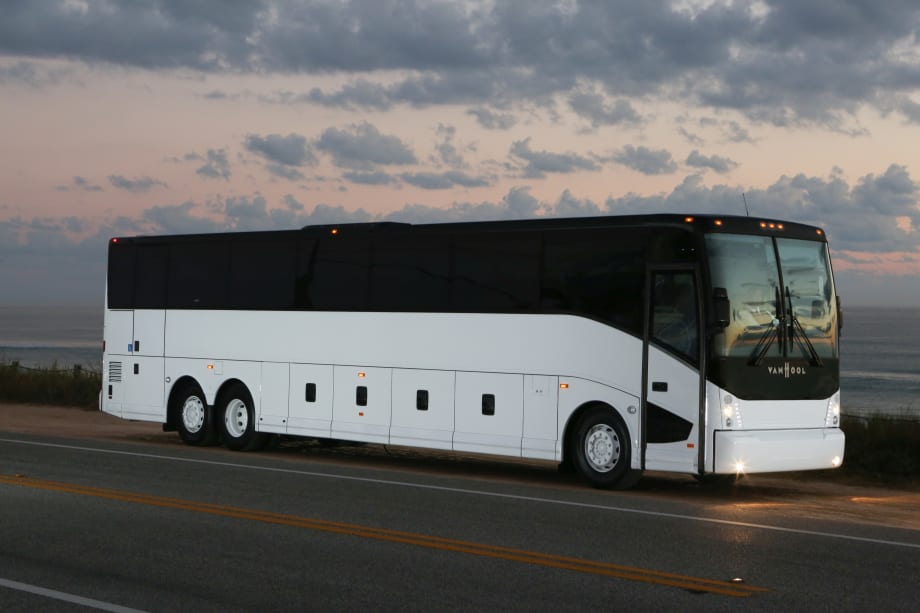
ABC Companies
ABC Companies
Adding Wi-Fi and 110-volt outlets, targeted marketing programs and partnering with event planners are just some of the ways operators are trying to attract the all-important millennial and baby boomer markets, according to the latest installment of METRO’s Top 50 Motorcoach operator listing and survey, which looks back at 2015.
Overall, 23,355 vehicles were reported by this year’s Top 50. Of the vehicles reported, 9,342, or 40%, are motorcoaches — less than the 9,764 reported last year, but still the same percentage as was reported in both 2014 and 2015.
Again, First Group America, with its crop of Greyhound motorcoaches, tops the list, followed by Coach USA/Coach Canada, Academy Bus Companies, Pacific Western Group of Companies and Easton Coach Co., who round out the top five.
There are five new operators on this year’s list, including the Ridgeland, Miss.-based Cline Tours Inc. (No. 19); Tulsa, Okla.’s Black Diamond Transportation (No. 36); and Trinity Transportation ( No. 40) of Wyandotte, Mich., bringing with them a total of 444 vehicles. All in all, 27 U.S. states and three Canadian provinces are represented in this year’s Top 50.
Growing, maintaining business
Overall, 74% of this year’s 120 total respondents report an increase in business, down slightly from last year’s 81%, with 15% reporting no change and 11% reporting that business is down, which doubled last year’s percentage.
Seventy-three percent of respondents reported they plan on purchasing an estimated 591 new vehicles in 2016, with top supplier choices being ABC Companies/Van Hool, Motor Coach Industries, Prevost and Temsa. Last year, 79% of operators reported that they were planning on purchasing 696 new vehicles.
Meanwhile, 60% of respondents say they plan on purchasing approximately 252 used vehicles in the coming year. Only 56% of those combined vehicle purchases reported are firm. Additionally, 19% of respondents said they are exploring purchasing a refurbished coach instead of purchasing brand new — a significant change from last year, when 72% of operators said they planned on purchasing refurbished coaches — with 39% saying they already own refurbished vehicles.
To battle increased fuel and other costs, 66% of respondents reported they increased their rates, representing a significant decrease compared to last year’s 85%, with fuel surcharges coming in second at 32% — also a noteworthy change from last year’s 61%. One reason for these drastic changes in numbers was the more stable price for fuel, according to several operators.
To help increase business, 56% reported obtaining more school contracts, followed by contracting with private companies (50%), obtaining government contracts (47%) and partnering with other providers (31%). Additional ways operators are trying to grow business, included the acquisition of competitors, increasing their marketing efforts and diversification into new markets, such as providing paratransit and shuttle services.
According to 52% of respondents, word of mouth is still the top marketing practice for motorcoach operators, followed by the Internet (19%) and social media (10%). When asked where they have increased their marketing efforts in the past year, operators reported the Internet and social media, both tied at 35%, which can be tied to their increased focus on the younger millennial market.
With the seat belt rule announced and set to go into effect in 2016, METRO asked respondents what percentage of their customers request coaches with factory-installed seat belts. Forty percent reported only 1% to 10% of customers make the request, while 23% said customers don’t request seat belts at all.
Challenges, innovations
Overwhelmingly, 77% of this year’s respondents report that their greatest challenge in providing service is Recruiting/hiring/retaining drivers, with the next-largest concerns, staying busy year-round and pricing, coming in at 28% and 27%, respectively.
Some ways operators are attempting to remedy the driver issue, include enhancing benefit packages, increasing training, using social media, hiring a third-party recruiter and increasing the bonus for driver referrals.
Sixty-seven percent of operators say they instituted additional driver training over the course of the year, with customer service, safety and logging being the most popular topics being covered.
At more than 90%, other coach companies are the top competition for this year’s respondents, with 19% of operators reporting that the good old automobile is their top competitor.
In addition to the aforementioned addition of Wi-Fi and 110-volt outlets, recent innovations operators are implementing include the addition of electronic logging devices, GPS, onboard cameras and bus tracking apps.
Finally, METRO asked operators if they were concerned with the federal government’s approach to coach safety, with 55% saying they are not and 45% saying they were. This question was asked previous to the passage of the FAST Act surface transportation bill, which included victories for the industry, including the review of the FMCSA’s Comprehensive, Safety, Accountability (CSA) program and the need for the U.S. Department of Transportation to conduct a study, specific to the passenger carrier industry, before FMCSA can proceed with a rule to increase insurance minimums.
That being said, some reasons for those operators who said they were concerned with the federal governments’ approach to coach safety, included the CSA scoring system, unfunded mandates and the inspection process. Stay tuned for a more in-depth report on how the FAST Act will impact the industry in future issues.
METRO would like to thank all of the motorcoach operators across the U.S. and Canada who responded to this year’s survey. If your operation would like to receive next year’s survey, or you have suggestions to improve it, please contact us at info@metro-magazine.com.
To view the article as it appeared in print along with the Top 50 chart, click here.
More Motorcoach

From Surviving to Thriving: Building Stronger Transportation Organizations
Bus Business Consultants founder Brian Dickson shares lessons on leadership, organizational health, and creating options for long-term success in a changing transportation industry.
Read More →
Report: Canadian Motorcoach Industry Generates $4.4B in Economic Impact
The 2025 Motorcoach Economic Impact Report finds motorcoach travel supported nearly 25,000 jobs and generated $980 million in federal, provincial, and local taxes.
Read More →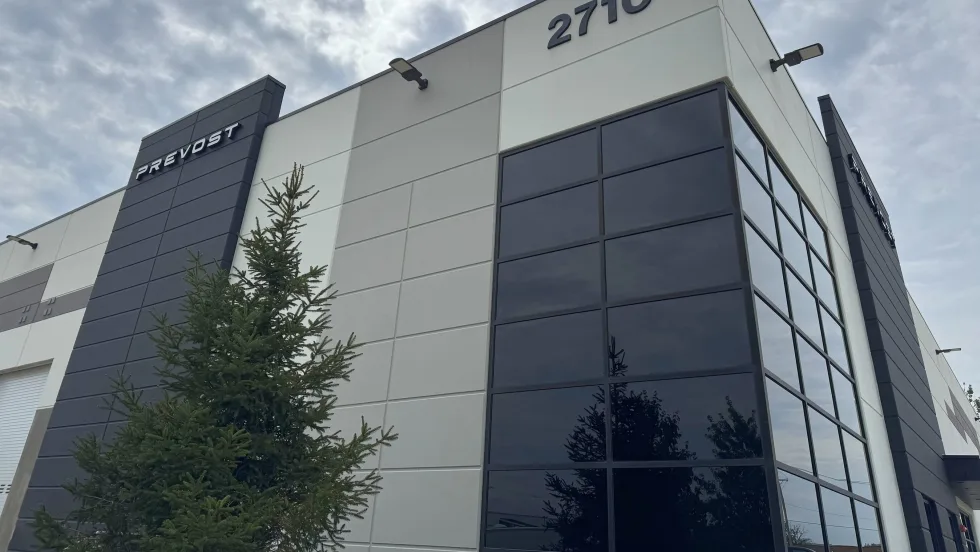
Prevost Opens Expanded Chicago-Area Service Center
The $8.1 million Elk Grove Village investment nearly triples facility space while adding service capacity, parts storage, and customer amenities.
Read More →
People Movement: Dan Dipert Coaches Adds Third-Generation Leader, Keolis Names New Valley Metro VP/GM, and More
In this edition, we also cover recent appointments and announcements at the Wabtec, SilverRide, HNTB, and more, showcasing the individuals helping to shape the future of transportation.
Read More →
METRO Opens Submissions for 2026 Motorcoach Awards
Nominations are now being accepted for METRO Magazine’s Operator of the Year and Innovative Operator of the Year awards.
Read More →
Biz Briefs: Alstom Lands Canadian Contract, LYT to Supply California TSP, and More
In METRO's latest installment, we take a look at recent news from Complete Coach Works, Beep, FlixBus, and more partnerships making headlines across the transportation sector.
Read More →
Biz Briefs: RIPTA Unveils New Frontrunners, Clevland RTA Adds New Siemens, and More
In METRO's latest installment, we take a look at recent news from Siemens, Prevost, Dodge, and more partnerships making headlines across the transportation sector.
Read More →
People Movement: Holly Arnold Joins Transdev and More
In this edition, we also cover recent appointments and announcements at Pace, CamTran, MCI, and more, showcasing the individuals helping to shape the future of transportation.
Read More →
ABA Report: Motorcoach Travel Generates $161.6B Economic Impact
The 2025 analysis finds motorcoach travel supported nearly 900,000 jobs and generated $28 billion in federal, state, and local taxes.
Read More →
CharterUP’s Armir Harris on Technology, AI, and the Future of Group Mobility
In a recent episode of METROspectives, CharterUP Founder/CEO Armir Harris discussed the company’s evolution from an online charter bus marketplace into a technology platform supporting public- and private-sector mobility and much more.
Read More →