



RELATED: How is the Industry Addressing the Driver Shortage?
2017 Top 50 Motorcoach Survey
Operators report they have stepped up efforts to find drivers and growth of transportation network companies is starting to compete for the industry’s business.
by Alex Roman, Managing Editor
February 6, 2017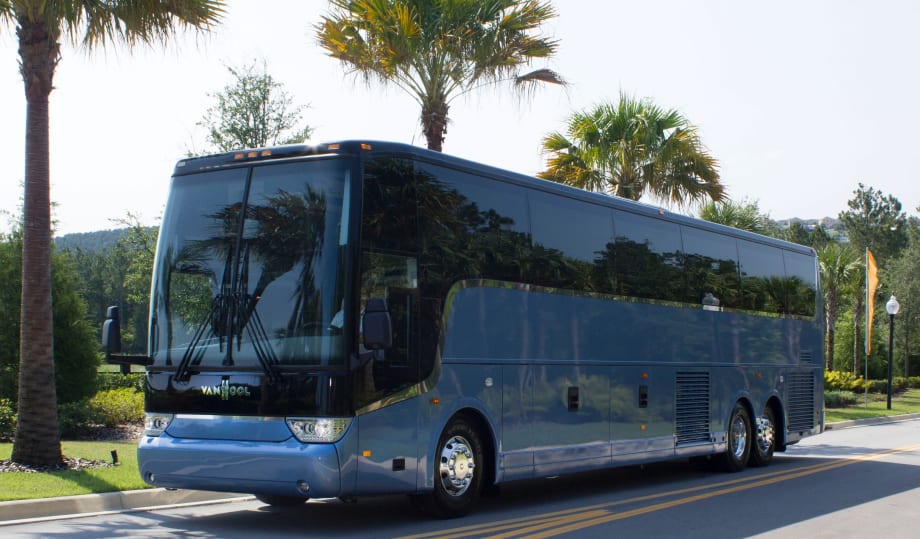
3 min to read
Recruiting, hiring, and retaining drivers is the biggest challenge facing motorcoach operations today, according to 85% of respondents to METRO’s Top 50 Motorcoach Survey this year. Additionally, when asked what their biggest expense other than equipment was, labor was the top answer as well as labor-related expenses, including health care/benefits and pay, with fuel costs coming in a distant second.
Overall, 23,831 vehicles were reported by this year’s Top 50, with 9,267, or 39%, of the vehicles reported motorcoaches — a slight decrease of about 200 coaches compared with last year.
A look at the numbers
Sixty-eight percent of this year’s respondents reported an increase in business, with 22% reporting that their business was down, and 10% reporting no change. The largest growth reported was 27%, with the largest decrease in business reported 15%.
Meanwhile, 84% of respondents plan on purchasing an estimated 554 new vehicles in 2017, with top supplier choices, including ABC Companies/Van Hool, Motor Coach Industries, Prevost and Temsa. Last year, 73% of operators reported that they were planning on purchasing 591 new vehicles — a number that was also down from the previous year.
To help increase business, 66% of respondents reported they are contracting with private companies, followed by obtaining school contracts (56%); obtaining government contracts (46%); partnering with other providers (37%); and diversifying into other types of transportation business, such as paratransit and limousine (22%). Additional ways operators are trying to grow business included the acquisition of competitors, finding niche markets, and increasing marketing efforts.
While an overwhelming number of operators report that their biggest source of competition is other operators (91%), taxis and transportation network companies (Uber, Lyft) are gaining traction (30% versus about 8% in 2016), followed by personal automobiles (27%), and airlines (20%).
Word of mouth is still the preferred method of marketing for 46% of respondents, followed by social media (17%) and internet advertising (15%). Meanwhile, 50% of respondents report that they have increased their marketing efforts on social media, with an additional 34% saying they have increased their internet advertising efforts.
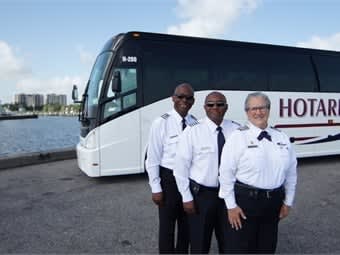
Hotard
Challenges, innovations
When asked what they are doing to combat the recruiting, hiring, and retaining drivers issue, many operators say they are improving training, increasing their pay/benefits packages, and concentrating more financial and marketing resources on recruitment.
With 64% of respondents saying they increased driver training in 2016, the most popular topics covered included (in order) safety, customer service, ADA training, and familiarization with the technologies on board coaches, such as Electronic Logging Devices.
Some of the most popular innovations implemented by motorcoach operators in 2016 include Wi-Fi and 110-volt outlets, online reservation systems and paperless tickets, GPS tracking, and sales and recruitment bonuses.
Finally, while the federal government continues its focus on improved motorcoach safety and customer awareness, METRO asked if operators are concerned with the approach being taken, with 55% saying yes, which was the same as 2016.
“By and large, we do support most of the regulations that are being implemented,” said one operator. “There are regulations that are proposed from time to time that we do question. The most recent is the leasing regulation, which is being proposed. While its intent is to go after companies that are not safe, it will adversely affect the law abiding companies and make it virtually impossible to manage.”
“Too often they implement new regulations under the guise of safety, which do nothing to improve safety, while ignoring simple steps they could take that could actually have an impact,” added another operator.
Additional concerns raised, involved FMCSA’s CSA scoring system, inconsistent guidelines in regards to roadside inspection of coaches, and imposing regulations without providing any financial assistance for implementation.
METRO would like to thank all of the motorcoach operators around the U.S. and Canada who responded to this year’s survey. If your operation would like to receive next year’s survey, or you have suggestions how to improve it, please contact us at info@metro-magazine.com.
To view the story as it appeared in print, click here.
Subscribe to Our Newsletter
More New Mobility

From Hardware to Digital Partner: Luminator Charts Its Next Chapter
CEO Magnus Friberg discusses Luminator’s shift toward becoming a digital partner, the growing importance of software and interoperability, and how AI can help agencies improve operations and passenger experience.
Read More →
Biz Briefs: Alstom Lands Canadian Contract, LYT to Supply California TSP, and More
In METRO's latest installment, we take a look at recent news from Complete Coach Works, Beep, FlixBus, and more partnerships making headlines across the transportation sector.
Read More →
CharterUP’s Armir Harris on Technology, AI, and the Future of Group Mobility
In a recent episode of METROspectives, CharterUP Founder/CEO Armir Harris discussed the company’s evolution from an online charter bus marketplace into a technology platform supporting public- and private-sector mobility and much more.
Read More →
Jacksonville’s NAVI Project Charts a New Course for Autonomous Public Transportation
Through its NAVI program, JTA is showing how autonomous vehicles, intelligent infrastructure, and coordinated operations can work together to deliver everyday public transportation.
Read More →
Biz Briefs: Luminator Marks Milestone and More
From manufacturers and suppliers to transit agencies and motorcoach operators, these updates offer a snapshot of the projects, partnerships and business moves driving the industry forward.
Read More →
New Tricks for Old Bureaucracies: Joshua Schank on Making Transit Innovation Stick
Former LA Metro Chief Innovation Officer Joshua Schank discusses why good ideas aren't enough, how transit agencies can overcome resistance to change, and why today's challenges demand more innovation.
Read More →
How DART's GoPass Is Redefining Regional Mobility
Serving 14 transit agencies, GoPass simplifies multimodal travel by allowing riders to plan, pay for, and manage an entire trip through one app.
Read More →
Biz Briefs: OCTA Taps Clean Energy for Hydrogen Station, Stadler to Supply Via Rail Vehicles, and More
From manufacturers and suppliers to transit agencies and motorcoach operators, these updates offer a snapshot of the projects, partnerships and business moves driving the industry forward.
Read More →CharterUP Expands Into New Mobility and Autonomous Transportation
Vice President of New Mobility Stephen Joos discusses how CharterUP is leveraging its nationwide transportation network, technology platform, and autonomous vehicle partnerships to expand into workforce mobility, campus shuttles, and transit solutions.
Read More →
METRO Magazine Announces 2026 Innovative Solutions Awards Winners
Projects Recognized for Advancing Mobility Through Technology, Accessibility, Workforce Innovation, and Operational Excellence
Read More →