



5 Qs: Q'Straint's Jean-Marc Girardin
For 30 years, Q’Straint has remained focused on one vision: to develop the world’s most effective wheelchair passenger safety solutions for public and private transportation. Today, Q’Straint is a global company serving customers in over 50 countries around the world.Jean-Marc Girardin, founder/executive chairman at Q’Straint, talks about how the company’s key innovations shaped the industry and how important family is to the business.

Girardin with his family (top row L to R): Patrick Girardin, Eric Girardin and Julie Boynton and Sure-Lok President Robert Joseph (bottom left).
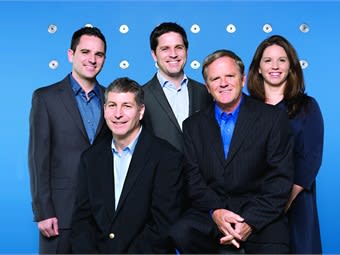
Girardin with his family (top row L to R): Patrick Girardin, Eric Girardin and Julie Boynton and Sure-Lok President Robert Joseph (bottom left).
For 30 years, Q’Straint has remained focused on one vision: to develop the world’s most effective wheelchair passenger safety solutions for public and private transportation. Today, Q’Straint is a global company serving customers in over 50 countries around the world.
Jean-Marc Girardin, founder/executive chairman at Q’Straint, talks about how the company’s key innovations shaped the industry and how important family is to the business.
How important is it that Q’Straint is a family business?
Passing a company to the next generation is a dream to every business owner. The crucial point for being a family business is that we have a capable and competent next generation to participate in helping manage and grow the business. In my case, all three of my children are involved, competent and pushing the company forward. Respect is crucial and helps create and maintain a great company culture. But also, we cannot forget that many of the employees that have been there from the beginning are considered family as well.
What are the biggest challenges facing the public transportation sector with regard to accessibility?
Some of the biggest challenges we’re hearing from operators is the increasing liability of wheelchair tip-overs and the growing trend for wheelchair passengers to ride in public transportation. Average tip-over lawsuits are easily in the millions of dollars at this point, and the industry is demanding more effective securement technology. To solve these issues, we have been creating specific securement technology for the city bus environment, first with our Q’POD, which is quickly becoming the most popular transit securement system, and next, with our new Quantum, which will be the first independent wheelchair securement system without the need for drivers to get out of their seat. Also, we focus heavily on training, from providing necessary training materials and training on-site to our national training seminar.

Discuss some of the company’s key innovations and how they have shaped the industry?
Our first product, the Q-5000 system brought automotive crash testing to wheelchair securements. Our QRT series was the first automatic wheelchair securement and shifted the industry from manual tie-down belts to automatic retractors you could use with one hand. The new QRT-360 series is the first product to meet new WC18 regulations due end of 2015.
Our Q’POD system was the first three-point integrated system for transit — which has redefined wheelchair securement in terms of time, liability, driver training and fleet consistency. And most importantly, we feel that the industry is about to be re-shaped with the Quantum wheelchair securement — the first independent wheelchair securement. Wheelchair passengers will be able to quickly board a bus and secure themselves in less than 20 seconds — offering them an equal level of safety and security afforded by everybody. We feel the Quantum system is the first to truly meet the spirit of ADA and are proud to release it in the same year as the 25th anniversary of the regulation.
What do you feel is the key to your success in terms of developing products that meet the needs of the public transportation industry?
It is hard to pinpoint exactly what creates success in developing products but certainly it would include creativity, customer feedback and patience: Creativity in design, Listening to the operators and users and understanding the challenges they face, and having patience in bringing products to market.
What is the greatest change you’ve seen in the industry so far and what has been its impact?
The greatest change we have seen throughout the year is the acceptance of mobility in city transit — from an early adoption, there was usually a mentality that this is something we ‘must’ comply with and that generally lead to doing the bare minimum to meet the regulations, such as ADA. Decades later, we’re proud to see operators embracing mobility and a real desire to do what is best for the mobility community. There is a far greater level of training and implementation of programs and new technologies than ever before, and it’s refreshing to see.
More Paratransit

Driving Smarter Paratransit
John Hanlon shares how AlphaRoute is leveraging AI-powered technology to help paratransit providers optimize operations, support frontline staff, and enhance the rider experience.
Read More →
People Movement: Dan Dipert Coaches Adds Third-Generation Leader, Keolis Names New Valley Metro VP/GM, and More
In this edition, we also cover recent appointments and announcements at the Wabtec, SilverRide, HNTB, and more, showcasing the individuals helping to shape the future of transportation.
Read More →
Biz Briefs: RIPTA Unveils New Frontrunners, Clevland RTA Adds New Siemens, and More
In METRO's latest installment, we take a look at recent news from Siemens, Prevost, Dodge, and more partnerships making headlines across the transportation sector.
Read More →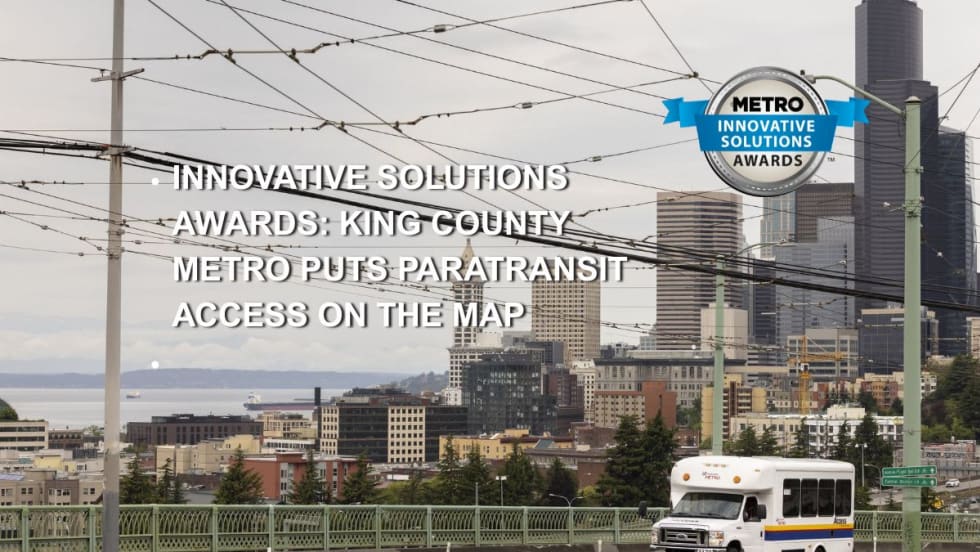
King County Metro Makes ADA Paratransit Easier to Navigate
METRO's Innovative Solutions Award winner replaces complex service-area descriptions with an accessible, interactive map that puts paratransit information directly in customers’ hands.
Read More →
Jacksonville’s NAVI Project Charts a New Course for Autonomous Public Transportation
Through its NAVI program, JTA is showing how autonomous vehicles, intelligent infrastructure, and coordinated operations can work together to deliver everyday public transportation.
Read More →
Driving Smarter Paratransit
John Hanlon shares how AlphaRoute is leveraging AI-powered technology to help paratransit providers optimize operations, support frontline staff, and enhance the rider experience.
Read More →
METRO Magazine Announces 2026 Innovative Solutions Awards Winners
Projects Recognized for Advancing Mobility Through Technology, Accessibility, Workforce Innovation, and Operational Excellence
Read More →
Biz Briefs: STV teams with Amtrak, Motorcoach Operators Boost Fleet and Land Contracts, and More
From manufacturers and suppliers to transit agencies and motorcoach operators, these updates offer a snapshot of the projects, partnerships and business moves driving the industry forward.
Read More →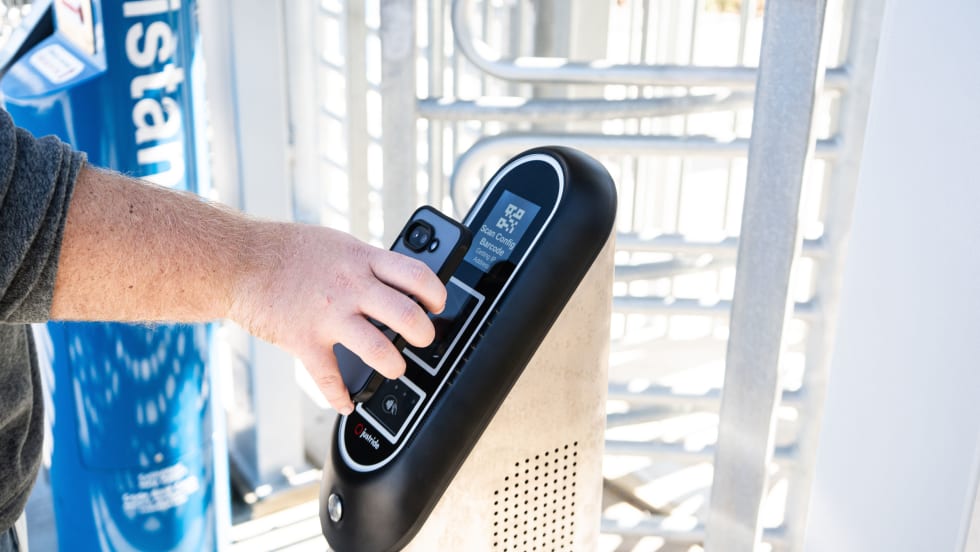
Biz Briefs: Masabi Teams with St. Louis Metro and More
In METRO's latest installment, we take a look at recent news from Transdev, Hitachi, and more partnerships making headlines across the transportation sector.
Read More →
New York MTA Leverages Zoning Program to Advance Station Accessibility
Accessibility enhancements at Nevins St Station will be financed through a development agreement tied to the MTA's Zoning for Accessibility initiative.
Read More →