



AECOM’s Aument Talks Post-Pandemic Challenges, Funding
Jennifer Aument, chief executive, global transportation for AECOM, is one of several top executives METRO spoke with for a consultant roundtable in the July issue.


Jennifer Aument is chief executive, global transportation for AECOM.
As cities, states, and provinces throughout the U.S. and Canada slowly begin to reopen, there is no doubt there will be a new normal not only in the way people commute, but in the way capital projects are planned and executed.
Jennifer Aument, chief executive, global transportation for AECOM, is one of several top executives METRO spoke with for a consultant roundtable in the July issue to discuss what may lie ahead for transit service planning, capital projects, workforce development, and much more.
Other than funding and the pandemic, what are the key challenges facing transit properties today?
More than just getting us safely from here to there, transit’s heightened importance in the post-pandemic world is about equitable access, jobs, economic growth, and housing. We are helping our clients rethink their approach to service, driving social equity objectives to connect and regenerate communities, and optimizing transportation infrastructure improvements that are greener and more resilient. Cybersecurity is a continuing threat for agencies. Also critical is restoring public confidence and reversing the COVID-driven shift away from transit. For sustainable operations, transit services must understand what the passenger of the future will need and how MaaS and last-mile options can be integrated to achieve the greatest potential and highest use.
What are some new trends you are seeing that are helping projects reach completion sooner or at least in the client’s desired time frame?
In the U.S., we know agencies that take the time during the project initiation/feasibility phase to fully explore options with the community and stakeholders, before initiating the environmental documentation process, will have a smoother path and be able to take advantage of NEPA streamlining provisions. In Europe, Australia, and Canada, collaborative delivery models that more closely align client, supplier, and fund-holder teams, promote engagement, leverage digital tools, and build supply chain capabilities and depth, can also complete projects faster.
Is there a solution that consultants can share with transit agencies to help bridge the funding gap?
Government stimulus and new infrastructure spending in the U.S. and elsewhere will be helpful, but it doesn’t erase the need for agencies to be smarter in unlocking federal funds, more flexible in attracting private investment, maximizing use of federal loan programs, and moving beyond just thinking of projects as public or private. Agencies must explore alternative sources of revenue: land-value capture, oversite development, local master planning and redevelopment are examples of this. We have also been counseling our clients on phased investment, asset refinancing, and opening new revenue streams — like advertising or commercial/retail leasing — to bridge the funding gap.
What is your company’s greatest challenge?
Much like our clients’ experiences, the past 14 months have required us to adapt, elevating both the way we work and how we deliver. Given the culture of collaboration at AECOM, our digital capabilities and new tools pioneered to support engagement, we didn’t miss a beat. We stood by our transit and transportation clients during the pandemic to help them recover and return to service. We are focused now on helping them build resilience and answering their demands to embed considerations of social equity and environmental sustainability — issues magnified during the pandemic — to achieve the best outcomes for their communities. As examples, we are working closely to help our clients to achieve low- and no-carbon solutions — through electrification, fleet conversions and more — while advocating as an organization for policies that support and speed clean transport. It is a transformational, challenging, and exciting period.
What lessons did you learn, personally, through the last year that we have lived through the pandemic?
If anything, the pandemic reinforced for me how interconnected we are, and the indispensable role technology plays in keeping us engaged and productive. Who would have thought we could shift nearly 50,000 global employees to remote work literally overnight, or help our clients engage with key stakeholders in virtual environments to keep projects moving forward? The pandemic also reinforced the opportunities we have in our industry to plan for and implement policies that improve access to safe, reliable transit systems, keep people and goods moving, and shape positive, sustainable futures for all our communities.
More Management
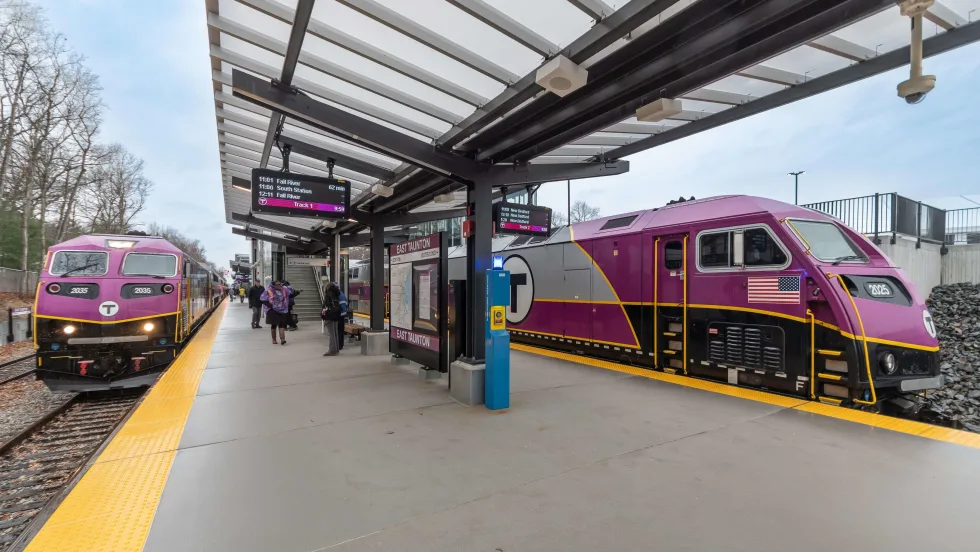
FTA Ends Direct Oversight of MBTA Safety Actions
The federal agency closed its remaining special directive to the Massachusetts Department of Public Utilities following a safety review that began in 2022.
Read More →
Report: Transit Bus Manufacturing Supports 34,100 Jobs, $5.1B in GDP
The “Buses Mean Business” report examines the transit bus manufacturing industry’s economic footprint, supply chain, and rising demand for vehicle replacements.
Read More →
LIT Marks 10-Year Milestone at Annual Summit
Hosted by the COTA from September 10 to 13, the Summit carried the theme “Celebrating 10 Years of Excellence, Leadership, and Impact,” with every part of the program honoring the people, agencies, and partners who built LIT over its first decade.
Read More →

People Movement: Dan Dipert Coaches Adds Third-Generation Leader, Keolis Names New Valley Metro VP/GM, and More
In this edition, we also cover recent appointments and announcements at the Wabtec, SilverRide, HNTB, and more, showcasing the individuals helping to shape the future of transportation.
Read More →
METRO Opens Submissions for 2026 Motorcoach Awards
Nominations are now being accepted for METRO Magazine’s Operator of the Year and Innovative Operator of the Year awards.
Read More →
New York MTA Advances Final Contract for Second Avenue Subway Expansion
Contract Four is the largest in the Second Avenue Subway Phase 2 project and includes construction of station infrastructure, tracks, and signals for the subway expansion, MTA officials said. Work on Contract Four will begin in 2027.
Read More →
Transit Agencies Highlight Safety Gains at National Summit
Leaders from 15 major transit systems shared crime-reduction results and safety initiatives while discussing the role of continued federal support.
Read More →
NITA Names New Leadership, Expands Reduced-Fare Program at First Board Meeting
The new regional transit authority appointed its first board chair and interim executive director while extending reduced fares across CTA, Metra, and Pace for eligible riders.
Read More →
Beyond the Checklist: A Structured Approach to Transit Maintenance
Reliability-Centered Maintenance helps transit agencies move beyond routine checklists to focus limited resources on the assets and failures that have the greatest impact on safety, reliability, and service.
Read More →
APTA 2026 Nominating Committee Selects Leadership Slate, Names Chair and Vice Chair Nominees
Leadership changes will help shape the association’s priorities and its representation of the transportation industry during the 2026–2027 term.
Read More →