



Almaviva Looks to Open Architecture to Advance Transit Technology
Eric Reese discusses how interoperability, open architecture, and modular design can help transit agencies control costs, reduce vendor lock-in, and upgrade technology without starting over.

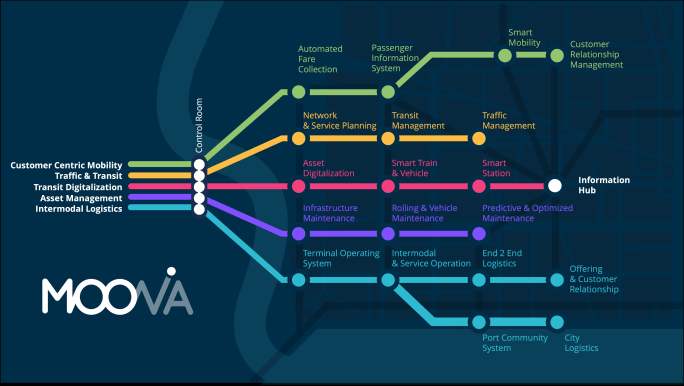
Almaviva’s growing North American Transit business is focused on advancing digital solutions for public transportation, anchored by its Moova mobility platform.
Almaviva/METRO
- Eric Reese emphasizes the importance of interoperability, open architecture, and modular design in transit systems.
- Adopting open architecture helps transit agencies manage costs and avoid being locked into specific vendors.
- Upgrading technology becomes more manageable without the need to start over, thanks to these design principles.
*Summarized by AI
With more than four decades of experience in digital transformation, Almaviva has built a global presence helping businesses and government agencies use technology to improve how they operate and serve their customers.
The company employs more than 40,000 people across Europe, North America, South America, and the Middle East, with pro forma revenues exceeding $2 billion. Its expansion in the transportation sector includes the 2024 acquisition of Iteris, an intelligent mobility infrastructure management solutions provider.
Almaviva’s growing North American Transit business is focused on advancing digital solutions for public transportation, anchored by its Moova mobility platform. Eric Reese, senior vice president of Transit North America, leads that effort. Reese brings extensive experience across transit operations, consulting, and the supplier community, having previously led the Americas region for Vix Technology and served as CEO of Bytemark.
In this Q&A, Reese discusses the evolving transit technology landscape, the challenges facing agencies, and how digital transformation can help transit providers improve operations, the passenger experience, and the future of mobility.
Interoperability and Operational Challenges
METRO: Why has interoperability become such an important consideration when organizations are building or upgrading systems today?
Reese: Most organizations run a variety of disconnected tools, hardware, and products purchased from different vendors over many years. When those pieces can't talk to each other, every upgrade becomes its own expensive project. Few organizations can afford to rip out and replace everything to make progress, especially with limited budgets. Interoperability lets transit agencies add one new piece while managing time and money better.
METRO: What are the highest costs or operational challenges organizations face when systems from different vendors can't communicate or work together?
Reese:There are many challenges transit agencies face when systems don’t work together. The costs really show up in three places: manual labor by agency staff, cost, and visibility. Our job is to make it easier. First, we help agencies automate by reducing time-consuming, error-prone manual processes; second, we eliminate expensive custom integrations and the recurring costs of fixing them after vendors update their software. Finally, when systems don’t share information, no one has an accurate, real-time picture of what is happening, which makes it take longer to identify and fix problems.
Open Architecture and Evaluating Systems
Eric Reese is the Senior Vice President of Transit North America at Almaviva Group. He has extensive leadership and transit industry experience across transit operations, consulting, and supplier roles.
Almaviva/METRO
METRO: How does an open-architecture approach reduce the amount of customization required, and where can that translate into meaningful cost or time savings?
Reese: Open architecture uses shared, published rules for moving data in and out, rather than a proprietary format only one vendor understands. When systems already speak the same “language,” the existing connection can lower integration fees, reduce maintenance costs, and reduce long-term risk by changing components rather than the whole system. In short, the payoff is less time and money spent on standing up a system, paying for its maintenance, and reducing the cost of a complete rebuild.
METRO: Vendor lock-in is a concern with many technology investments. What should organizations look for when evaluating a system to make sure they maintain flexibility and aren't tied to a single vendor long-term?
Reese: Before you sign the dotted line, it is the responsibility of a strategic organization to ask the right questions about the system’s future. Don’t fall for “future-proofing” marketing-speak. Instead ask: Does the system use open, widely adopted data and communication standards? Who owns the data, and can you export and reuse it elsewhere? Will it work with our existing hardware? What happens if we switch vendors later? If vendor responses include phrases such as “closed, proprietary format,” “required replacements,” and “start over,” the system is unlikely to add, remove, or replace without a full rebuild.
On Modularity
With more than four decades of experience in digital transformation, Almaviva has built a global presence helping businesses and government agencies use technology to improve how they operate and serve their customers.
Almaviva
METRO: How does modular design allow organizations to take a phased approach rather than making a large investment all at once?
Modular design unlocks a system by breaking it down into separate, connected components rather than a binary, all-or-nothing one. This gives agencies the flexibility to prioritize essential components, prove they work, and build the case for the next. This cadence mirrors agency budgeting, which is based on stages across cycles. Modularity also lowers risk, since right-sized rollouts make it easier to manage, adapt, and learn before scaling.
METRO: As technology continues to evolve, how can interoperability and modularity help organizations expand or upgrade their systems without having to start over?
Reese: Technology doesn’t stand still; there are always new tools, data formats, and expectations. Building a system on open standards and modular components lets transit agencies swap or upgrade components without disrupting the rest of the system. That is the real goal: instead of budgeting for a full system replacement every decade, organizations can evolve while preserving investments already made. Interoperable, modular systems can do more than break vendor lock-in; they can show passengers and the broader community that agencies can deliver projects that move the whole region faster.
Quick Answers
Open architecture in transit technology refers to a design approach that promotes interoperability between different systems and components, allowing for easy integration and upgrades.
*Summarized by AI
More Technology

Driving Smarter Paratransit
John Hanlon shares how AlphaRoute is leveraging AI-powered technology to help paratransit providers optimize operations, support frontline staff, and enhance the rider experience.
Read More →
From Hardware to Digital Partner: Luminator Charts Its Next Chapter
CEO Magnus Friberg discusses Luminator’s shift toward becoming a digital partner, the growing importance of software and interoperability, and how AI can help agencies improve operations and passenger experience.
Read More →
Beyond the Checklist: A Structured Approach to Transit Maintenance
Reliability-Centered Maintenance helps transit agencies move beyond routine checklists to focus limited resources on the assets and failures that have the greatest impact on safety, reliability, and service.
Read More →

NJ TRANSIT Advances Bus Technology Upgrades Across Statewide Fleet
More than 1,500 buses now feature upgraded technology designed to improve arrival predictions and provide free Wi-Fi, with deployment expected to reach nearly 2,000 buses by the end of 2026.
Read More →
Building a Flexible Path to Transit Electrification
John Hroncich discusses BAE Systems’ modular and scalable approach, lessons learned from decades of real-world operations, and how agencies can identify electrification strategies that fit their fleets.
Read More →
Biz Briefs: Alstom Lands Canadian Contract, LYT to Supply California TSP, and More
In METRO's latest installment, we take a look at recent news from Complete Coach Works, Beep, FlixBus, and more partnerships making headlines across the transportation sector.
Read More →
From Legacy Silos to Conversational Intelligence
What if transit leaders could ask any operational question and get a trusted answer in seconds? Conversational AI is transforming how agencies use their data.
Read More →
USDOT Announces Rail Vehicle Replacement Grants, Chattanooga AV Shuttle Funding
More than $191 million in federal funding will help three transit agencies replace aging rail vehicles and support a new autonomous shuttle service in Chattanooga.
Read More →
Bus Tech Talk: Keeping Transit Technicians Ahead of the Technology Curve
LA Metro’s Obed Mejia discusses technician training, evolving maintenance technology, fleet replacement, and strategies for getting the most out of today’s transit fleets.
Read More →
Biz Briefs: RIPTA Unveils New Frontrunners, Clevland RTA Adds New Siemens, and More
In METRO's latest installment, we take a look at recent news from Siemens, Prevost, Dodge, and more partnerships making headlines across the transportation sector.
Read More →